Leave Your Message

China Top 10 Continuous Ball Mill Machine Manufacturers

China’s ball-milling sector supports cement, ceramics, mining, and advanced powder processing. This introduction examines China Top 10 Continuous Ball Mill Machine Manufacturers through measurable engineering and commercial criteria. Capacity is only one part of the picture. Liner life, motor efficiency, discharge stability, maintenance access, and after-sales response also influence practical value.

The International Energy Agency reported that cement production creates about 7% of global carbon dioxide emissions in its 2023 cement analysis. The U.S. Geological Survey estimated global cement production at approximately 4.1 billion metric tons in 2023. These figures explain why efficient grinding equipment deserves closer evaluation. A continuous mill can reduce interruption between feeding and discharge. However, performance depends on feed size, moisture, residence time, grinding media, and process control. Bigger is not always better.

Dr. Alban J. Lynch, a widely cited comminution specialist, wrote, “The ball mill is a tumbling mill in which the grinding media are steel balls,” in Mineral Crushing and Grinding Circuits. His observation remains technically relevant, although modern systems add sensors, variable-speed drives, and automated classification. Energy matters. Evidence matters. Supplier claims can be uneven, and published specifications may omit real operating conditions. Therefore, this ranking should be read as a structured market guide, not an absolute verdict. It compares manufacturing experience, product configuration, testing capability, certifications, export records, and user support. Factory visits, sample testing, and verified operating references still matter. That gap deserves attention.

China Top 10 Continuous Ball Mill Machine Manufacturers

Definition and Working Principle of Continuous Ball Mill Machines

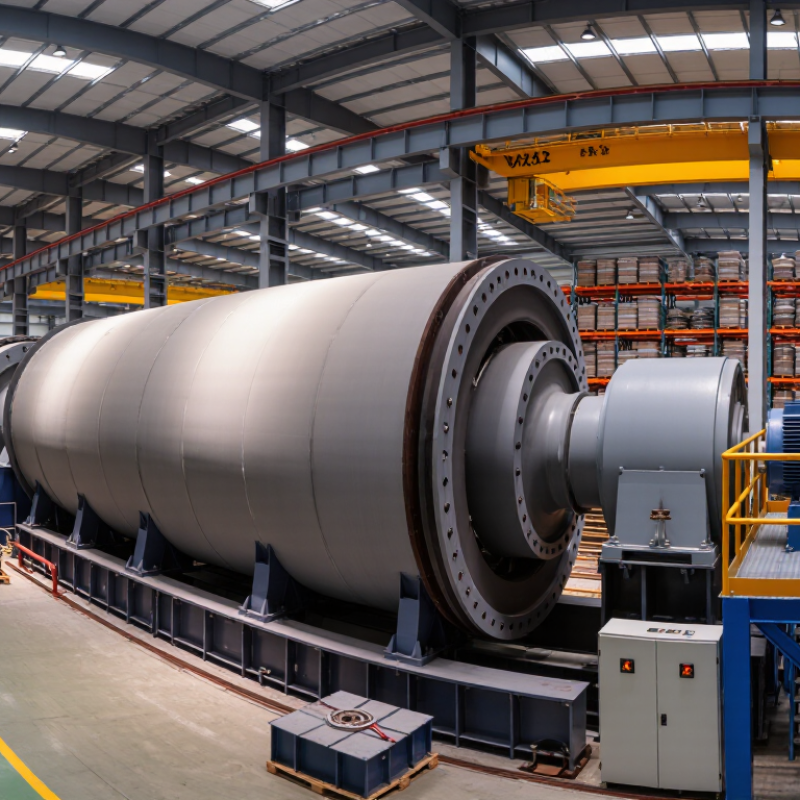
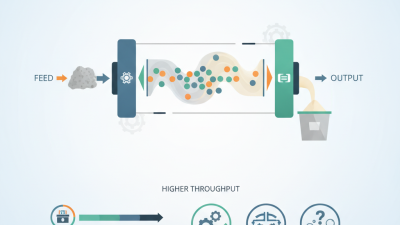
A continuous ball mill machine is a cylindrical grinder that processes material without stopping the feed. Inside the rotating shell, steel balls lift and drop through the material. Impact breaks coarse particles, while friction reduces their size further. Feed enters through one end, and ground product leaves through the opposite end. This differs from a batch mill, which requires loading, grinding, and discharge cycles.

The working principle depends on controlled residence time. Operators adjust shell speed, ball diameter, feed rate, and discharge opening. A slower speed may produce weak lifting, while excessive speed can make the balls cling to the shell. That mistake wastes power. Internal liners also shape the motion and protect the shell. In many plants, a classifier separates fine particles and returns oversized material for additional grinding. The system therefore behaves like a moving loop, not a single crushing event.

Energy demand remains a practical concern. The European Commission’s 2019 Cement, Lime and Magnesium Oxide BREF reports cement-grinding electricity consumption commonly around 20–40 kWh per tonne, depending on feed, fineness, and equipment design. The International Energy Agency also identifies grinding efficiency as an important pathway for lowering cement-sector energy use. These figures are useful benchmarks, not guarantees. Moist feed, worn liners, and poor ball grading can shift actual performance sharply. A clear definition must include these operating realities.

China Top 10 Continuous Ball Mill Machine Manufacturers - Definition and Working Principle of Continuous Ball Mill Machines

No. Machine Configuration or Evaluation Dimension Definition / Typical Specification Working Principle or Process Function Typical Materials Main Selection Consideration
1 Continuous Ball Mill A cylindrical grinding machine that receives feed continuously and discharges product continuously, rather than operating batch by batch. The rotating shell lifts and drops grinding media, producing impact and abrasion while material moves gradually from the feed end to the discharge end. Ceramic raw materials, minerals, ores, cement-related materials, glass, and industrial powders. Required throughput, target particle size, material hardness, moisture, and permissible contamination.
2 Wet Continuous Ball Mill A continuous mill operated with process water or another suitable liquid; the slurry commonly contains approximately 60–75% solids by weight, depending on the material and process. Liquid improves material transport and helps prevent excessive dust. Grinding occurs as the slurry passes through the rotating drum. Clay, feldspar, quartz, limestone, ores, pigments, and ceramic slip formulations. Water availability, slurry viscosity, downstream separation equipment, corrosion resistance, and drying cost.
3 Dry Continuous Ball Mill A mill that grinds and conveys relatively dry feed without adding process water; air flow may be used for material transport and classification. Impact and attrition reduce particle size while internal airflow or an external classifier removes suitably fine particles. Cement raw materials, gypsum, lime, minerals, fertilizers, and dry ceramic powders. Feed moisture, dust collection, ventilation, explosion risk, energy consumption, and final fineness.
4 Single-Compartment Mill A continuous drum with one grinding chamber and one principal media size distribution. The same chamber performs coarse breakage and fine grinding; media size and filling level are selected as a compromise. Soft to medium-hard materials and applications with moderate fineness requirements. Simple layout, lower capital cost, easier maintenance, and suitability for a relatively narrow product range.
5 Multi-Compartment Mill A continuous mill divided by intermediate diaphragms into two or more grinding chambers. Coarse grinding takes place in the first chamber, while smaller media in later chambers progressively produce finer particles. Cement, clinker, limestone, silica, feldspar, and other materials requiring controlled fineness. Product fineness, residence-time control, intermediate diaphragm design, and wear-part availability.
6 Grinding Media and Filling Level Grinding media are commonly steel, alloy steel, ceramic, or other wear-resistant spheres. A typical mill filling level is often about 25–40% of the internal mill volume, depending on design and duty. Media motion creates impact, compression, and abrasion. Excessive or insufficient filling can reduce grinding efficiency. The media type is matched to hardness, density, contamination limits, and wet or dry operation. Media wear, product contamination, mill speed, liner design, and energy efficiency.
7 Mill Speed and Critical Speed Critical speed is the theoretical speed at which centrifugal force holds the media against the shell. Ball mills normally operate below critical speed, commonly around 65–80% of the critical value. Operating below critical speed allows the media to fall and cascade, generating useful impact and abrasion instead of remaining attached to the shell. The setting is adapted to material hardness, media diameter, mill diameter, and desired product size. Motor power, vibration, liner wear, noise, media trajectory, and product quality.
8 Continuous Feed and Discharge System A controlled system consisting of a feeder, inlet chute, internal transport path, discharge grate or overflow outlet, and product-handling equipment. A stable feed rate maintains the material load and residence time. Discharge design prevents excessive buildup and controls material flow. Granular solids, slurries, mineral mixtures, and ceramic suspensions. Feed consistency, blockage prevention, moisture level, slurry density, and process-control accuracy.
9 Liners and Wear Protection Replaceable internal plates made from materials such as alloy steel, high-chrome iron, rubber, or ceramics, selected for the operating environment. Liners protect the shell and influence the lifting action, sliding behavior, noise level, and energy transfer to the grinding media. Dry abrasive minerals, wet slurries, ceramic materials, and applications with contamination restrictions. Wear resistance, service life, replacement time, operating temperature, and compatibility with the product.
10 Capacity, Fineness, and Energy Evaluation Actual capacity and product fineness depend on mill size, feed characteristics, moisture, media charge, speed, residence time, and circuit design; they should be confirmed through process calculations or testing. Higher throughput generally requires an appropriate balance between feed rate, grinding volume, media energy, classification, and discharge capacity. Materials ranging from coarse feed to fine powders, with specifications determined by the final application. Compare kWh per tonne, product-size distribution, production stability, maintenance cost, and total operating cost.

Note: The specifications and ranges shown are general engineering reference values for continuous ball-mill selection. Exact performance depends on the equipment design, material properties, operating conditions, and complete grinding circuit.

Key Features and Performance Standards for Industrial Ball Mills

China Top 10 Continuous Ball Mill Machine Manufacturers

Key Features and Performance Standards for Industrial Ball Mills

Continuous ball mills must deliver stable throughput, controlled particle size, and predictable energy use. The CEEC Comminution Energy Efficiency report indicates that comminution may consume 25–50% of a mine’s total energy. This makes motor efficiency and liner design important purchasing factors. A practical machine should maintain steady feed rates, even when moisture changes. Operators should also monitor mill power, vibration, bearing temperature, and discharge density. These measurements reveal problems before production stops.

The Bond Work Index remains a widely used method for estimating grinding energy. However, laboratory results cannot fully represent plant conditions. Ore hardness, liner wear, ball grading, and slurry viscosity can shift actual performance. ISO 50001 principles support continuous energy monitoring, while IEC 60034 motor standards help verify motor efficiency. A useful benchmark is energy per tonne, not only hourly capacity. Higher output may hide excessive power consumption. That mistake is common.

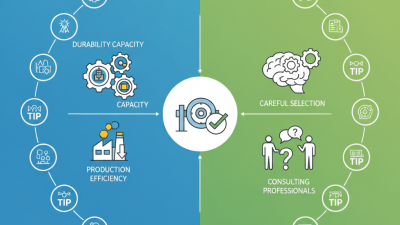
Tips: Request a full-load test with representative material. Check particle-size distribution at the discharge. Ask for documented noise, vibration, and temperature limits. Keep spare liners available. Small delays become expensive quickly. Performance data should be reviewed monthly, although many plants review it too late.

China’s Leading Continuous Ball Mill Machine Manufacturers

China’s leading continuous ball mill machine manufacturers serve cement, ceramics, mining, and advanced material plants. Their equipment supports steady grinding with controlled feed and discharge. Experienced manufacturers understand that capacity depends on more than drum size. Material hardness, moisture, residence time, and final particle size also matter.

Factory experience is visible in practical details. A reliable supplier should provide test data, dimensional drawings, wear-part specifications, and clear maintenance schedules. Engineers may inspect the customer’s raw material before recommending a lining, grinding media, or motor configuration. This step reduces costly design errors. It also shows professional responsibility. Ask for production records from comparable installations. Ask difficult questions.

Quality control should cover steel thickness, shaft alignment, welding, bearings, and electrical protection. Trial operation reports can reveal vibration, temperature, and power consumption. Chinese manufacturers with export experience often provide installation guidance, operator training, spare parts, and remote technical support. However, service quality can differ between factories. A polished brochure is not enough. Verify response times and documentation before signing.

No supplier is perfect. Some factories offer strong mechanical design but weaker after-sales coordination. Others customize quickly but need closer inspection of testing procedures. Buyers should compare total operating costs, not only the purchase price. A carefully selected continuous ball mill can deliver stable output, longer component life, and safer daily operation when the design matches real production conditions.

How to Compare Manufacturers, Models, and Technical Specifications

For a China Top 10 comparison, rank manufacturers by evidence, not polished brochures. Start with the duty. Check feed size, product fineness, moisture, hardness, and required tonnes per hour. A mill for ceramic slurry needs different internals from one processing dry mineral feed. Numbers can look impressive. The U.S. Geological Survey reported about 4.1 billion tonnes of global cement production in 2023. That scale makes availability, wear life, and energy cost practical issues, not minor details. The International Energy Agency estimates cement causes roughly 7% of global carbon dioxide emissions. Therefore, compare specific energy consumption, stated as kilowatt-hours per tonne, under similar test conditions.

Model comparison should include shell diameter, shell length, motor rating, speed range, ball charge, liner material, and discharge design. Do not compare motor power alone. A larger motor may hide poor grinding efficiency. Request a signed performance test using representative feed. Record throughput, product residue, temperature, vibration, noise, and power draw. Ask whether figures are guaranteed or merely typical. They are not the same. For continuous operation, inspect bearing seals, lubrication access, emergency stops, spare-part lead times, and remote support. The report should identify assumptions, especially feed moisture and media size.

Manufacturer scoring can use weighted criteria: 30% verified performance, 20% lifecycle cost, 15% safety systems, 15% service capability, and 20% delivery and documentation. This is not a universal formula. It needs adjustment. The Global Cement and Concrete Association emphasizes efficiency and emissions reduction across cement production, but buyers still need plant-level measurements. Visit a running installation when possible. Watch the discharge stream. Listen for abnormal impacts. A clean factory tour proves little. The cheapest quotation may become the most expensive machine after liners, downtime, and unstable product quality.

Applications, Maintenance, and Buying Considerations in China

China Top 10 Continuous Ball Mill Machine Manufacturers

Continuous ball mills serve mineral processing, cement, ceramics, and industrial mineral plants. They accept feed continuously, reducing batch interruptions and improving process stability. The IEA’s 2023 Cement report states that cement production causes about 7% of global energy-related CO2 emissions. Energy efficiency therefore matters. USGS Mineral Commodity Summaries 2024 estimates China produced about 2.1 billion metric tons of cement in 2023. This scale supports strong demand for reliable grinding equipment.

Maintenance starts with disciplined daily checks. Operators should record bearing temperature, motor current, vibration, and lubricant condition. A small temperature rise can signal poor alignment or overloading. Inspect liners and grinding media weekly. Uneven wear often points to incorrect feed size or media grading. Keep feed moisture controlled. Wet material can reduce capacity and increase internal buildup. Neglect happens.

When comparing China’s top ten manufacturers, buyers should examine throughput at the intended feed size, product fineness, motor efficiency, shell thickness, liner material, and spare-part availability. Ask for test data using similar ore or slurry. ISO 9001 certification supports process control, but it does not guarantee field performance. Request inspection records, vibration limits, warranty terms, and commissioning support. A factory acceptance test should confirm power draw, noise, leakage, and discharge consistency. The lowest quotation may conceal higher maintenance costs. That possibility deserves careful review.