Leave Your Message

How to Choose a Continuous Ball Mill for Your Business?

Choosing a Continuous Ball Mill is a practical decision, not a simple equipment purchase. The right model must match your material, production target, and operating conditions. A mill handling 12 tonnes per hour may struggle with a sudden increase in feed moisture. Small details matter.

Begin with the material itself. Consider hardness, moisture, particle size, and abrasiveness. These factors influence grinding efficiency, liner wear, motor demand, and maintenance frequency. In plant evaluations, operators often compare feed samples under controlled conditions. A short trial can reveal problems that brochures rarely mention. It may expose excessive heat, uneven discharge, or unexpected power consumption.

Capacity also deserves careful attention. Do not select a machine based only on its maximum advertised output. Real production depends on feed consistency, grinding media, residence time, and equipment condition. Ask suppliers for verified performance data, test results, and references from similar facilities. Check the mill diameter, length, drive system, liner design, and discharge arrangement. Spare parts availability matters too.

There is no perfect choice.

I have seen technically impressive mills perform poorly after installation because the feed was misunderstood. That mistake is easy to make. A reliable selection process includes site measurements, operating-cost estimates, maintenance planning, and honest communication with the manufacturer. Energy use should be reviewed alongside purchase price. A cheaper mill may create higher long-term costs through downtime and frequent liner replacement. This guide explains the main criteria for choosing a Continuous Ball Mill with practical judgment, measurable evidence, and room for careful reconsideration.
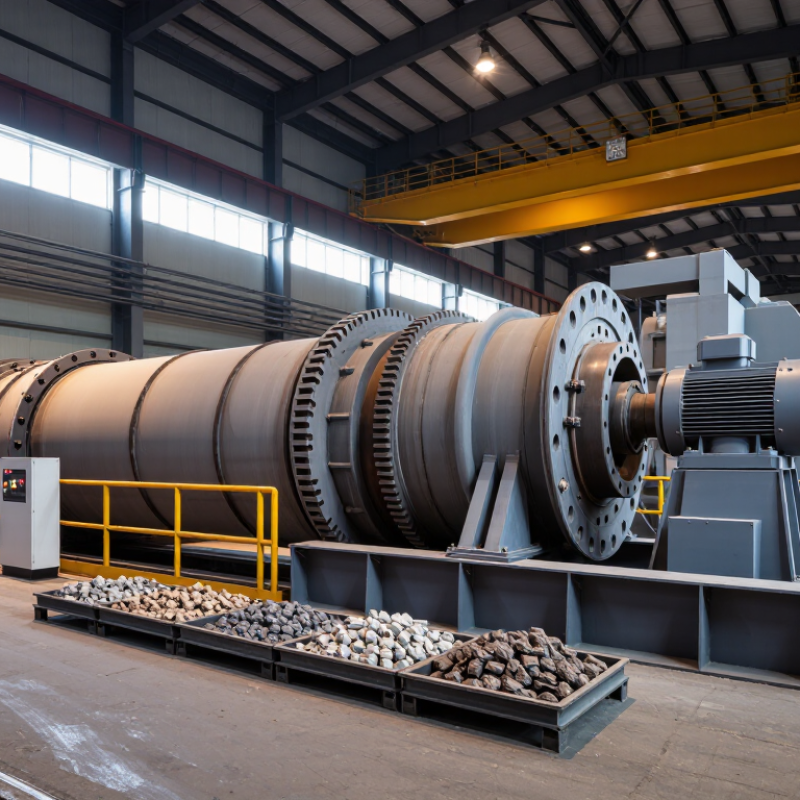
How to Choose a Continuous Ball Mill for Your Business?

Define Capacity and Product Targets: t/h, 80% Passing Size, and Bond Work Index

How to Choose a Continuous Ball Mill for Your Business?

Define Capacity and Product Targets: t/h, 80% Passing Size, and Bond Work Index

Selecting a continuous ball mill starts with measurable production targets. State capacity in tonnes per hour, and define whether the figure uses wet or dry feed. A target of 25 t/h can mean very different equipment duties at 8% or 18% moisture. Record feed density, hardness, top size, and operating hours. Small details matter.

Product size needs equal precision. Specify the P80, meaning 80% of the product passes through a selected screen size. For example, a P80 of 150 microns requires a different grinding arrangement than 500 microns. Do not rely on visual fineness. Laboratory sieve analysis gives a more dependable reference. Sampling errors still occur.

Bond Work Index Bond Work Index estimates the ore’s resistance to grinding. A higher value usually means greater energy demand, but the number is not a perfect prediction. Ore variability, ball charge, slurry density, and mill condition can change actual performance. Use representative samples from several production zones. One test may mislead you. In practice, compare the calculated energy requirement with pilot results and a realistic safety margin. Then check whether the selected mill can maintain capacity when liners wear, feed moisture changes, or the target size becomes finer. That last condition is often underestimated.
Calculate Critical Speed: Nᶜ = 42.3/√(D−d) rpm; Operate at 65–80%

Choosing a continuous ball mill starts with the critical speed, not only the advertised capacity. The key calculation is Nᶜ = 42.3/√(D−d) rpm. Here, D is the mill’s inside diameter, while d is the grinding media diameter. Use consistent units, preferably metres, before calculating. A small measurement error can change the recommended operating range.

For example, assume a mill diameter of 2.4 metres and media diameter of 0.08 metres. The critical speed is about 27.8 rpm. Running at 65–80% gives an operating range near 18.1–22.2 rpm. This range helps the media lift and cascade effectively, improving impact and grinding action. Too slowly, and the charge may slide. Too quickly, and centrifugal force can hold the media against the shell.

In practical commissioning, I would begin near the lower end and inspect the discharge, motor load, vibration, and product size. Real materials behave differently. Moist feed, oversized particles, or uneven loading can shift the best setting. The formula is a strong starting point, but not a complete design method. I would also verify the liner thickness, because it reduces the working diameter over time. That detail is easy to miss. A short trial with measured feed rate and particle-size results often reveals more than a spreadsheet alone. Teams should record each adjustment, rather than trusting a single calculated speed.

How to Choose a Continuous Ball Mill for Your Business?

Critical speed is calculated using Nᶜ = 42.3 / √(D − d), where D is the mill diameter and d is the grinding media diameter, both in metres. Continuous ball mills are commonly operated at approximately 65–80% of critical speed. Final operating conditions should also consider material properties, media filling, mill length, and feed rate.

Match Ball Charge and Media: 25–35% Filling and Size-Graded Grinding Balls

Choosing a continuous ball mill starts with the ball charge, not the motor rating. A practical starting range is 25–35% mill volume, measured by grinding-ball volume. This is not a universal answer. Ore density, moisture, feed size, and residence time can shift the ideal level.

A 30% charge often provides a useful balance between impact and attrition. Too little media creates weak impacts and uneven product sizing. Too much can increase liner wear, overload the drive, and reduce slurry movement.

Bond’s comminution research remains a key industry reference, while the SME Mineral Processing and Extractive Metallurgy Handbook links media selection with feed size, hardness, and target liberation. These variables deserve plant trials.

Use size-graded balls instead of one uniform diameter. Larger balls handle coarse feed and resist rapid size loss. Smaller balls improve contact with fine particles. A pilot charge might combine several diameters, then adjust after sampling discharge size, power draw, and circulating load.

The International Energy Agency’s 2024 analysis identifies mineral processing as a significant energy consumer, so small efficiency losses matter. In practice, operators often check the charge weekly. Yet this can be insufficient when ore changes quickly.

I would not trust a fixed recipe for every deposit. A wet, sticky feed may need less filling, better classification, or a different size distribution. Real plants are messier.

Choose Wet or Dry Milling by Moisture, Fineness, and Specific Energy in kWh/t

Choosing a continuous ball mill starts with the feed, not the machine size. Moisture often decides between wet and dry milling. Dry milling suits relatively low-moisture materials that flow freely and do not form sticky coatings. Wet milling works better when the feed contains more water or needs controlled slurry transport.

Fineness must be measured at the discharge point. A target of 75 microns may require different residence times than a target of 45 microns. In practical trials, operators should record feed rate, mill speed, media load, and product size together. A laboratory test can reveal whether the process needs 18 or 30 kWh/t. These figures are useful, but they are not universal.

I have seen plants select equipment from motor power alone. That approach can miss moisture-related problems. Wet milling may reduce dust and improve heat control, but it adds water separation and drying costs. Dry milling can simplify handling, yet sticky feed may coat the chamber and reduce capacity. Check the material after one hour of continuous operation. Is the fineness stable? Does energy use rise sharply? A small pilot test is safer than relying on a supplier’s average number. Real feed conditions are rarely perfect.

How to Choose a Continuous Ball Mill for Your Business? — Choose Wet or Dry Milling by Moisture, Fineness, and Specific Energy in kWh/t
Decision Factor Typical Feed Condition Wet Milling Dry Milling Planning Guidance
Feed moisture Water already present in the feed before milling Usually suitable for approximately 15–60% water by mass, depending on the required slurry density and material behavior Generally preferred when feed moisture is below approximately 2–5%; higher moisture may cause sticking, coating, or reduced flow If the material is naturally wet and no drying step is required, wet milling can reduce handling complexity and dust.
Product moisture requirement Moisture specification after grinding Produces a slurry or wet product; downstream dewatering and drying may be required Produces a dry powder when the feed is sufficiently dry or when hot gas drying is integrated Choose dry milling when the final product must be immediately suitable for dry storage, blending, or pneumatic conveying.
Typical product fineness Approximate product size for continuous operation Common planning range: approximately 20–150 μm; finer results may require classification or additional grinding stages Common planning range: approximately 45–300 μm; very fine products may require an air classifier or closed-circuit operation Wet milling is often more practical for fine grinding because liquid helps control dust and transport particles through the mill.
Specific energy consumption Electrical energy used per tonne of finished product Approximately 15–80 kWh/t, depending on feed size, hardness, solids concentration, and target fineness Approximately 10–70 kWh/t, excluding any separate thermal energy required for drying Compare total process energy, not only mill motor power. Drying energy can make a dry circuit less favorable when wet feed must be dried first.
Feed particle size Material entering the continuous ball mill Typically accepts pre-crushed feed up to several millimeters, subject to mill design and material competency Typically accepts pre-crushed feed up to several millimeters; uniform feed improves residence-time control Use a crusher or pre-grinder when the feed is too coarse. Ball mills are generally finishing mills rather than primary size-reduction machines.
Dust and environmental control Airborne particles generated during transfer and grinding Low airborne dust during grinding because particles are suspended in liquid Requires effective enclosure, bag filtration, ventilation, and—where applicable—explosion protection Wet milling is advantageous for dusty, hazardous, or difficult-to-contain powders, provided wastewater and slurry handling are acceptable.
Material characteristics Hardness, abrasiveness, stickiness, and chemical sensitivity Suitable for many hard minerals and ores; liquid chemistry must be compatible with the product and grinding media Suitable for materials that remain free-flowing when dry; sticky or hygroscopic materials may cause coating and blockages Check slurry rheology for wet milling and flowability, hygroscopicity, and caking tendency for dry milling.
Downstream processing Equipment used after the mill May require hydrocyclones, screens, thickeners, filters, or dryers May require air classifiers, dust collectors, pneumatic conveying, or product coolers Select the circuit that minimizes the combined cost of milling, separation, drying, dust control, water treatment, and maintenance.
Best initial choice General selection rule Prefer wet milling when feed moisture is high, dust suppression is important, or the target product is a fine slurry Prefer dry milling when the feed is dry and free-flowing, the final product must remain dry, and no major drying step is needed Confirm the choice with a representative pilot test measuring product size, throughput, slurry or powder behavior, and kWh/t.
Important: The values shown are typical preliminary-design ranges for continuous ball-milling circuits, not guaranteed performance limits. Actual specific energy and fineness depend on ore or material hardness, feed size, mill diameter and length, media size and filling level, solids concentration, residence time, separator efficiency, and required product specification.

Verify Wear, Power, and Payback Using Liner Life, kW, and Maintenance Data

How to Choose a Continuous Ball Mill for Your Business?

When comparing continuous ball mills, request operating records from similar ore and feed conditions. Ask for liner replacement intervals, average power draw, throughput, and unplanned shutdown hours. These figures reveal more than a brochure rating. A liner lasting 4,000 hours may look economical, but frequent inspections can still increase labor costs. Record the liner material, thickness, feed size, moisture, and mill load. Small differences can change wear dramatically.

Power demand must be checked under real production conditions. Compare kW per tonne, not only the motor’s maximum rating. A larger motor does not automatically mean better performance. Do not trust averages. Review start-up loads, stable running kW, and changes caused by harder feed. One trial may look excellent. That gap matters.

Maintenance data should include bearing work, lubrication, liner handling, and downtime. Calculate payback using production losses, spare parts, labor, and energy together. Still, forecasts remain uncertain. Real ore varies.

Tips: Ask for twelve months of maintenance data whenever possible. Visit a working installation and inspect worn liners directly. Measure actual kW with calibrated equipment. Challenge optimistic payback claims by testing lower throughput and longer replacement delays. I would also leave a contingency allowance; early estimates are often too neat. Payback should survive a bad month, not only a perfect test.