Leave Your Message
Choosing a China Top Semi Continuous Grinding Ball Mill Manufacturer requires more than comparing prices or catalog photographs. Buyers should examine engineering experience, production controls, and after-sales capability. A reliable supplier understands how ore hardness, feed size, moisture, and target fineness affect mill performance. These details determine whether a Semi-Continuous Grinding Ball Mill operates smoothly or consumes excessive power.
Look closely at the manufacturing process. Inspect the shell plate quality, gearbox configuration, bearing arrangement, and discharge design. Ask for material certificates, dimensional inspection records, and test-run videos. Better still, visit the workshop and observe welding, assembly, and quality checks in person. Real evidence matters.
A professional manufacturer should provide process calculations, capacity estimates, installation guidance, and practical maintenance instructions. It should also explain limitations clearly. No mill performs perfectly under every condition. That honesty builds trust.
Field experience often reveals small but costly problems. Inadequate lubrication, uneven feeding, or poorly selected grinding media can reduce output. Experienced engineers can identify these risks before commissioning. They may recommend a customized liner profile or a different ball-size combination.
Still, supplier claims deserve careful review. “Top” is not a technical certification. Compare references, warranty terms, spare-parts availability, and response times. Request test results from applications similar to yours. A strong manufacturer supports the equipment beyond shipment, including commissioning and operator training.
This guide explores the qualities that distinguish dependable Chinese manufacturers. It focuses on measurable performance, transparent communication, and long-term operating value. The best decision is not always the cheapest. It is the one that remains practical after years of continuous production.
What Is a Semi-Continuous Grinding Ball Mill?
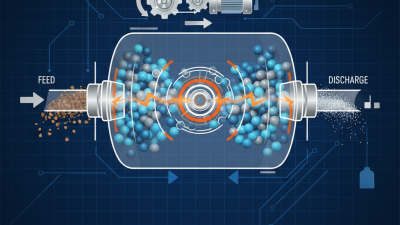
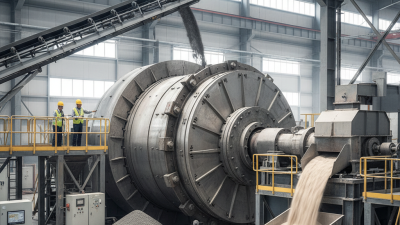
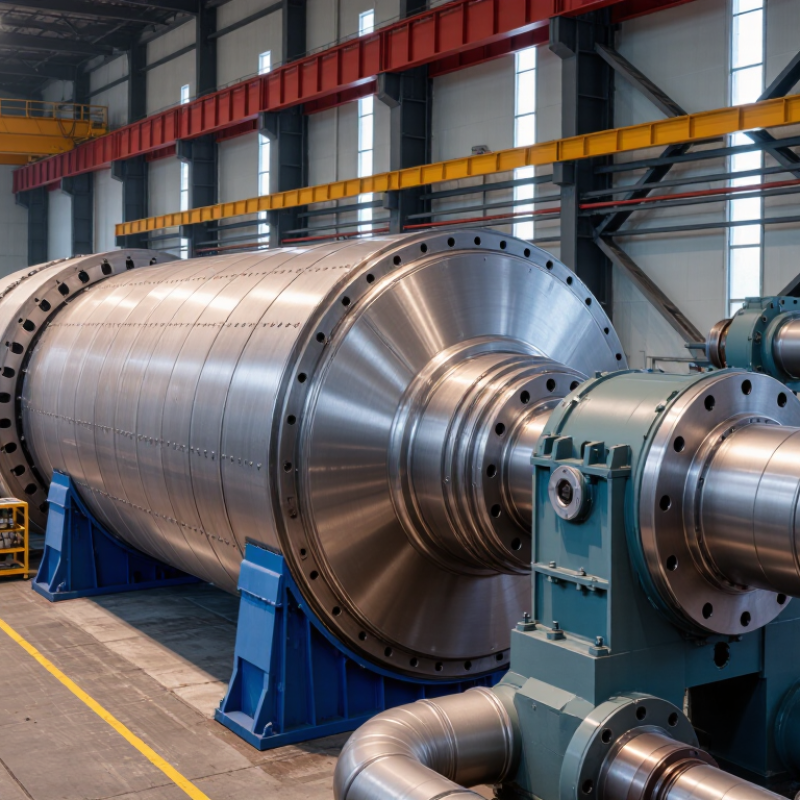
A semi-continuous grinding ball mill is a rotating cylinder that reduces ore or other mineral feed with steel balls. Material enters at a controlled rate and leaves after partial grinding. Unlike a batch mill, it does not require complete shutdown between loads. Unlike a fully continuous mill, its feed and discharge may follow timed or measured stages.
Inside the chamber, lifting liners raise the balls before they fall through the material. Impact breaks larger particles, while abrasion produces a finer product. Water may be added to form a slurry, helping transport particles through the mill. Operators monitor motor current, feed size, pulp density, noise, and discharge appearance. Small changes can affect residence time and final fineness.
This design suits plants needing flexible capacity and steady operation. It can handle changing ore conditions better than a rigid batch process. However, “semi-continuous” is not a perfect compromise. Poor control can create uneven filling, excessive wear, or coarse discharge. Engineers should check ball size distribution, liner condition, and sampling accuracy during commissioning. A practical sample near the outlet often reveals problems faster than a control panel. Maintenance teams also inspect trunnion seals, lubrication lines, and discharge screens. The best configuration depends on feed hardness, target particle size, moisture, and available space. There is no universal setting.
Technical Overview, Operating Characteristics, and Typical Selection Data
| Data Dimension | Typical Value or Classification | Description |
|---|---|---|
| Equipment Definition | Batch-fed, continuously discharged grinding system | A semi-continuous grinding ball mill receives fresh feed at controlled intervals while ground material is discharged continuously or at regular short intervals. |
| Main Grinding Principle | Impact and attrition | Grinding occurs when rotating steel balls lift and tumble inside the mill, breaking particles through impact, compression, and abrasion. |
| Typical Mill Type | Horizontal cylindrical mill | The mill shell normally rotates around a horizontal axis and is fitted with wear-resistant liners to protect the shell and improve grinding action. |
| Common Application Materials | Ores, minerals, cement raw materials, slag, ceramics, and chemical solids | The equipment is suitable for wet or dry grinding when the material is compatible with the selected liner, grinding media, and process conditions. |
| Typical Feed Size | Up to approximately 10–25 mm | Actual feed size depends on material hardness, mill diameter, liner design, and the required product fineness. Coarse feed may require crushing before milling. |
| Typical Product Size | Approximately 45–200 μm for many applications | Final particle size depends on residence time, mill speed, ball size distribution, material properties, circuit design, and whether classification is used. |
| Operating Mode | Intermittent charging with steady-state discharge | This mode provides more process continuity than a fully batch mill while avoiding the fully continuous feed-control requirements of a continuous mill circuit. |
| Wet Grinding | Water or process liquid added as required | Wet operation can reduce dust, improve handling of certain ores, and support closed-circuit classification, but it requires slurry management and downstream dewatering. |
| Dry Grinding | No process liquid required | Dry operation simplifies material recovery and avoids slurry handling, but dust collection, ventilation, and temperature control may be necessary. |
| Typical Speed Range | Approximately 65–80% of critical speed | Critical speed is the theoretical speed at which grinding media would remain against the mill shell. Actual operating speed is normally lower to promote cascading and effective impact. |
| Critical Speed Formula | nc ≈ 42.3 ÷ √D rpm | In this commonly used approximation, D is the mill inside diameter in metres. The actual design speed also depends on liner profile and grinding objective. |
| Grinding Media | Steel balls, commonly about 20–100 mm diameter | Media size is selected according to feed size, hardness, target product size, and mill dimensions. Smaller balls generally provide more contact points for fine grinding. |
| Typical Ball Filling | Approximately 25–40% of mill volume | The optimum filling level varies with mill design, material characteristics, speed, and whether the process is wet or dry. |
| Mill Diameter Range | Approximately 0.9–5.0 m for many industrial installations | Small laboratory and pilot mills fall below this range, while large mineral-processing mills may exceed it. Final sizing requires throughput and work-index calculations. |
| Mill Length-to-Diameter Ratio | Commonly about 1.0–2.5 | The ratio influences material residence time, flow pattern, grinding efficiency, and whether the mill is configured for open-circuit or closed-circuit operation. |
| Throughput Range | From laboratory scale to several hundred tonnes per hour | Capacity is controlled by mill dimensions, motor power, material hardness, feed size, moisture, product fineness, and classification efficiency. |
| Drive Arrangement | Motor, gearbox or pinion drive, and girth gear | Industrial mills commonly use a motor-driven gear arrangement. Smaller units may use a direct or geared motor depending on torque and speed requirements. |
| Power Requirement | Application-dependent; commonly tens to several thousand kW | Required power is influenced by mill diameter, mill length, ball charge, rotational speed, material work index, and target capacity. |
| Liner Materials | Rubber, steel, composite, or high-chrome materials | Liner selection balances impact resistance, abrasion resistance, noise, energy efficiency, and compatibility with the processed material. |
| Control Parameters | Feed rate, mill speed, ball charge, water addition, and discharge rate | Maintaining stable values for these parameters helps control product fineness, power draw, mill loading, and operating stability. |
| Advantages | Flexible operation and moderate process continuity | Semi-continuous operation can reduce frequent full shutdowns, support variable production schedules, and provide better control than a purely batch process. |
| Limitations | Less stable than a fully continuous circuit | Periodic charging may cause fluctuations in mill load, product quality, and power consumption if feed intervals and operating conditions are not properly controlled. |
| Energy Efficiency Factors | Closed-circuit classification, suitable media, and optimized speed | Efficient classification prevents excessive overgrinding, while correct media grading and operating speed improve the proportion of useful grinding energy. |
| Material Moisture Consideration | Low to moderate moisture preferred for dry grinding | Excessive moisture can cause material coating, reduced flow, and mill blockage in dry operation. Wet grinding is often preferred for highly moist feed. |
| Maintenance Items | Liners, grinding media, bearings, seals, gears, and discharge components | Routine inspections should include liner wear, gear lubrication, bearing temperature, vibration, motor current, and the condition of feed and discharge systems. |
| Safety Requirements | Guarding, lockout procedures, dust control, and noise protection | Operators should prevent access to rotating components, isolate electrical and mechanical energy before maintenance, and control dust and noise where required. |
| Selection Inputs | Capacity, feed size, product size, material hardness, moisture, and process type | These inputs are required for preliminary mill sizing and should be verified through laboratory testing, pilot testing, or established process data before final equipment selection. |