Leave Your Message
Choosing the 2026 Best Fine Cone Crusher requires more than comparing capacity figures. Global buyers need equipment that matches local rock, plant layout, power supply, and maintenance skills. A crusher performing well in granite may struggle with abrasive limestone or wet feed. Real conditions matter.
This guide examines Fine Cone Crusher options through practical engineering criteria. We consider reduction ratio, closed-side setting, liner wear, hydraulic protection, and product consistency. We also review motor efficiency, control systems, spare-part availability, and technical support. Small details matter. A clear maintenance platform can save hours during liner replacement. Reliable sensors can prevent costly overload damage.
Our evaluation draws on manufacturer specifications, application experience, and common quarry operating practices. Buyers should request test data for their specific material before approving an order. Laboratory results are useful, but field performance can differ. That gap deserves attention. No machine is best for every site.
Supplier transparency also influences the final decision. Confirm production capacity under stated feed conditions. Check warranty terms, commissioning support, safety documentation, and regional service coverage. Ask how quickly critical parts can arrive. A low purchase price may become expensive when a seal, liner, or bearing remains unavailable.
This introduction prepares readers to compare leading models with a careful, evidence-based approach. We may overlook emerging technologies or regional advantages. That is why independent verification remains essential. The right crusher should deliver stable output, manageable operating costs, and dependable service throughout its working life.
2026 Best Fine Cone Crusher for Global Buyers
What Is a Fine Cone Crusher and How Does It Work?
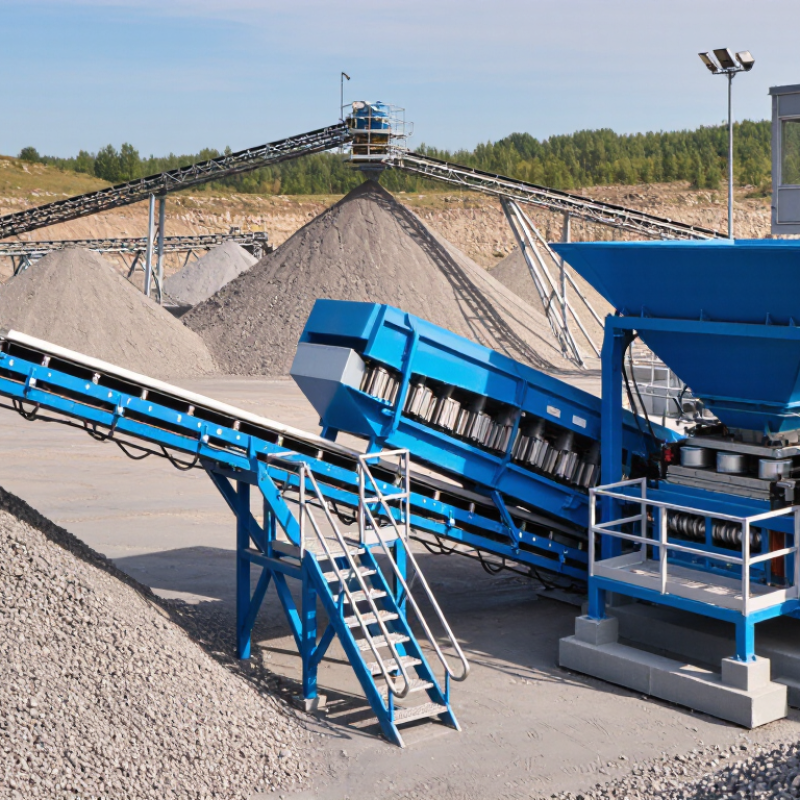
A fine cone crusher reduces pre-crushed rock into smaller, more uniform particles. It uses a rotating mantle inside a fixed concave. As the mantle turns, the crushing chamber repeatedly compresses stone. The closed-side setting controls the final size. A tighter setting usually produces finer material, but it can increase power demand and wear.
The process suits manufactured sand, road base, and fine aggregates. The USGS Mineral Commodity Summaries 2025 estimated U.S. crushed stone production at about 1.5 billion metric tons in 2024. Such volume makes consistent grading important. Industry energy studies also identify comminution as a major electricity user. However, output depends on feed hardness, moisture, cavity design, and screening. A perfect setting does not exist. Field operators sometimes chase smaller particles and create unnecessary recirculating load.
Tips: Keep the feed evenly distributed across the chamber. Check the discharge belt for damp material and buildup. Measure product size with regular sieve tests, not visual judgment. The European Commission’s Best Available Techniques reference documents stress process monitoring and energy efficiency. Those practices matter more than a specification sheet alone. In practical trials, a slightly wider setting may deliver better tons per kilowatt-hour. That result can feel disappointing, but it deserves attention.
| Data Dimension | Typical Fine Cone Crusher Data | How It Works or What It Means | Buyer Selection Guidance |
|---|---|---|---|
| Definition | A secondary, tertiary, or quaternary crushing machine designed to produce a relatively fine and well-shaped product. | A moving mantle compresses material against a stationary concave inside a crushing chamber. | Choose it when the process requires a smaller product after primary or secondary crushing. |
| Typical Applications | Manufactured sand, aggregates, railway ballast, quarry products, and mineral processing. | The crusher reduces already-sized feed through repeated inter-particle and chamber compression. | Confirm whether the final product must meet road, concrete, asphalt, or mineral-processing specifications. |
| Common Crushing Stage | Usually tertiary or quaternary crushing; sometimes used for secondary crushing with suitable feed. | Fine chambers and smaller closed-side settings create a finer discharge than coarse chambers. | Use a closed-circuit arrangement when consistent product sizing is important. |
| Typical Feed Size | Often approximately 20–100 mm, depending on crusher size, chamber design, material, and operating setting. | The feed must be controlled so oversized particles do not overload the crushing chamber. | Match the maximum feed size with the selected chamber and verify the allowable feed gradation. |
| Typical Product Size | Common finished-product ranges are approximately 3–25 mm; actual output depends on setting and feed characteristics. | A smaller closed-side setting generally produces a finer product, but may reduce capacity. | Request a particle-size distribution rather than relying only on the nominal discharge size. |
| Typical Capacity Range | Approximately 30–500 metric tons per hour for many commercial fine-crushing configurations. | Capacity is influenced by crusher size, feed gradation, rock hardness, moisture, closed-side setting, and circuit design. | Use the capacity at the required product size, not the maximum open-circuit capacity. |
| Reduction Ratio | Commonly about 3:1 to 6:1 in fine-crushing service, with the actual ratio varying by feed and product requirements. | The reduction ratio compares the feed top size with the product top size. | If a much higher reduction ratio is required, use multiple crushing stages instead of forcing one machine. |
| Motor Power | Typical installed power may range from approximately 90–750 kW across small to large industrial units. | The drive rotates the eccentric assembly, which produces the gyrating motion of the mantle. | Check site voltage, frequency, starting current, power factor, and available electrical capacity. |
| Crushing Principle | Continuous compression, with additional particle-on-particle crushing in some chamber and circuit conditions. | The mantle approaches and recedes from the concave, repeatedly compressing and releasing the feed. | Compression is generally suitable for hard and abrasive rock, provided wear parts are correctly selected. |
| Product Shape | Often produces cubical aggregate when operated with suitable chamber design, feed distribution, and reduction conditions. | Inter-particle crushing can improve shape by reducing some elongated and flaky particles. | Ask for flakiness, elongation, or shape test results when producing concrete or asphalt aggregate. |
| Closed-Side Setting | Often adjustable within a few millimeters to several tens of millimeters, depending on machine size and design. | The setting is the smallest distance between the mantle and concave during the crushing cycle. | Ensure the required setting is achievable without exceeding the machine's power or capacity limits. |
| Suitable Materials | Granite, basalt, diabase, quartzite, limestone, and other competent materials, subject to design limits. | The machine applies high compressive forces to break mineral particles along natural weaknesses. | Provide compressive strength, abrasiveness, bulk density, moisture, and clay-content data before selection. |
| Feed Moisture and Fines | Low to moderate moisture is generally preferred; excessive fines, clay, or wet feed may reduce flow and increase packing risk. | Fine or sticky material can block chamber voids and interfere with efficient compression. | Use scalping, screening, washing, or a different crushing arrangement when the feed is wet or clay-rich. |
| Circuit Configuration | Open circuit for simpler operation; closed circuit with a screen for tighter product control and higher efficiency. | Oversize from the screen returns to the crusher for additional reduction. | Select conveyors, screens, surge bins, and dust-control equipment as part of the complete circuit. |
| Main Wear Parts | Mantle, concave, feed plate, eccentric components, seals, and other chamber or drive-related parts. | Wear changes the chamber profile and can affect capacity, power draw, product shape, and product size. | Compare wear-life data, replacement time, local machining capability, and spare-parts availability. |
| Automation and Protection | Modern systems may include hydraulic adjustment, tramp-release protection, lubrication monitoring, overload protection, and remote monitoring. | Sensors and hydraulic systems help maintain safe operating conditions and protect the crusher from uncrushable material. | Prioritize automatic control when labor is limited or stable product quality is essential. |
| Advantages | High reduction efficiency, continuous operation, good cubicity potential, compact layout, and suitability for hard rock. | The gyratory motion provides repeated crushing strokes while the chamber remains continuously fed. | Best suited to operations needing reliable fine aggregate production and stable long-term throughput. |
| Important Limitations | Less suitable for highly sticky feed, uncontrolled oversize, excessive moisture, or large quantities of clay. | Poor feed preparation can cause plugging, unstable power draw, reduced capacity, and accelerated wear. | Evaluate feed preparation and screening before comparing equipment prices. |
| Best Purchasing Checklist | Confirm required capacity, feed size, product gradation, material properties, installed power, liner life, safety functions, service support, and total operating cost. | Crusher performance depends on the complete process rather than the machine alone. | Request a process guarantee based on the buyer's actual feed and target product, supported by test or reference data. |