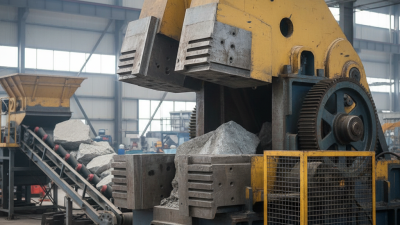
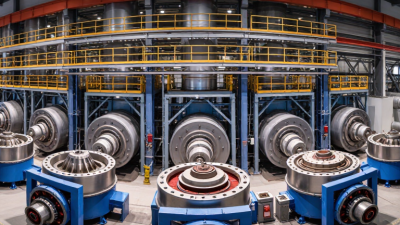
China Top Industrial Crusher Manufacturers for Global Buyers
China has become a major sourcing base for global buyers seeking reliable Industrial Crusher equipment. Its manufacturers supply jaw crushers, cone crushers, impact crushers, hammer crushers, and complete crushing plants. However, choosing a supplier requires more than comparing prices.
A practical evaluation begins with the material. Granite, limestone, recycled concrete, and iron ore behave differently inside the crushing chamber. Feed size, moisture, abrasiveness, capacity, and required output shape the correct machine choice. A crusher that performs well in a dry quarry may struggle with sticky material. Small details matter.
Dr. Steve Morrell, a recognized comminution specialist, puts it this way: “The best crusher is the one that fits the complete process.” His view reflects an important industry reality. Crusher performance depends on feeding, screening, conveying, maintenance, and operator experience. It does not depend on the machine alone.
This guide examines China’s leading Industrial Crusher manufacturers through practical buyer concerns. These include engineering capability, factory quality control, testing procedures, wear-part availability, automation, energy use, export experience, and after-sales support. Product certifications deserve attention, but certificates cannot replace application testing.
Look beyond polished brochures.
Experienced buyers should request material samples, performance data, installation references, and clear warranty terms. They should also confirm spare-part delivery times and technical support across borders. Some rankings may appear confident, yet supplier performance can vary by project and region. That weakness deserves honest consideration.
The strongest manufacturer is not always the largest. It is the partner that understands the feed material, communicates clearly, and supports stable production after delivery.
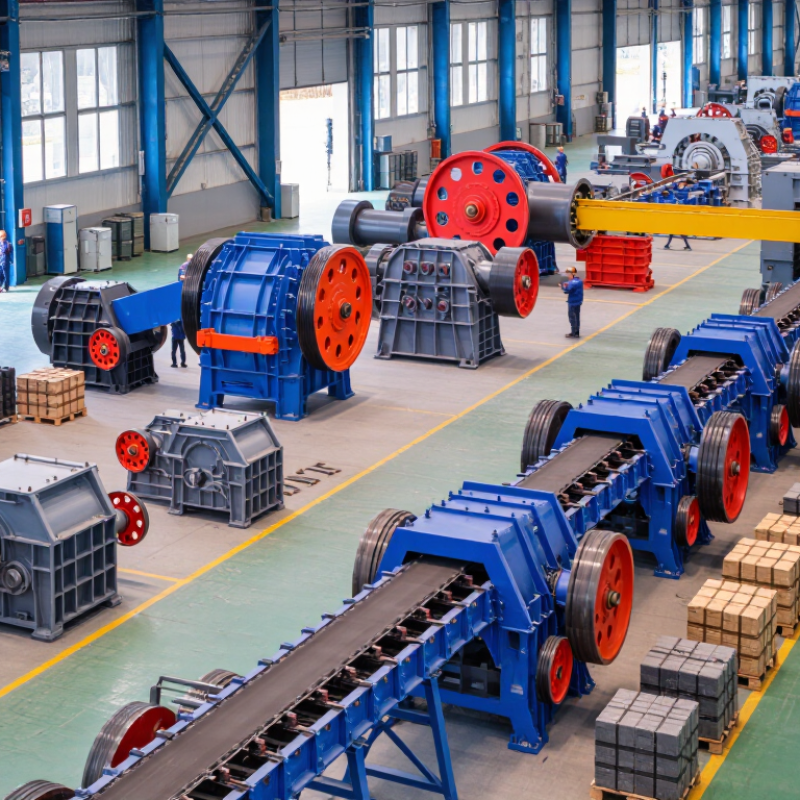
Industrial Crusher Types and Typical 3:1–10:1 Reduction Ratios
Industrial crusher selection starts with reduction ratio, not catalog size. This ratio compares feed size with product size. A 4:1 ratio turns a 400 mm feed into roughly 100 mm material. Actual results change with rock hardness, moisture, chamber design, and feed grading.
Jaw crushers commonly deliver about 3:1–6:1 reduction in primary duty. Gyratory units often operate near 3:1–5:1. Cone crushers typically achieve 3:1–6:1 during secondary or tertiary processing. Impact crushers can approach 10:1 when the feed is well controlled and the material is moderately abrasive.
These ranges align with practical guidance in the SME Mining Engineering Handbook and aggregate processing literature. The U.S. Geological Survey’s Mineral Commodity Summaries 2024 estimated U.S. crushed-stone production at approximately 1.5 billion metric tons in 2023. That scale makes energy, wear, and product consistency important purchasing factors.
Do not treat 10:1 as a guaranteed result. A hard, flaky feed may produce too many fines and accelerate blow-bar or liner wear. A 5:1 target may be more reliable. Technical reports from the European Commission’s Best Available Techniques reference also stress controlled feed conditions and staged crushing for efficient operation. Small details matter: a blocked grizzly, uneven belt loading, or wet clay can reduce throughput quickly. The ratio is useful, but it is not the whole design. Many buyer specifications remain too optimistic. Feedback from test runs should challenge the original calculation.
China’s Leading Crusher Manufacturers by 50–2,000 t/h Rated Capacity
China Top Industrial Crusher Manufacturers for Global Buyers
China’s Leading Crusher Manufacturers by 50–2,000 t/h Rated Capacity
China’s industrial crusher sector serves projects from small aggregate sites to high-volume mining operations. Rated capacity commonly ranges from 50 to 2,000 t/h. The number matters. However, it rarely tells the whole story.
Machines rated at 50–300 t/h often suit quarry expansion, recycled aggregates, and regional construction projects. Systems from 300–1,000 t/h support larger limestone, granite, and basalt operations. Capacities above 1,000 t/h usually require staged crushing, robust conveyors, and careful stockpile design. A supplier should explain how feed size, moisture, rock hardness, and closed-side setting affect real output. Published figures can look attractive. Field performance may differ.
Experienced manufacturers normally provide drawings, wear-part recommendations, factory testing, and commissioning guidance. Buyers should request material test results, inspection records, and references from comparable installations. Ask whether the quoted capacity applies to the complete process or one crusher only. This distinction prevents costly misunderstandings. A perfect capacity promise is usually a warning sign. Even reliable equipment may underperform when feeding is uneven or maintenance is delayed. I would also examine access doors, lubrication points, dust-control provisions, and spare-part availability. These details seem minor until production stops.
Jaw, Cone, Impact, and VSI Crushers: Output and Feed-Size Data
China Top Industrial Crusher Manufacturers for Global Buyers
Jaw, Cone, Impact, and VSI Crushers: Output and Feed-Size Data
Crusher selection starts with feed size, rock strength, moisture, and the required product curve. The 2024 U.S. Geological Survey Mineral Commodity Summaries reported about 1.5 billion metric tons of crushed stone production in the United States in 2023. Such volumes demand stable machines, not only high headline capacity.
Typical jaw crushers accept 500–1,200 mm feed and produce 100–300 mm output. Cone crushers usually handle 150–350 mm feed, delivering 10–75 mm products at roughly 100–800 tonnes per hour. Impact crushers may accept feed below 800 mm and produce 20–100 mm material. Their capacity commonly ranges from 100–500 tonnes per hour. VSI crushers work best with smaller feed, often 25–100 mm, and make cubical products between 0–25 mm. Output may reach 80–400 tonnes per hour, depending on rock and rotor speed.
These figures are practical ranges, not promises. Mineral Processing Technology, 8th Edition, stresses the influence of closed-circuit screening, wear, and material properties on final performance. Field testing matters. A wet, abrasive stone can cut capacity sharply. That detail is easy to overlook. Buyers should request test data, liner-life estimates, motor power, and feed openings under matching conditions. A catalog number is not a site guarantee.
China Top Industrial Crusher Manufacturers for Global Buyers
Jaw, Cone, Impact, and VSI Crushers: Output and Feed-Size Data
This chart presents representative industry operating ranges for major crusher types. Throughput is shown as a range in metric tonnes per hour, while maximum nominal feed size is shown in millimetres. Actual performance depends on equipment configuration, material hardness, moisture, gradation, and operating conditions.
Global Buyer Standards: ISO 9001, CE, and 80–120 dB Noise Limits
China Top Industrial Crusher Manufacturers for Global Buyers
Global buyers often begin with ISO 9001, CE compliance, and measurable noise performance. These are practical screening points for industrial crusher suppliers. ISO 9001 should cover design, purchasing, production, inspection, and corrective actions. Ask for the certificate scope, audit status, and quality records. A certificate alone proves little without traceable procedures.
CE compliance requires more than a printed logo.
The supplier should identify applicable European requirements and provide a Declaration of Conformity. Technical files, risk assessments, electrical diagrams, and safety instructions should match the delivered crusher. Check guarding, emergency stops, dust controls, and lockout points during factory inspections. Small document gaps can become costly site delays.
Noise limits need careful measurement.
An 80–120 dB range is broad, so buyers should request dB(A) readings, test distance, operating load, and microphone position. A crusher may measure 88 dB(A) in an open yard but sound much louder near a feed hopper. Enclosures, rubber liners, vibration isolation, and remote operation can reduce exposure. Hearing protection remains necessary in many conditions. Do not trust one attractive reading. Ambient noise, material hardness, and maintenance can change results. I would also require installation guidance and repeat testing after commissioning, because factory data may not reflect a crowded production site.