Top Fine Impact Crusher Options for Global Buyers?
In the competitive landscape of industrial equipment, the Fine Impact Crusher stands out for its efficiency and versatility. This machine is essential for reducing material size in various sectors, such as mining and construction. Buyers worldwide seek reliable options that deliver high performance while maintaining operational cost-efficiency.
Many manufacturers offer Fine Impact Crushers, each with unique features. Understanding these options helps in making informed decisions. Some machines may excel in specific applications, while others provide general versatility. Prospective buyers should recognize the importance of matching the right crusher to their unique needs.
It is crucial to evaluate the specifications and after-sales support provided by manufacturers. Experienced users highlight the necessity of reliable service and maintenance options. Buyers should focus on brands with a proven track record in the industry. Reflecting on the importance of these factors can guide buyers toward making the most suitable choice.
Understanding Fine Impact Crushers and Their Applications
Fine impact crushers are essential in various industries for crushing materials into fine particles. They are widely used in mining, construction, and recycling sectors. According to a report by MarketsandMarkets, the global demand for fine impact crushers is projected to grow significantly, driven by the increasing mineral processing activities.
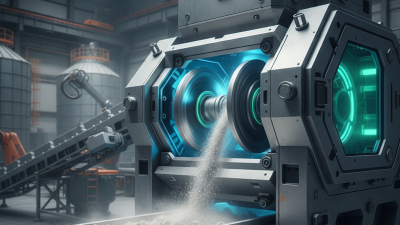
These machines operate on the principle of high-speed impact, producing finely crushed materials with minimal energy consumption. The design allows flexibility, enabling them to handle different materials, including hard rock and medium-hard ores. Industry experts highlight that efficiency often varies among machines. Regular maintenance is vital to ensure consistent performance and longer lifespan.
Despite advancements, user feedback indicates some limitations. For instance, certain models may struggle with high moisture content in materials. Understanding these nuances helps buyers make informed decisions. Regular evaluations and performance analysis can lead to improved operation and reduced downtime. Investing in the right type of fine impact crusher aligns with operational goals.
Key Features to Consider When Choosing a Fine Impact Crusher
When selecting a fine impact crusher, key features should drive the decision-making process. One critical factor is the crushing ratio. A higher ratio typically means better efficiency in reducing material size, ultimately saving time and energy. Industry reports indicate that optimal crushing ratios can reach up to 30:1, balancing power consumption and output quality.
Another essential feature is the material compatibility. Many crushers excel with specific materials, while others struggle. Understanding the material’s hardness and abrasiveness helps in choosing the right machine. Research shows that fine impact crushers designed for varied materials can increase operational flexibility by over 20%. It’s crucial to match the crusher's design with the materials you intend to process.
Maintenance requirements cannot be overlooked. Regular upkeep ensures longevity and consistent performance. Surprisingly, studies suggest that up to 30% of operational downtime stems from inadequate maintenance. Assessing service availability and part replacement cycles is vital. It reflects on the overall operational efficiency and can prevent unforeseen costs.
Top Fine Impact Crusher Options for Global Buyers
This bar chart illustrates key specifications of different fine impact crushers, including their throughput, power consumption, weight, and cost. These factors are essential for global buyers when evaluating their options in the market.
Top Brands and Models of Fine Impact Crushers in the Market
Fine impact crushers are essential in various industries, including construction, mining, and recycling. They efficiently crush rocks and minerals to produce fine materials. The effectiveness of these crushers is largely determined by their design and technology. Recent industry data indicates that the global fine impact crusher market is projected to grow at a CAGR of around 5% through 2026. This growth highlights the rising demand for high-quality crushing solutions.
Numerous brands dominate the fine impact crusher landscape. Leading models often include features such as advanced rotor designs and customizable settings. These enhancements contribute to improved operational efficiency and reduced wear rates. However, not all models deliver on their promises. Some may underperform due to maintenance neglect or improper application. Proper training and routine checks are crucial for optimal performance.
Many buyers should analyze potential acquisitions critically. The choice of a fine impact crusher should align with specific operational needs. Approaches can vary widely. Certain applications require a focus on throughput, while others prioritize energy efficiency. Recognizing the nuances can prevent costly mistakes. Buyers must invest time in researching specifications and case studies to make informed decisions.
Comparative Analysis of Performance and Efficiency
When selecting fine impact crushers, buyers must consider performance and efficiency thoroughly. Recent industry reports indicate that the efficiency of these crushers can vary significantly. Typical machines show an efficiency range of 60%-85%. However, some specialized units reach up to 90%. This discrepancy highlights the importance of evaluating specific needs and operational contexts.
Moreover, the energy consumption of these crushers is a crucial factor. The average energy consumption for many models fluctuates between 20 kW and 40 kW per ton of crushed material. Selecting a unit with lower energy demands can lead to substantial long-term operational savings. However, higher efficiency models may come with a steeper initial cost. This trade-off requires careful consideration.
The lifespan and maintenance needs of these machines also play vital roles. Reports suggest that finely tuned models may require more frequent maintenance yet provide superior output quality. Conversely, simpler designs may have longer lifespan but lack the performance needed for certain applications. Buyers must weigh these elements to find the optimal balance between efficiency and sustainability.
Top Fine Impact Crusher Options for Global Buyers
| Model |
Capacity (TPH) |
Max Feed Size (mm) |
Power (kW) |
Weight (kg) |
Efficiency (%) |
| Model A |
100 |
30 |
132 |
3500 |
90 |
| Model B |
150 |
35 |
160 |
4000 |
92 |
| Model C |
200 |
40 |
200 |
4500 |
91 |
| Model D |
250 |
45 |
250 |
5000 |
93 |
Global Trends in Fine Impact Crusher Technology and Innovation
The global fine impact crusher market is evolving. Recent studies show that the industry is projected to grow at a CAGR of 4.5% from 2023 to 2028. This growth is driven by increasing demand across various sectors, including construction and mining. The rising need for efficient size reduction processes has sparked innovation in crusher technology.
Recent advancements in materials science have led to more durable components. These innovations enhance performance and reduce maintenance costs. For example, improved rotor designs are now capable of handling tougher materials, which increases throughput while minimizing wear. Reports indicate that the efficiency of modern impact crushers can exceed 90% in certain applications.
Another trend is the integration of IoT technology. Smart crushers are emerging, equipped with sensors that provide real-time data on performance. This technology offers insights into operational efficiency and predictive maintenance. However, the adoption rate varies significantly across regions, highlighting a potential area for growth. Companies must consider these trends while staying mindful of environmental regulations. There are challenges in balancing innovation with sustainability, as some traditional methods still pose ecological risks.