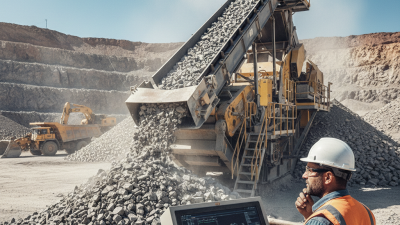
Choosing the right primary crusher is essential for efficiency and productivity in mining and construction. This decision impacts the entire material processing chain. There are various types of primary crushers available in the market. Each type has its unique features and advantages. Understanding these differences can guide buyers in making informed choices.
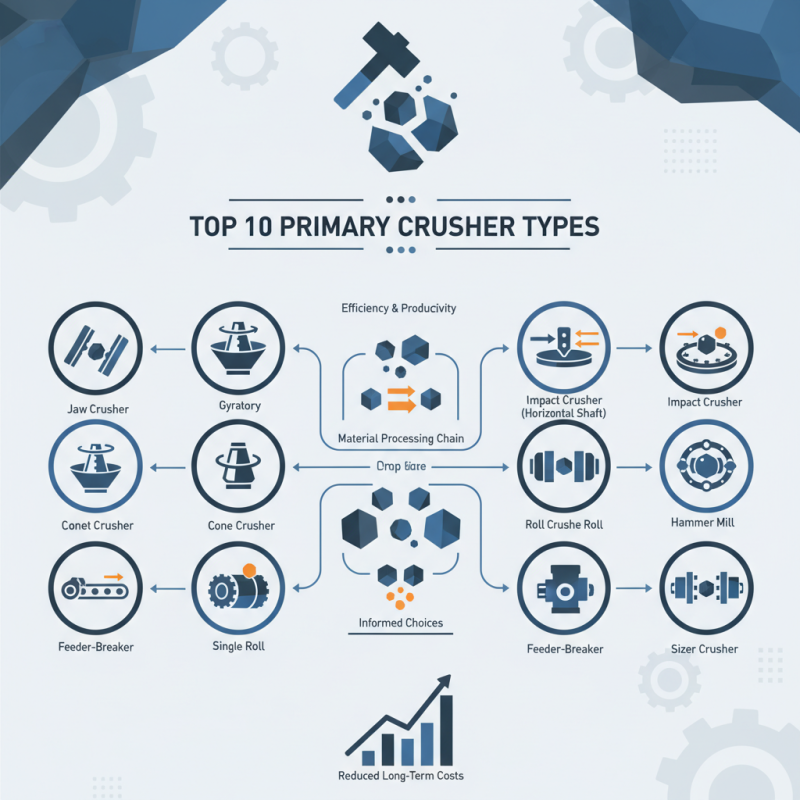
Primary crushers are crucial for breaking large rocks into manageable sizes. They play a vital role in the initial stages of material handling. Let's explore the top 10 types of primary crushers you should know. This knowledge is not just theoretical; it's practical and necessary for any industry professional.
Buyers often overlook the importance of selecting the correct primary crusher. Some factors to consider include the type of material and desired output size. Each type of crusher may perform differently under varying conditions. This realization can reshape one's approach to equipment selection. Ultimately, the right primary crusher enhances operational efficiency and reduces long-term costs.
Understanding primary crushers is essential for efficient material processing in various industries. These machines break down large rocks into smaller, manageable pieces. They play a vital role in mining, construction, and recycling operations. A primary crusher's design and function can greatly influence overall productivity.
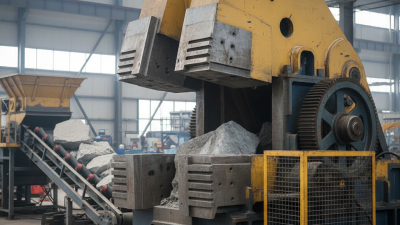
There are several types of primary crushers, including jaw crushers, gyratory crushers, and impact crushers. Each type has unique features that cater to specific crushing tasks. For instance, a jaw crusher is known for its ability to handle hard materials. In contrast, impact crushers excel in crushing softer materials. Choosing the right type depends on the material's characteristics and the desired output size.
However, selecting the correct crusher is not always straightforward. Factors like maintenance, operational costs, and energy efficiency must be considered. It’s crucial to assess your specific requirements. Misunderstanding the capabilities or limitations of each type can lead to inefficient operations or increased costs. Therefore, investing time in research and expert consultation is advisable.
| Crusher Type | Description | Advantages | Common Applications |
|---|---|---|---|
| Jaw Crusher | A primary crusher used to reduce large rocks into smaller pieces. | High efficiency, durable, suitable for hard materials. | Mining, construction, aggregate processing. |
| Gyratory Crusher | A crusher with a conical head and a rotating crushing surface. | Excellent for large-scale operations, high capacity. | Ore processing, stone mining. |
| Impact Crusher | Uses impact force to crush materials, ideal for softer rocks. | Versatile, reduces material size effectively. | Recycling, quarrying, concrete production. |
| Cone Crusher | Crushes materials by compressing them between a stationary cone and a moving cone. | Highly efficient, good for hard materials. | Mining, metallurgy, construction. |
| Roll Crusher | Crushes materials using two rotating rolls. | Produces fewer fines, energy-efficient. | Coal, clay, mineral processing. |
| Hammer Mill | Uses hammers mounted on a rotor to crush materials. | Versatile, effective for soft to medium-hard materials. | Feed, grain, biomass processing. |
| Cable Granulator | Designed for efficiently separating copper and other metals from wires. | Specialized for recycling, minimal material loss. | Recycling industry, electrical and electronic waste. |
| Vertical Shaft Impact Crusher (VSI) | Crushes hard materials by impacting them with high-speed rotor blades. | Efficient for production of high-quality aggregates. | Construction, aggregates, sand production. |
| Swing Hammer Crusher | Uses swinging hammers to crush materials against a stationary surface. | Compact design, low energy consumption. | Chemical, food, and mineral processing. |
| Pitman Arm Crusher | Utilizes a moving pitman as the key component to crush materials. | Reliable, efficient, suitable for heavy-duty applications. | Mining, quarrying, heavy-duty applications. |
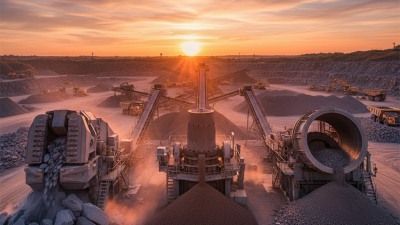
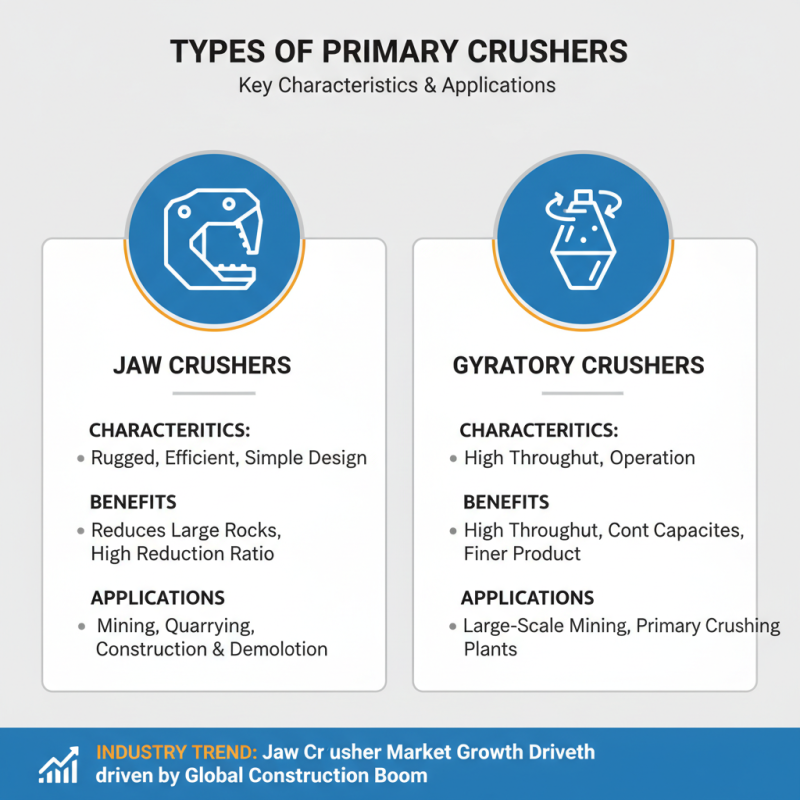
Primary crushers are vital in the material processing industry. Understanding the key characteristics and applications of various types can help in making informed purchasing decisions. Jaw crushers, for example, are widely known for their ruggedness and efficiency. They excel in reducing large rocks into manageable sizes for further processing. Meanwhile, gyratory crushers offer a similar benefit with a higher through-put capacity. Data from industry reports suggest that the jaw crusher market is projected to grow significantly, driven by increased construction activities globally.
Another popular type is the impact crusher. This type uses high-speed impact force to break materials. It's particularly effective for softer rocks and recycling applications. According to a report by Research and Markets, the global impact crusher market could increase by 5.4% annually between 2023 and 2028. These devices are essential in sectors like mining and aggregate production.
Tip: When selecting a primary crusher, consider the material characteristics. For instance, harder materials may require a more robust crushing mechanism. Remember, improper choice can lead to inefficiencies and higher operational costs.
Understanding specific applications is crucial. For example, cone crushers perform well in secondary and tertiary stages. They produce a finer product, ideal for high-quality construction materials. Awareness of these specifics helps mitigate risks of underperformance or equipment failure.
The design of a primary crusher significantly influences its efficiency and output. A well-designed crusher not only optimizes the size reduction process but also enhances the overall performance of a crushing system. Factors such as the type of crusher, its geometry, and the materials used can alter how effectively it breaks down materials. For example, the angle of the crushing chamber can determine the size and shape of the output particles. Suboptimal designs can lead to increased energy consumption and reduced output.
Moreover, consideration of the material characteristics is crucial. Different materials respond differently to various crushing techniques. A crusher designed for hard rocks may not perform well with softer materials. Understanding the material's abrasiveness and moisture content can help in selecting the right design. Even within the same design, wear and tear can affect long-term efficiency. Regular maintenance is essential, yet often overlooked by operators. Monitoring wear patterns can provide insight into potential design flaws or the need for adjustments. The interplay between design and material characteristics dictates the success of any crushing operation.
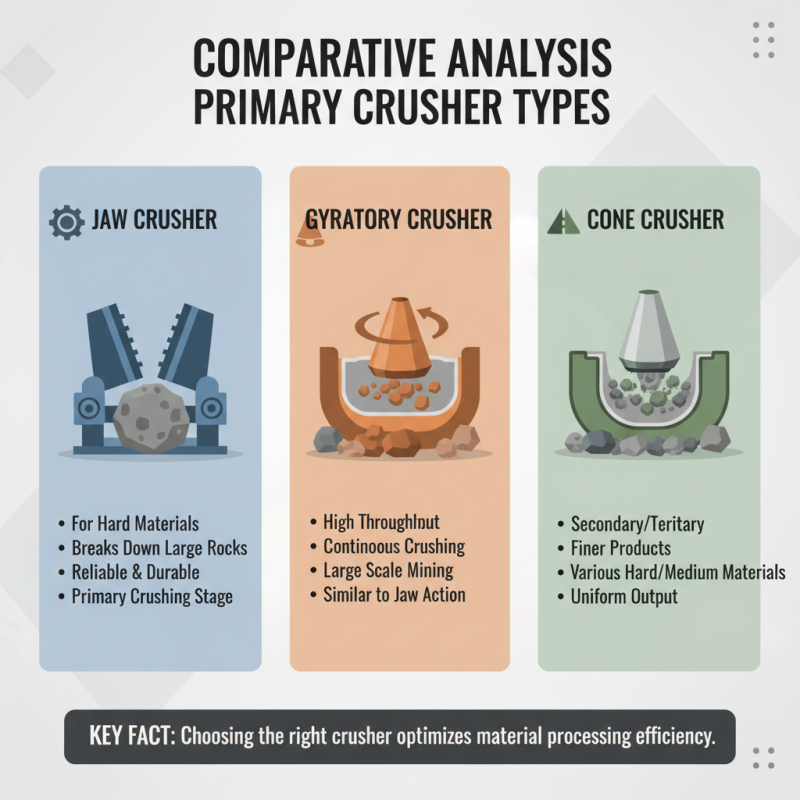
Choosing the right primary crusher is crucial for efficient material processing. Different types of crushers serve unique functions. Jaw crushers are often used for hard materials, breaking them down into manageable pieces. They work well for hard rock and are known for their reliability.
In contrast, cone crushers are more effective for medium to hard materials. Their design allows for a finer output, ideal for applications needing precise particle size. Impact crushers, on the other hand, excel at processing softer materials. They produce high volumes of sand and gravel by using high-speed impact forces.
While these general characteristics guide buyers, understanding the limitations is vital. Each crusher type has a specific operating range. Overloading a unit or misusing it can decrease efficiency and increase wear. Evaluating the specific needs of your operation is essential. Consider the material type and desired output. Selecting the right crusher type can significantly affect production rates and overall project success.
When choosing a primary crusher, cost considerations play a key role in decision-making. Crushers can vary significantly in price, often influenced by material types and processing capacity. According to industry reports, initial equipment costs can represent up to 70% of the total expenses over the crusher's lifespan. Maintenance and operational costs also factor heavily into the budget. It's vital to look beyond the purchase price and include these ongoing expenses in the overall assessment.
Buyers should evaluate their specific requirements. Factors such as the material's hardness and the desired output size are crucial. For instance, a primary crusher for hard rock may incur higher operational costs due to wear and tear. Weighing efficiency and production rates against purchase and operational costs can help in making a more informed choice.
A report by a recognized mining journal highlights that selecting the right crusher can increase productivity by up to 30%. Yet, many buyers still overlook this crucial analysis, focusing only on upfront costs. This oversight might lead to higher long-term expenses and potential downtimes.