Top 10 Ultrafine Grinding Mill Manufacturers Worldwide?
Choosing the right Ultrafine Grinding Mill is rarely a simple matter of comparing advertised fineness.
Mineral processors must examine feed hardness, target particle size, throughput, energy consumption, wear resistance, and maintenance access. A mill producing 5-micron powder may still perform poorly if its output fluctuates or its liners wear too quickly. That detail matters. Factory trials, laboratory data, and long-term service records often reveal more than a polished brochure.
Dr. Barry A. Wills, a respected mineral-processing authority, has stated, “Grinding is the most energy-intensive operation in mineral processing.” This observation remains highly relevant when evaluating global manufacturers. An efficient Ultrafine Grinding Mill can reduce power demand, improve classification stability, and support more consistent downstream processing. However, efficiency depends on the complete system, including feed preparation, separators, ventilation, and control technology.
This guide examines ten leading Ultrafine Grinding Mill manufacturers worldwide. The comparison considers engineering experience, product reliability, technical support, application range, and evidence from industrial use. It also recognizes an uncomfortable fact: no manufacturer is ideal for every material or plant layout. Some suppliers excel in mineral applications, while others perform better with calcium carbonate, talc, graphite, pigments, or chemical powders.
The ranking is therefore a practical reference, not an absolute verdict. Performance can change with installation conditions.
Readers should verify specifications through site visits, sample testing, warranty terms, and transparent operating data. Small differences in moisture, feed size, or hardness can alter results significantly. That is where careful judgment matters.
Ultrafine Grinding Defined: D97 Below 10 μm and Feed Sizes Below 3 mm
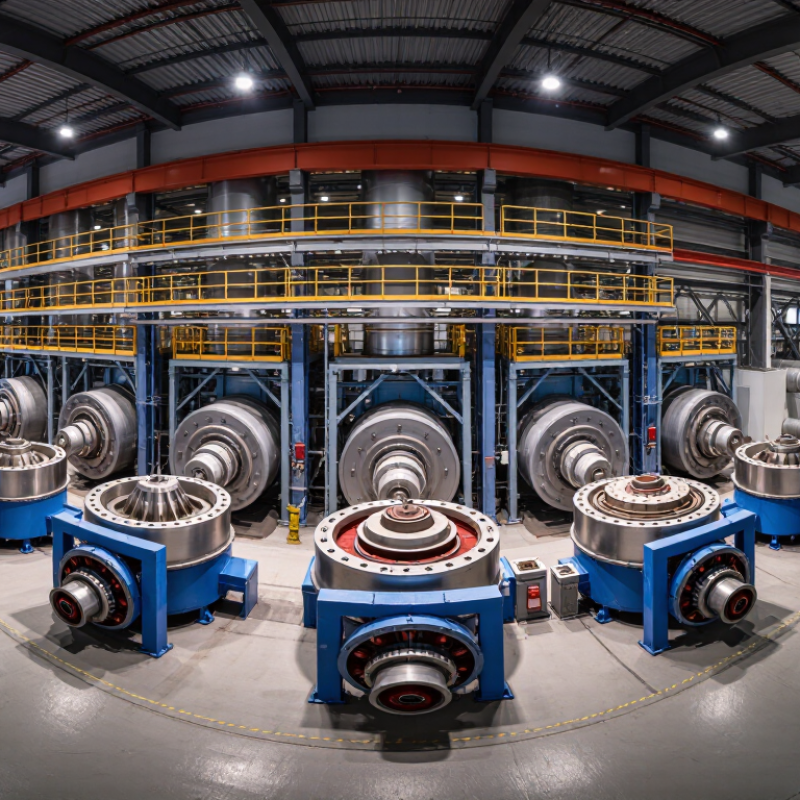
Ultrafine grinding is best defined by measurable output, not by a mill’s name. Here, the target is a D97 below 10 μm, with feed particles smaller than 3 mm. D97 means 97% of measured particles are at or below the stated size. ISO 13320:2020 describes laser-diffraction methods for particle-size analysis; consistent sampling and dispersion matter because small testing differences can shift the reported result. A powder that looks silky may still miss the specification.
Why feed size matters
The feed limit is practical, too. A few coarse fragments can destabilize feeding, raise wear, or leave an oversized tail in the final distribution.
Track feed size, throughput, temperature, and specific energy together, then verify the product with repeat measurements. The US Department of Energy’s 2007 Mining Industry Energy Bandwidth Study identifies comminution as a significant energy-use area in mining, a reminder that finer output can carry a real power cost. Results vary by material, moisture, and machine setup.
Tips: Keep a representative sample, record the test method, and check D97 alongside D50 and the full size curve. Don’t trust one reading. This may sound fussy, but sampling errors are easy to overlook. A realistic trial should use the actual feed and operating rate; lab results alone can flatter performance.
Key Evaluation Metrics: Capacity, Specific Energy, Wear Rate, and D50 Control
Top 10 Ultrafine Grinding Mill Manufacturers Worldwide
Comparing ultrafine grinding mill manufacturers requires more than reading capacity claims. Capacity should be tested with the same feed size, moisture, and hardness. A mill rated at 10 tonnes per hour may deliver less with sticky minerals. Ask for pilot data, not only brochure figures. Record stable throughput, product temperature, and operating pressure during each trial.
Specific energy shows the power needed for each tonne of finished powder. Use kilowatt-hours per tonne, based on the same D50 and feed condition. A lower number usually indicates better grinding efficiency. However, motor efficiency, classifier settings, and recycled load can distort comparisons. Check the complete circuit, not the mill motor alone.
Wear rate needs equal attention. Measure liner, rotor, and grinding media loss in grams per tonne. Inspect particle contamination after extended operation. D50 control is equally practical. A reliable system should hold the target median size during changing feed conditions. Laser diffraction results should include sampling details and repeat tests. Small sampling errors can change the result. That part is often overlooked. In plant visits, observe discharge stability, maintenance access, and dust sealing. A clean spreadsheet can still mislead when test methods differ. Rechecking questionable data is not wasted time; it may prevent an expensive selection mistake.
Top 10 Ultrafine Grinding Mill Manufacturers Worldwide? - Key Evaluation Metrics: Capacity, Specific Energy, Wear Rate, and D50 Control
Comparative engineering benchmark dataset for dry ultrafine grinding systems. Values are representative operating ranges for mineral powders under stable feed conditions; actual performance varies with material hardness, moisture, feed size, classifier settings, and product specification.
| Rank |
Anonymous Manufacturer Profile |
Typical Capacity
(t/h) |
Specific Energy
(kWh/t) |
Wear Rate
(g/t) |
Controllable D50
(μm) |
D50 Control
(± μm) |
Typical Application Focus |
| 1 |
Profile A |
1.5–12.0 |
22–38 |
8–18 |
3–15 |
±0.8 |
High-purity mineral powders and industrial fillers |
| 2 |
Profile B |
2.0–15.0 |
24–42 |
12–25 |
4–20 |
±1.0 |
Calcium carbonate, dolomite, and silica processing |
| 3 |
Profile C |
0.8–10.0 |
28–48 |
10–22 |
2–12 |
±0.7 |
Fine chemicals, pigments, and specialty materials |
| 4 |
Profile D |
3.0–20.0 |
35–55 |
18–35 |
5–25 |
±1.5 |
Large-scale mineral and construction-material production |
| 5 |
Profile E |
1.0–8.0 |
25–40 |
7–16 |
1.5–10 |
±0.6 |
Contamination-sensitive powders and advanced ceramics |
| 6 |
Profile F |
2.5–18.0 |
38–60 |
20–42 |
6–30 |
±1.8 |
High-throughput limestone and industrial mineral lines |
| 7 |
Profile G |
0.5–6.0 |
30–52 |
9–20 |
2–15 |
±0.9 |
Research-scale, specialty, and pharmaceutical-grade powders |
| 8 |
Profile H |
1.5–11.0 |
31–50 |
15–30 |
3–18 |
±1.2 |
Battery minerals, graphite, and functional powders |
| 9 |
Profile I |
2.0–14.0 |
40–65 |
22–45 |
5–35 |
±2.0 |
Abrasive minerals and high-hardness feed materials |
| 10 |
Profile J |
0.7–9.0 |
29–47 |
13–28 |
2–20 |
±1.1 |
Compact modular systems for diversified powder production |
Top 10 Global Manufacturers by Mill Technology, Scale, and Product Range
The top ten ultrafine grinding mill manufacturers are best compared through technology, production scale, and product range. Leading suppliers usually offer air-classifying mills, stirred mills, jet mills, and ring-roller systems. Each design serves different materials, from limestone and kaolin to pigments and advanced mineral powders. Particle-size control matters. So does energy use.
Global scale reveals another difference. Larger manufacturers often operate several engineering centers, testing laboratories, and regional service teams. They can support pilot trials before full installation. This reduces costly design errors, although no supplier eliminates every risk. Some companies provide complete lines, including feeders, classifiers, dust collectors, and automation. Others focus on specialized mills. Real operating experience should guide the ranking, not brochure claims alone.
Tips: Request a material test with your exact feedstock. Check the final particle-size distribution, moisture tolerance, throughput, and power consumption. Ask for recent references in a similar industry. Inspect maintenance access, wear-part availability, and operator training. A smaller supplier may offer better customization, while a large supplier may provide stronger international support. Compare both carefully. And question unusually high capacity promises.
Manufacturer Profiles: Operating Fineness, Throughput, Power, and Applications
Top 10 Ultrafine Grinding Mill Manufacturers Worldwide?
Comparing the leading ten manufacturers requires more than reading catalogue values. In operating plants, fineness depends on feed moisture, hardness, classifier settings, and wear condition. Most advanced mills produce particles from roughly 2 to 45 microns. Some systems reach 1 micron under carefully controlled laboratory conditions. That figure can be misleading.
Manufacturer profiles should show practical throughput, not only maximum capacity. Compact mills often process 0.1 to 2 tonnes per hour and use 30 to 250 kilowatts. Larger production lines may handle 5 to 20 tonnes per hour with several hundred kilowatts installed. Airflow, separator speed, and cooling design strongly influence stable output. Operators usually collect samples every few hours and check particle size with laser analysis. Small details matter.
Application fit separates a capable supplier from a suitable one. Calcium carbonate, talc, graphite, silica, pigments, and industrial minerals require different grinding forces. Impact systems can deliver sharp, narrow distributions, while stirred mills often perform better at very fine targets. A reliable manufacturer should provide test-work data, wear estimates, energy measurements, and commissioning support. My early comparisons focused too heavily on nominal fineness. That was a mistake. Actual performance can fall when feed moisture rises or the classifier becomes overloaded. Buyers should request a pilot trial using their own material, because published numbers rarely tell the whole story.
Buyer Comparison: Air Classifiers, Ball Mills, Vertical Mills, and Jet Mills
Choosing among air classifiers, ball mills, vertical mills, and jet mills requires more than comparing advertised fineness. The USGS Mineral Commodity Summaries 2024 estimated global cement production at about 4.1 billion tonnes in 2023, showing the scale of energy-sensitive grinding demand. Vertical mills often suit high-throughput mineral and cement applications, with integrated drying and separation. Ball mills remain practical for robust, relatively coarse grinding, but their media wear and circuit footprint deserve careful costing. Air classifiers do not grind alone. They control particle size and can improve product consistency when paired with a suitable mill.
Jet mills deliver very fine powders without grinding media, which can reduce contamination. However, compressed-air demand can become substantial. US Department of Energy guidance indicates that compressed-air leaks may waste 20–30% of system output. That figure should trigger an on-site audit, not blind acceptance. Moisture, feed hardness, target d50, and allowable temperature rise can change the best choice quickly. A buyer should request measured kWh per tonne, classifier efficiency, wear-part life, and performance data from comparable feedstock. Laboratory results matter more than showroom claims. I would also challenge any ranking that ignores maintenance access, noise, dust control, and operator skill. The lowest capital price may become expensive after six months. A staged pilot test is slower, but it exposes uncomfortable assumptions before production investment.
Top 10 Ultrafine Grinding Mill Manufacturers Worldwide? — Buyer Comparison
Indicative particle-size ranges for selected technologies. This chart compares equipment types, not individual manufacturers.
Smaller values indicate finer particles. Ranges are indicative, not guaranteed specifications: achievable results depend on the material, feed size, operating conditions, and equipment configuration. An air classifier separates particles rather than grinding them, so its range refers to classification cut size.