How to Choose the Best Crushing Machine for Your Needs?
Selecting the right crushing machine is crucial for various industries, from mining to construction. According to Mark Smith, an industry expert at Crushing Solutions, “The right crushing machine can significantly impact your operation’s efficiency.” His words resonate deeply in this competitive market.
Choosing a crushing machine involves understanding your specific needs. Different materials require unique crushing methods. For example, a machine suited for concrete may not effectively handle rocks. Moreover, the capacity of these machines varies widely. Some can process tons of material per hour, while others are more compact, ideal for smaller operations.
Navigating through options can be overwhelming. Each model has its unique specifications. Researching reliability is essential. Customer feedback often highlights real-world performance. However, aspiring buyers should remain cautious about flashy advertisements. They can sometimes mask underlying issues. Balancing price with quality is also a significant part of the decision-making process. Therefore, take your time to weigh all factors carefully.
Identifying Your Material Processing Requirements for Crushing Machines
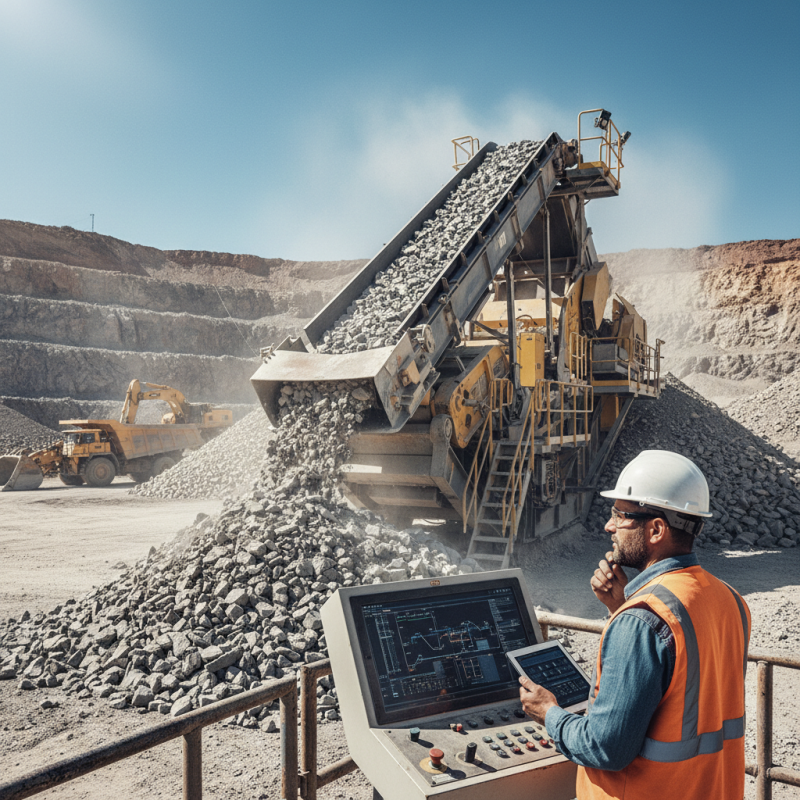
When choosing a crushing machine, the first step is to identify your material processing requirements. Different materials have unique characteristics. For instance, softer materials like clay require different machines than harder materials like granite. Understanding the hardness, size, and moisture content of your materials is vital. This knowledge allows you to select a machine that operates efficiently and meets your production goals.
Furthermore, consider the required output size. Some projects need finer materials, while others can handle coarser outputs. Each crushing machine offers specific size reduction capabilities. Evaluating your end product specifications will help guide your decision. Don’t overlook maintenance considerations too. Machines that are easier to maintain often lead to lower operating costs.
Reflecting on previous experiences can help. If past choices did not meet expectations, it’s time to reassess. Talk to industry experts or conduct research to gain insights. Gathering information will lead to more informed choices. It's essential to be aware that no machine is perfect. Each has its limitations and strengths. Understanding these can aid in achieving optimal results while minimizing potential drawbacks.
Understanding Different Types of Crushing Machines Available in the Market
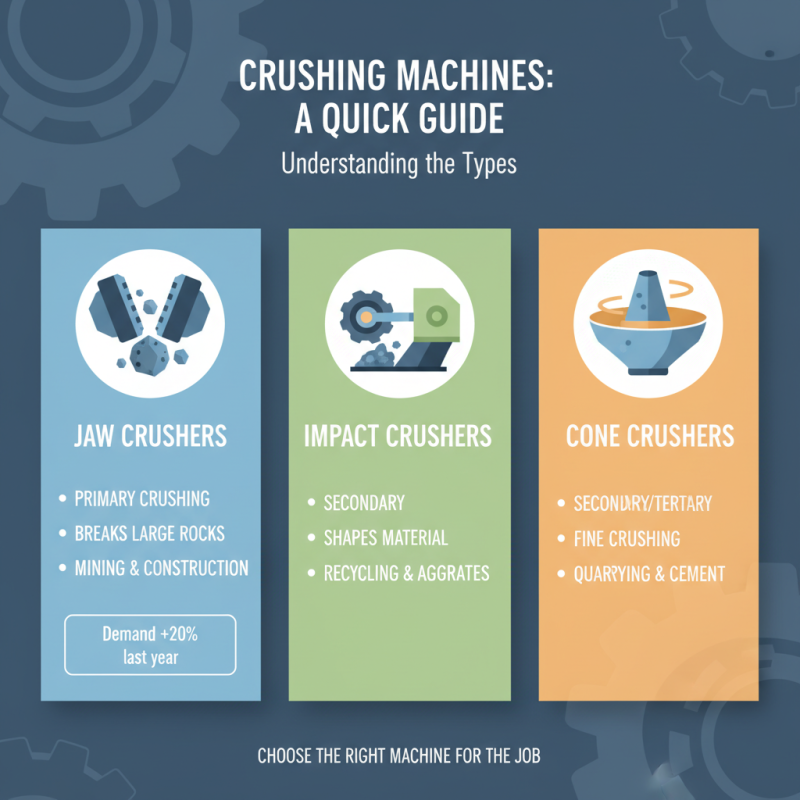
When selecting a crushing machine, understanding the types available is crucial. The market offers various options, including jaw crushers, impact crushers, and cone crushers. Each type has its own unique strengths. Jaw crushers excel in primary crushing, breaking large materials into manageable pieces. According to a recent industry report, the demand for jaw crushers increased by over 20% in the last year, highlighting their essential role in mining and construction.
Impact crushers are ideal for producing high-quality aggregates. They are effective for softer materials. The versatility of impact crushers allows them to serve multiple industries, from recycling to quarrying. However, they may not be as efficient for hard materials. Cone crushers provide precise size reduction. They are often preferred for secondary and tertiary stages of crushing. Despite their advantages, one must assess the material characteristics thoroughly to avoid subpar performance.
Selecting the right crushing machine requires careful analysis. Consider the material type, desired output size, and production capacity. An ill-fitting choice can lead to operational inefficiencies and increased costs. Industry insights suggest that many facilities miss out on optimizing their processes due to lack of research. Investing time in understanding machine types can significantly enhance productivity and profitability.
Evaluating Key Features and Specifications of Crushing Equipment
Choosing the right crushing machine requires careful consideration of key features and specifications. Start with the crushing capacity, as it directly impacts your productivity. Look for machines that clearly state their output in tons per hour. This information helps you gauge whether a machine meets your operational needs.
Another vital feature to assess is the crushing mechanism. Different machines use various techniques, such as jaw, cone, or impact crushing. Each has its own advantages. Jaw crushers are typically reliable for primary crushing, while cone crushers excel in secondary applications. Understanding the intended use of the machine will guide your choice.
Finally, durability and maintenance requirements should not be overlooked. A machine built with high-grade materials can withstand tough conditions. Check for ease of access to vital components for maintenance tasks. Complex designs can complicate repairs, leading to downtime. Reflect on your environment and operational demands to find the best fit.
Assessing Budget Considerations for Purchasing a Crushing Machine
When considering the purchase of a crushing machine, budget plays a crucial role. It's essential to establish a clear financial plan. Determine initial costs, including purchase price and any financing options. Hidden fees can quickly elevate your budget. Installation and maintenance expenses are often overlooked. Ensure you account for these in your overall financial assessment.
Evaluate the long-term financial impact. Cheaper options may save money upfront but could incur higher operational costs. Consider the machine's energy efficiency and durability. Investing in a reliable model can lead to savings over time. Refurbished machines often present budget-friendly alternatives, but their performance can be unpredictable.
It's beneficial to seek advice from industry experts. They can provide insights on balancing cost with quality. Assess the cost between various machine types, as each has different operational costs. Striking the right balance helps avoid future unexpected costs. Always stay informed about market trends to adjust your budget accordingly.
Crushing Machine Budget Considerations
Reviewing Maintenance and Support Options for Long-Term Performance
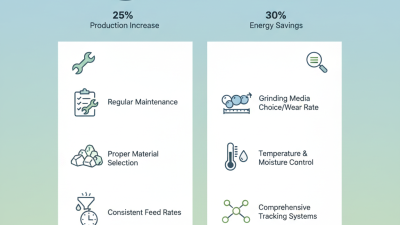
When selecting a crushing machine, consider maintenance and support options. Regular upkeep is essential for consistent performance. A machine can function efficiently for years, but neglect leads to breakdowns. Understand the required maintenance tasks. Daily inspections and routine servicing can prevent unexpected issues.
Support options are crucial for long-term success. Look for manufacturers that offer comprehensive support. This can range from easy access to spare parts to expert technical assistance. When machines underperform, timely help is necessary. Find a provider that values customer satisfaction and provides resources for troubleshooting.
Reflect on past experiences with machine maintenance. Have you faced delays due to unavailable parts? Such issues are more common than one might think. Consider the ongoing support that ensures the machine's operational efficiency. An informed choice can make a significant difference in performance and longevity. Proper maintenance checks can reveal potential problems before they escalate, ensuring productivity.