Leave Your Message
Selecting among the top Cement Clinker Ball Mill manufacturers requires more than comparing prices or catalog specifications. Global buyers must examine grinding capacity, energy consumption, liner design, maintenance access, and after-sales support. A dependable manufacturer should explain how its mill performs with different clinker hardness, moisture levels, and feed sizes.
Cement-process expert Dr. Arvind Kumar Chatterjee emphasizes, “A cement mill must be judged by sustained performance, not brochure capacity.” This practical view remains important. A mill may show impressive laboratory results, yet struggle under continuous production. Real operating conditions reveal the difference.
Look closely.
Experienced buyers should request verified references from comparable cement plants. They should also review motor efficiency, gearbox reliability, separator compatibility, and spare-parts availability. A well-designed Cement Clinker Ball Mill can deliver stable fineness while reducing unexpected shutdowns. However, no machine solves every process problem. Poor ventilation, uneven feeding, or unsuitable grinding media can weaken performance.
This guide compares leading manufacturers serving international markets. It considers engineering experience, production quality, customization, commissioning support, and long-term service. Certifications matter, but field results matter more. Some manufacturers communicate clearly before the sale, then respond slowly after installation. That risk deserves attention.
The evaluation is not perfect. Supplier data can be selective, and regional performance may vary. Buyers should verify technical claims independently. Site visits, production records, and transparent warranty terms provide stronger evidence than polished marketing language. The best choice is rarely the cheapest machine. It is the manufacturer that offers dependable output, practical support, and measurable value over years of operation.
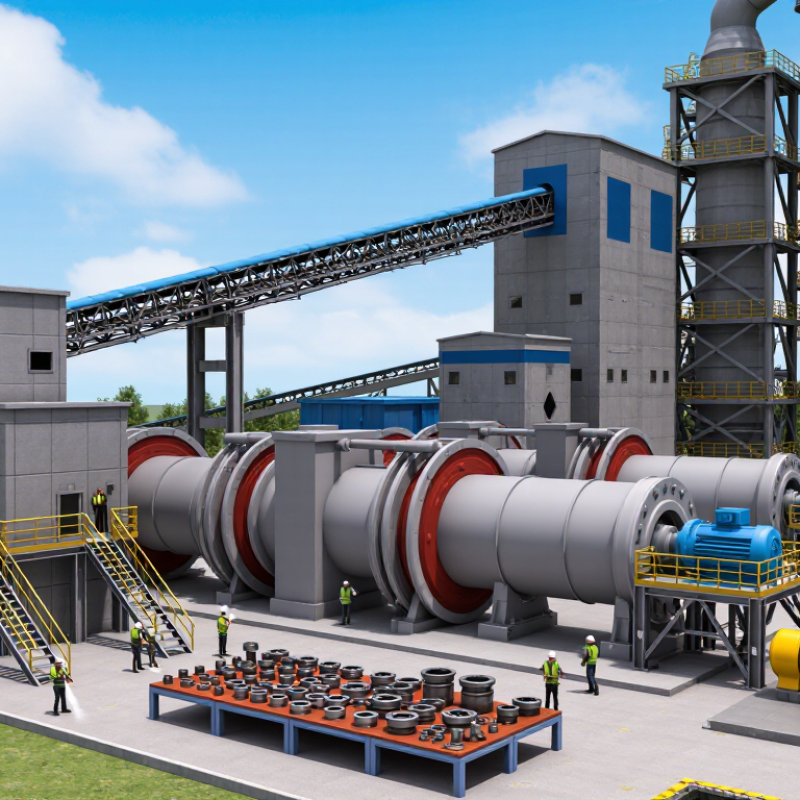
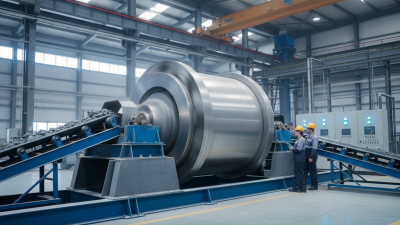
A cement clinker ball mill is a rotating steel cylinder that grinds clinker into fine cement powder. Inside, hardened grinding balls lift and drop as the shell turns. Impact and friction break clinker particles against the mill lining. Gypsum and selected mineral additions may enter during this stage. The finished material must meet strict fineness and chemical requirements.
Design starts with capacity, clinker hardness, moisture, and target Blaine value. A longer mill may provide more grinding time, while compartmented chambers control particle movement. Diaphragms separate coarse and fine zones. Liners protect the shell and influence grinding efficiency. Ventilation removes heat and carries fine particles toward the separator. Poor airflow can increase temperature, reduce output, and encourage coating inside the chamber.
Good manufacturers support calculations, installation, testing, and operator training. Buyers should request evidence from comparable cement plants, not only attractive specifications. Check drive power, bearing design, liner life, dust control, spare-part access, and vibration limits. Practical inspections matter. A small vibration change can reveal alignment or foundation problems before serious damage occurs. Clinker mills serve integrated cement plants, grinding stations, and replacement projects. They also support blended cement production when material feeding and separation are carefully controlled. No design is perfect. Local conditions often expose assumptions made during engineering.
| Evaluation Dimension | Typical Data or Range | Design and Technical Notes | Industrial Application |
|---|---|---|---|
| Equipment definition | Horizontal cylindrical grinding mill using steel balls | Rotating shell lifts and drops grinding media to reduce clinker and other additives by impact and attrition. | Cement finish grinding, mineral processing, and selected industrial powder applications |
| Common mill arrangement | Two-compartment or three-compartment ball mill | Coarser grinding is performed in the first compartment; finer grinding takes place in the later compartment. | Closed-circuit cement grinding lines with high product-fineness requirements |
| Typical mill diameter | Approximately 2.2–5.6 m for many industrial cement installations | Diameter selection depends on required capacity, rotational speed, grinding media charge, and plant layout. | Small, medium, and large-scale cement plants |
| Typical mill length | Approximately 8–18 m, depending on configuration | Longer mills may provide additional grinding stages, while compartment length and diaphragm design control material flow. | Finish-grinding systems requiring stable residence time and product control |
| Indicative throughput | Roughly 20–250 t/h for common cement grinding projects | Actual output varies with clinker grindability, feed moisture, additive ratio, product fineness, and separator efficiency. | Capacity planning for regional cement works and integrated plants |
| Installed drive power | Approximately 1,000–10,000 kW for many medium-to-large units | Motor sizing is determined by mill dimensions, material hardness, target throughput, and starting-torque requirements. | Continuous-duty grinding where high mechanical availability is required |
| Finished-product fineness | Commonly about 2,800–4,500 cm²/g Blaine for cement products | Fineness is controlled through separator settings, circulating load, grinding media grading, and mill ventilation. | General-purpose cement, blended cement, and strength-class production |
| Typical specific power demand | About 25–40 kWh per tonne for cement finish grinding, project dependent | Energy use changes with clinker hardness, product fineness, grinding aids, separator performance, and system ventilation. | Energy benchmarking and operating-cost assessment |
| Grinding media | High-chrome, alloyed, or forged steel balls; commonly graded by diameter | Media selection should match clinker abrasiveness, compartment function, liner profile, and wear-life targets. | Clinker, gypsum, limestone, pozzolan, slag, and other cementitious materials |
| Mill liners | Cast alloy steel, high-chrome steel, or other wear-resistant liner systems | Liner profile influences lifting action, impact intensity, grinding efficiency, noise, and maintenance intervals. | High-abrasion continuous production environments |
| Material feed size | Commonly below 20–30 mm after clinker cooling and crushing | The exact limit depends on mill design, feed system, crusher performance, and the required grinding circuit stability. | Cement plants with controlled clinker and additive dosing |
| Circuit configuration | Open circuit or closed circuit with an air separator | Closed circuits normally improve particle-size control and reduce overgrinding by returning coarse particles to the mill. | High-throughput cement production and multi-grade product lines |
| Cooling and ventilation | Forced-air ventilation with mill outlet temperature monitoring | Ventilation removes heat and excess moisture; water injection or auxiliary cooling may be used when necessary. | Temperature-sensitive cement grinding and gypsum-containing products |
| Key monitoring systems | Bearing temperature, vibration, motor load, pressure, feed rate, and outlet temperature | Online monitoring supports preventive maintenance, process stability, and protection against overload or abnormal vibration. | Automated and semi-automated grinding plants |
| Buyer acceptance criteria | Guaranteed capacity, fineness, power consumption, noise, vibration, and wear rate | Purchasing specifications should define feed composition, operating hours, ambient conditions, standards, testing procedures, and spare parts. | International tenders, plant upgrades, and replacement projects |
| Maintenance requirements | Routine inspection of liners, diaphragms, bearings, lubrication systems, seals, and grinding media | Planned shutdowns and locally available wear parts can significantly improve long-term plant availability. | Remote or high-utilization cement facilities |
Note: The ranges shown are indicative industry reference values. Final mill sizing and performance guarantees require project-specific material tests, process data, and operating conditions.