Why Choose a Cement Clinker Ball Mill for Your Production Needs?
When it comes to cement production, the right machinery can significantly impact efficiency and output. One key piece of equipment is the Cement Clinker Ball Mill. This mill plays a crucial role in grinding clinker into fine cement for various construction applications.
Cement Clinker Ball Mills offer several advantages. They are designed to optimize the grinding process and ensure consistent product quality. Their design varies, allowing flexibility in production requirements. However, selecting the right mill requires careful consideration of several factors.
While many prioritize price, it is essential to also focus on performance and durability. Investing in quality equipment like the Cement Clinker Ball Mill can save costs in the long run. It's vital to evaluate options and seek expert advice to enhance production efficiency reliably.
Understanding Cement Clinker Ball Mills and Their Functionality
Cement clinker ball mills play a vital role in the production of cement. These mills are designed to grind clinker into fine powder, which is essential for producing high-quality cement. Their functionality lies in their ability to efficiently reduce the size of clinker particles. This process not only enhances the surface area of the material but also improves the hydration process during cement mixing.
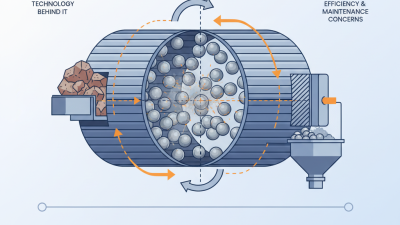
Understanding how cement clinker ball mills work is crucial for optimizing production. They operate on principles of impact and compression, breaking down clinker as it passes through the mill. Various factors, such as the mill's design and the speed of rotation, can influence the grinding efficiency. It's also important to monitor wear and tear on the components. Over time, the efficiency of the mill may decline, requiring careful maintenance and replacement of parts.
Cement clinker ball mills are often underestimated in their complexity. They require skilled operators who understand the intricacies of the grinding process. Miscalculations in parameters can lead to subpar cement quality. Continuous learning and adaptation are necessary for maximizing production efficiency. Investing time in understanding this equipment can yield significant benefits in the long run.
Key Benefits of Using Cement Clinker Ball Mills in Production
Cement clinker ball mills play a crucial role in the cement production process. Their design ensures efficient grinding of clinker, which is essential for achieving the desired fineness of cement. This characteristic directly impacts the strength and quality of the final product. Many manufacturers appreciate this efficiency, making it a fundamental choice in their operations.
One key benefit of using these mills is their adaptability. They can handle a variety of materials, which means less downtime and greater flexibility in production. This increases overall productivity. However, operators must also monitor maintenance closely. Ineffective maintenance can lead to reduced output and unexpected costs. Moreover, while they offer high capacity, their energy consumption should not be overlooked. This is an area for continuous improvement.
The grinding process in cement clinker ball mills also enables better particle size distribution. Proper distribution can enhance the performance of concrete mixtures, leading to better structural integrity. Yet, achieving optimal results requires skilled operation and consistent quality checks. Neglecting these aspects can compromise the benefits, showcasing the need for ongoing attention in production practices.
Comparison of Cement Clinker Ball Mills and Alternative Grinding Methods
When it comes to cement production, selecting the right grinding method is crucial. Cement clinker ball mills are widely used for their efficient grinding capabilities. They offer an excellent balance between performance and energy consumption. This approach is favored for its reliability and simplicity. Yet, alternative grinding methods exist that may suit specific needs.
Vertical roller mills and high-pressure grinding rolls are two significant alternatives. While they can provide quality outputs, they often come with higher initial costs. Operational complexities can also arise with these methods. Comparatively, cement clinker ball mills are easier to operate and maintain. They have a proven track record in various production setups, underscoring their longstanding reputation in the industry.
However, it's essential to consider the scale of production and specific requirements. Not every facility may find the ball mill ideal for its needs. Some might challenge the efficacy of ball mills regarding energy efficiency at larger scales. Evaluating all options carefully ensures a well-informed decision, fitting the unique context of a production facility.
Comparison of Cement Grinding Methods
Factors to Consider When Choosing a Cement Clinker Ball Mill
When selecting a cement clinker ball mill, several critical factors demand attention. The mill's capacity is paramount. According to industry data, mills with higher capacities can handle larger volumes, thus improving efficiency. A mill capacity of 20-30 tons per hour is common for medium to large-scale operations. Ensure the model matches your production needs for optimal performance.
Another vital aspect is the grinding efficiency. Clinker particle size significantly affects the final product's quality. Research shows that a uniform particle size can enhance strength and durability in the final cement mix. Investing in technology that allows for closer monitoring of grinding processes can lead to better outcomes.
Tips:
Consider energy consumption. A ball mill’s energy efficiency can vary widely. Look for models that use less energy without compromising production quality. Regular maintenance is also essential. Worn-out parts can lead to inefficiencies. Keeping an inventory of critical replacement components can minimize production downtime.
Quality control features should not be overlooked. Advanced mills come equipped with monitoring systems that provide real-time data. This capability helps identify issues early, ensuring quality consistency in the final product. Always evaluate the total cost of ownership, including maintenance and energy costs, when making your decision.
Maintenance and Efficiency Tips for Cement Clinker Ball Mills
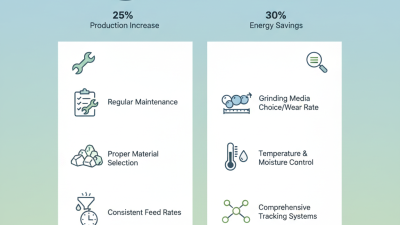
When operating a cement clinker ball mill, maintenance is crucial for optimal performance. Routine checks on lubrication systems can prevent wear and tear. A well-lubricated mill can reduce energy consumption by 5-10%, directly impacting production efficiency. Additionally, monitoring the temperature and pressure during operation can help identify potential issues before they escalate. Industry reports indicate that a 1% increase in operational efficiency can lead to significant cost savings, potentially exceeding $100,000 annually for medium-sized operations.
Efficiency is not just about the machinery. Operator training plays a vital role. Skilled operators can more easily detect faults and inefficiencies. Research shows that investing in training can improve production rates by as much as 15%. Understanding the mill's operating parameters allows for better decision-making. It's also important to regularly calibrate instrumentation. Accurate measurements contribute to the mill's overall efficiency.
Challenges do exist. Equipment wear can occur faster than anticipated, leading to unscheduled downtime. Regular inspections and proactive maintenance schedules can mitigate this issue. Data reflects that about 30% of maintenance costs stem from unexpected failures. Therefore, creating a robust maintenance plan is essential. It should include timelines, responsibilities, and specific tasks. This proactive approach can enhance reliability and improve the lifecycle of the equipment.