Leave Your Message

2026 Top Crushing Machine Types for Global Buyers

Choosing a Crushing Machine in 2026 is not simply a matter of selecting the largest model. Global buyers must match equipment with feed size, rock hardness, moisture, output requirements, energy costs, and local service support. A compact jaw crusher may suit a small quarry with limited power. A cone crusher may perform better when consistent aggregate grading matters. Impact crushers can create a cubical product, but their wear costs may rise with abrasive stone.

As mineral-processing expert Dr. J. D. Mular observed, “Good plant design begins with understanding the material and the process.” This principle remains practical. A machine that looks efficient in a catalogue may struggle beside a dusty stockpile, under irregular feeding, or during a long rainy season. Real operating conditions matter.

This guide examines the leading crushing machine types expected to attract global buyers in 2026. It considers jaw, cone, impact, gyratory, hammer, and mobile crushing systems. Each section focuses on application, capacity, maintenance, fuel or electricity use, wear-part demand, and after-sales support. Those details often decide the purchase.

There is no universal winner.

Even experienced buyers can misjudge future production needs. A low purchase price may hide expensive liners, downtime, or weak technical support. Buyers should request test results, inspect comparable installations, and calculate total ownership cost. Some figures will remain uncertain. That is worth admitting.

The strongest choice is usually the machine that fits the entire operation, not the machine with the most impressive specification sheet.
2026 Top Crushing Machine Types for Global Buyers

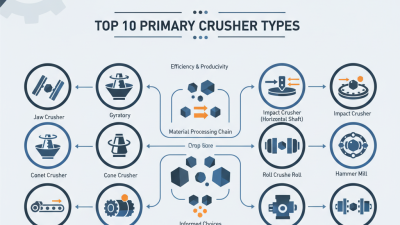
Primary Crushing Machines: Jaw, Gyratory, and Impact Crushers

2026 Top Crushing Machine Types for Global Buyers

Primary crushing sets the plant’s rhythm.

Jaw crushers use a compressive bite and suit hard, abrasive rock. Their simple chamber design supports easier inspection, but oversized feed can cause blockages. Keep that risk visible.

Gyratory crushers handle very high capacities with a deep, continuous crushing chamber.

They fit large mines where feed arrives steadily and power infrastructure is strong. Installation demands more space and careful foundation work. That assumption can fail in remote sites.

The USGS Mineral Commodity Summaries 2024 reported about 1.5 billion metric tons of crushed stone produced in the United States during 2023.

Such volume shows why capacity, uptime, and maintenance access matter together.

Impact crushers break material through impact energy rather than compression.

They can produce well-shaped particles and support softer, less abrasive feed. However, wear rates may rise when the stone contains hard minerals.

The European Commission’s Best Available Techniques reference for extractive industries stresses dust control, noise reduction, and efficient material processing. These requirements affect crusher layout, not only machine selection.

Experienced buyers should compare feed size, moisture, abrasiveness, target output, and local service skills.

A jaw crusher may win on simplicity.

A gyratory unit may justify its footprint at extreme throughput.

An impact crusher may deliver better shape, but only under suitable geology.

Test data should guide the decision.

Sales tables alone are not enough.
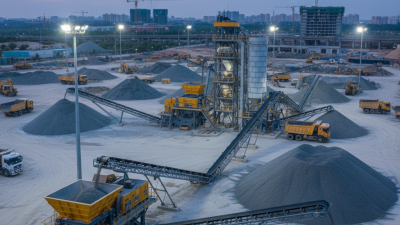
Secondary and Tertiary Crushers for Precise Material Sizing

Secondary and tertiary crushers control the final shape, grading, and usability of processed rock. Secondary machines reduce primary feed into manageable sizes for screening. Tertiary machines refine that material into precise specifications. This distinction matters. USGS Mineral Commodity Summaries 2025 reported approximately 1.5 billion metric tons of crushed stone production in the United States during 2024. Such volume makes consistent sizing commercially important.

Cone crushers often suit hard, abrasive stone in secondary and tertiary stages. Impact crushers can produce more cubical particles, especially with softer materials. Vertical shaft impactors refine manufactured sand and improve particle shape. Closed-circuit screening returns oversized particles for another pass. Feed shape changes. Moisture changes performance. Operators should check chamber design, reduction ratio, liner wear, and hourly capacity before purchasing.

Global buyers should compare test results rather than rely on catalogue capacity. The USGS 2025 report also estimated nearly 870 million metric tons of construction sand and gravel production in the United States. That figure shows how widely sizing accuracy affects infrastructure supply chains. However, reported capacities may assume ideal feed conditions. Real sites include wet fines, uneven loading, and irregular maintenance. A practical trial with local rock is often more valuable than a perfect specification sheet. I would also question whether the smallest target size justifies higher energy use and faster wear.

2026 Top Crushing Machine Types for Global Buyers

Secondary and tertiary crushers are selected according to the feed material, required reduction ratio, and target product size. The chart shows typical discharge-size ranges in millimetres; actual results vary with machine settings, feed gradation, material hardness, and circuit design.

Mobile and Stationary Crushing Systems for Different Worksites

Mobile and Stationary Crushing Systems for Different Worksites

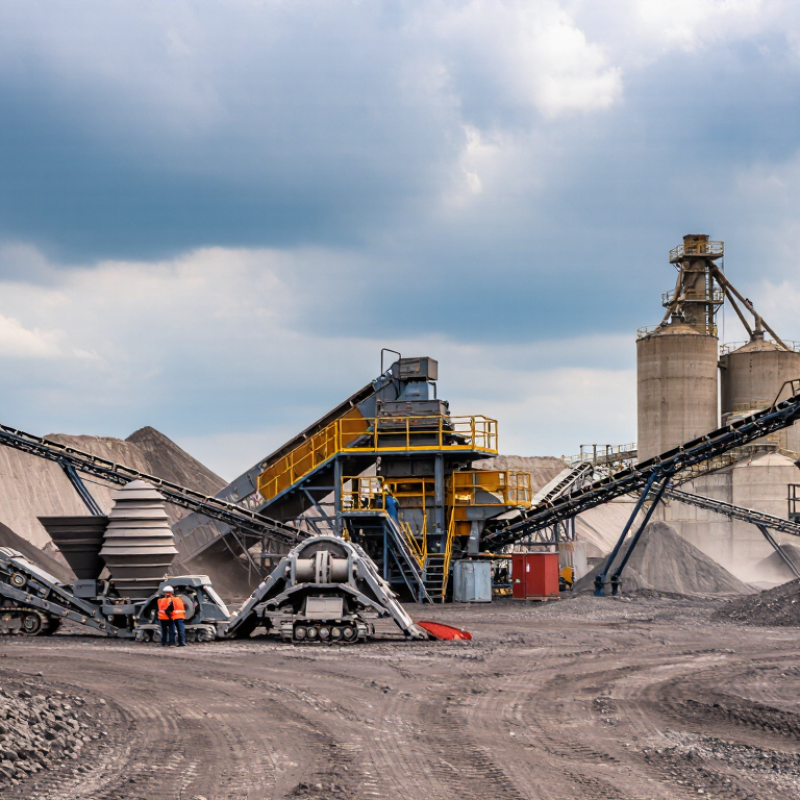
Mobile crushing systems suit projects that move between quarry faces, road corridors, and demolition sites. Their tracked or wheeled frames reduce relocation time and limit repeated material handling. At a narrow urban site, operators can position the crusher near concrete stockpiles. This may lower hauling costs. However, mobility does not solve every problem. Soft ground, steep access roads, and limited fuel storage can slow production. I have seen output fall when a machine was placed without checking ground bearing capacity.

Stationary systems fit long-term quarries and fixed recycling yards. They can support larger feed sizes, multiple crushing stages, and steady conveyor layouts. A well-designed plant separates primary, secondary, and screening duties. This improves product consistency for road base, concrete aggregate, or manufactured sand. Engineers should study feed hardness, moisture, target sizes, and daily tonnage before selecting equipment. A simple site sketch often reveals costly transfer points.

Worksite conditions should guide the final choice. Measure truck turning space, electrical access, drainage, dust paths, and maintenance clearance. Noise controls may affect operating hours near homes or public roads. Local safety and environmental rules also require verification before installation. Mobile units offer flexibility. Stationary plants often provide better long-term control. Neither option is automatically superior. A rushed purchase can look efficient on paper, yet perform poorly during wet seasons or peak demand. Leave room for inspection, wear-part replacement, and operator training. Small details matter.

Key Factors Global Buyers Should Compare Before Purchasing

Global buyers comparing crushing machine types should begin with the material, not the brochure. I have seen buyers choose high capacity equipment, then struggle with wet feed and uneven output. Confirm the rock type, moisture level, maximum feed size, and required product range. A jaw crusher may suit primary reduction, while an impact or cone crusher can offer better control for later stages. The correct choice depends on the full process.

Capacity figures need careful review. Ask whether the stated output applies to your material and operating conditions. Compare motor power, energy use, chamber design, wear-part life, and adjustment methods. Inspect service access around the machine. Can a technician replace key parts safely beside the production line? Small details matter. A practical trial using representative feed is more reliable than a polished specification sheet.

Total ownership cost deserves equal attention. Include transport, installation, foundation work, spare parts, routine lubrication, and planned downtime. Check electrical compatibility and local workplace requirements before ordering. Dust control and noise levels also affect site approval and worker comfort. Remote areas may need simple controls and common replacement parts. A low purchase price can become expensive after one difficult maintenance season. My own comparison process is not perfect; early estimates often miss cleaning time and operator training. Buyers should challenge every assumption, record measured results, and leave room for changing material conditions.

2026 Crushing Machine Innovations, Efficiency, and Safety Trends

In 2026, crushing machines are judged by more than tonnes per hour. Global buyers want lower energy use, cleaner work zones, and safer maintenance. The International Energy Agency reports that industry consumes about 37% of global final energy (IEA, Energy Efficiency 2023). Even small efficiency gains matter at high duty cycles. Variable-speed drives can match motor output to feed conditions. Load-sensing controls reduce idle running. The gain is practical. Less wasted power means less heat near the machine room.

Material demand adds pressure. UNEP’s Global Resources Outlook 2024 reports that natural-resource extraction has tripled in five decades and may rise another 60% by 2060. Modern jaw, cone, impact, and mobile crushers increasingly use remote diagnostics, belt scales, and automated setting control. At a dusty discharge point, enclosed transfer areas and water mist can improve visibility. Yet automation is not magic. Poor sensor calibration can create false alarms or hide uneven wear. A short manual inspection still has value.

Safety design deserves equal weight. The U.S. Mine Safety and Health Administration recorded 40 mining fatalities in 2023 across all mining sectors (MSHA, 2023 statistics). Interlocked guards, emergency pull cords, blocked-chute procedures, and stored-energy isolation should be checked before purchase. ISO 12100 and ISO 13849 provide useful risk-reduction frameworks. Buyers should request measured noise, dust, energy, and maintenance data, not attractive estimates. The honest gap appears after installation. Training, spare parts, and disciplined inspections decide whether innovation survives daily production.