

The Effect of Grinding Media on Grinding Efficiency
As the core equipment in Mineral Processing, the operational efficiency of ball mills directly impacts the cost and productivity of the entire production line. To achieve the goal of "high efficiency and low energy consumption," it is essential not only to precisely control operational parameters but also to adopt a systematic approach to optimize the entire process. Balancing high grinding efficiency with low energy consumption requires considering multiple factors [1]. This article primarily discusses the effects of grinding media on grinding efficiency.
I.Material of grinding media should match the mineral type
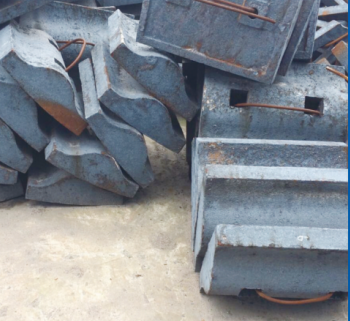
For high-hardness minerals, abrasives and liners with equivalent hardness must be selected. The abrasive material's composition directly determines wear resistance, toughness, and service life, which in turn affects grinding efficiency stability. The industry-standard ZGMn13Cr2 high-manganese alloy steel [2] utilizes manganese's work hardening property, with chromium, molybdenum, and nickel added to enhance hardness and corrosion resistance, thereby extending the steel balls' service life. When using standard high-manganese steel (without additional elements), the accelerated wear rate necessitates frequent ball replenishment to maintain filling rates. This not only increases steel consumption costs but also causes grinding efficiency instability due to filling rate fluctuations.
II.Control Mechanism of Grinding Efficiency by Material-to-Ball Ratio
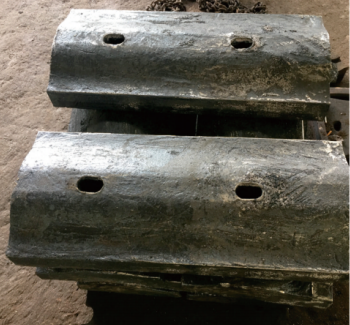
The ball-to-material ratio is the core parameter that determines whether the energy of steel balls can effectively act on the material.[3,4].
When material volume is insufficient, the contact probability between steel balls and materials decreases, resulting in a large number of steel balls remaining in an idle collision state. On one hand, the impact energy of steel balls fails to be converted into crushing work, leading to wasted electrical energy. On the other hand, direct friction between steel balls and liners accelerates liner wear. Additionally, inadequate material volume causes coarse-grained ores to remain in the mill for too long, increasing the risk of over-grinding.
When the material volume is excessive, the material layer in the mill becomes too thick. As the steel balls descend, they must penetrate this heavy layer, causing a significant reduction in impact energy and a decrease in the crushing rate of coarse-grained ore. Moreover, an overly high material volume increases the mill's load, which further reduces the crushing rate of coarse-grained ore.
The optimal ball-to-ore ratio is not a fixed value, but should be dynamically adjusted based on ore properties (grain size, hardness) and operational parameters (rotation speed).
When the particle size is coarse and the hardness is high, the ball-to-material ratio should be reduced and the proportion of steel balls should be increased to strengthen the impact crushing.
When the particle size of the ore is fine and the hardness is low, the ball-to-material ratio should be increased, the relative proportion of the material should be raised, and the grinding frequency should be improved.
When the speed of the mill is increased, the kinetic energy of the steel ball is enhanced, so the ball ratio can be increased appropriately to avoid the empty collision of the steel ball and make full use of the new energy.
III.Synergistic effect of abrasive ball and material ball ratio
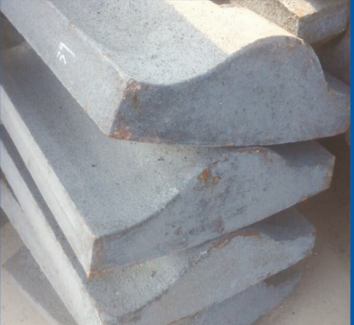
The improvement of grinding efficiency is not the result of single parameter optimization, but the synergistic matching process of abrasive ball characteristics and material ball ratio, the core of which is the balance of "energy transfer-material contact-dissipation control".
(1) Synergy of Ball Diameter Grading and Ball-to-Material Ratio: Precise Matching of Crushing Requirements
When coarse-grained ore constitutes the majority, a "dominant large balls with supplementary small balls" gradation is required (e.g., 40% Φ120mm steel balls, 30% Φ80mm, and 30% Φ60mm), while reducing the ball-to-material ratio to ensure full impact energy transfer to coarse particles. Conversely, for high fine-grained content, a "dominant small balls with large balls for void filling" configuration (20% Φ80mm, 50% Φ60mm, and 30% Φ40mm) should be adopted. This approach enhances the ball-to-material ratio and facilitates particle disintegration through high-frequency grinding by small balls.
(2) Synergy of material and material ball ratio: prolonging the high efficiency operation cycle
The ZGMn13Cr2 steel balls exhibit exceptional wear resistance. Even when the ball-to-material ratio fluctuates (e.g., dropping to 0.7 or rising to 1.3), they maintain a low wear rate, preventing sudden drops in filling efficiency caused by ball wear. Consequently, high-performance materials expand the 'effective adjustment range' of the ball-to-material ratio, reduce operational complexity, and ensure long-term efficient operation.
In conclusion, only by dynamically optimizing the matching relationship based on ore characteristics can we achieve the goal of "efficient crushing, precise dissociation, and low-consumption operation", which provides crucial support for cost reduction and efficiency improvement in mineral processing production lines.
References
- [1] Xue Hongchao, Han Chunyang, Lu Xingcen, et al. Optimization path and empirical study on low operating cost of semi-automatic grinding process in mineral processing [J/OL]. Nonferrous Metals (Mineral Processing Section), 1-24 [2025-11-25]. https://link.cnki.net/urlid/11.1840.TF.20251124.1202.002.
- [2] Song Weiwei, Zhang Yong, Zhang Xinglong, et al. The influence of ball mill operating parameters on crushing rate and neural network prediction model [J/OL]. Metal Mine, 1-15[2025-11-25]. https://link.cnki.net/urlid/34.1055.TD.20251028.1719.005.
- [3] Chen Junliang, Chen Junhao, Zhao Xin, et al. Optimization and Application of Spare Parts for 3660 Ball Mill [J]. Metallurgical Equipment Management and Maintenance, 2025,43(05):6-8+19.
- [4] Li Chuanwei. Common Fault Diagnosis and Maintenance Strategies of Ball Mill in Iron Ore Concentration Plant. Equipment Maintenance Technology, 2025, (05):91-94. DOI:10.16648/j.cnki.1005-2917.2025.05.025.