What is the Working Principle of a Continuous Ball Mill?
The Continuous Ball Mill Working Principle is a topic of great interest in the manufacturing industry. Renowned expert Dr. Mark Thompson states, “Understanding the working principle of a continuous ball mill is crucial for optimizing production.” His insight emphasizes the importance of this knowledge for enhancing efficiency in processes.
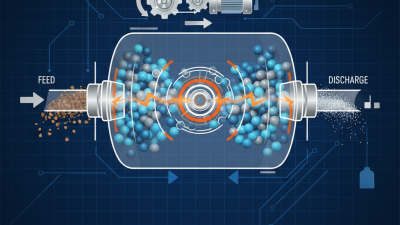
A continuous ball mill operates by using a cylindrical rotating chamber filled with balls. The material is fed into the mill and continuously grinds as the chamber rotates. This method offers a steady feed and discharge, which is vital for large-scale production. However, achieving the right balance in rotation speed and material flow can be challenging.
In practice, many engineers overlook minor adjustments that can markedly improve output. For instance, variations in ball size and type can affect the grinding efficiency. It requires careful monitoring and sometimes trial and error to find the ideal setup. Understanding the Continuous Ball Mill Working Principle invites ongoing reflection and adjustments for optimal performance.
Understanding the Basic Structure of a Continuous Ball Mill
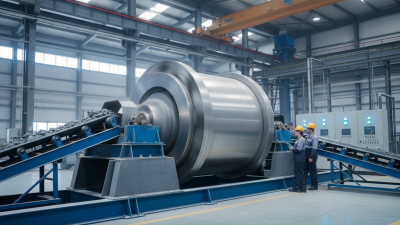
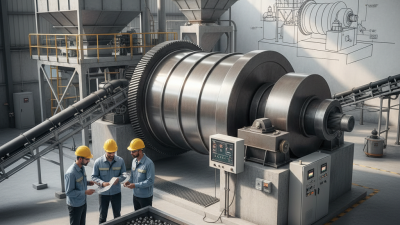
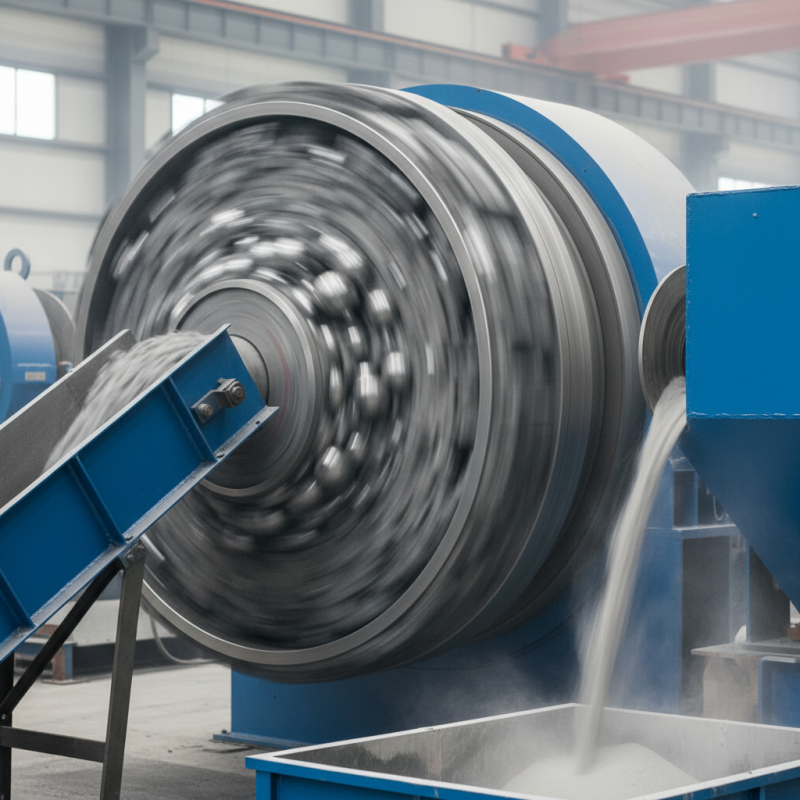
Understanding the basic structure of a continuous ball mill is crucial for optimizing its performance. A continuous ball mill typically consists of a rotating cylindrical shell, filled with grinding media and the material to be processed. The shell is mounted horizontally and rotates at a certain speed, allowing the media to cascade and grind the materials inside. This design allows for a continuous feed of material and a consistent outflow of the ground product.
The grinding media in a continuous ball mill can vary in size and material, impacting the overall efficiency. According to industry data, smaller media can lead to finer particles but may require longer processing times. On the other hand, larger media can result in faster grinding but may not yield as fine a product. It's essential to find a balance that meets specific requirements.
Tips: Regular monitoring of the mill’s speed and fill level is necessary. Adjustments can ensure optimal performance and avoid overloading. Additionally, wear on the grinding media should be regularly assessed. Frequent changes can save on costs and improve efficiency. Every ball mill has a unique setup, so constant evaluations help refine operations. Consider testing different grinding media to analyze their impact on processing efficiency.
Mechanism of Continuous Material Feeding in Ball Mills
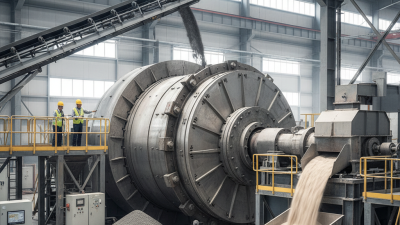
Continuous ball mills are crucial in modern material processing. The mechanism of continuous material feeding ensures efficient operation. Materials enter the mill through a feeding system, often gravity-fed. The feed rate must be steady for optimal results. A report by the International Journal of Mineral Processing indicated that 70% of total operational efficiency relies on this continuous feeding mechanism.
As materials flow into the mill, they interact with the grinding media in a continuous cycle. The design allows for a uniform distribution of particles. An even feed prevents blockages, which can disrupt the milling process. According to a study by the Journal of Engineering Science and Technology, fluctuations in material feed can lead to a 15% decrease in grinding efficiency. This highlights the need for precise control in feed rates.
Despite advancements, operators face challenges. Maintaining consistent material properties is vital. Variations in size and moisture can impact grinding efficiency. An operator's experience plays a significant role in managing these variables. Regular monitoring is essential to adapt the operation. Continuous improvement is necessary. Acknowledging these limitations can lead to greater efficiency in continuous ball mills.
What is the Working Principle of a Continuous Ball Mill?
| Parameter |
Value |
Description |
| Mill Diameter |
1.2 m |
Diameter of the mill cylinder |
| Mill Length |
4 m |
Length of the mill cylinder |
| Charge Volume |
30% |
Volume percentage of load inside the mill |
| Ball Size |
30 mm |
Diameter of grinding balls used |
| Rotational Speed |
75 rpm |
Speed at which the mill rotates |
| Material Feed Rate |
500 kg/h |
Rate at which material is fed into the mill |
| Output Particle Size |
100 microns |
Average size of particles after milling |
Grinding Process and Size Reduction in Continuous Ball Mills
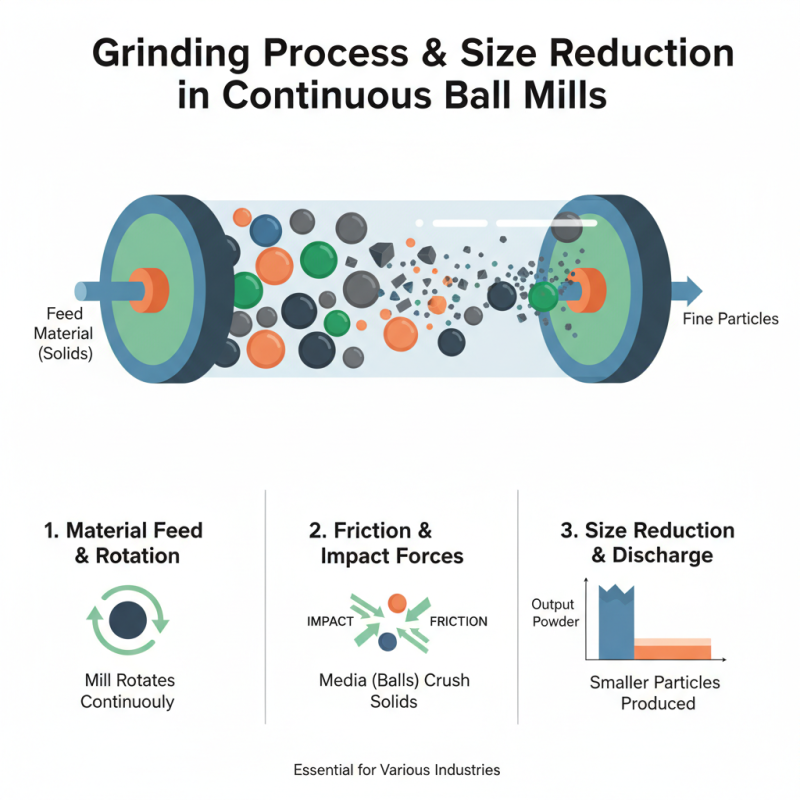
Continuous ball mills are essential in various industries for grinding materials. The grinding process relies on the movement of media inside the mill. Balls made of different materials are used to crush solids into smaller particles. The size reduction occurs due to friction and impact forces, which are generated as the mill rotates.
In continuous ball mills, materials feed continuously, making the process effective for large-scale production. Efficiency can vary based on several factors. For instance, the ball size, the material's hardness, and the mill speed play crucial roles. A report from the International Journal of Manufacturing Technology highlights that optimizing these parameters can enhance productivity by up to 30%.
Tips: Consistent monitoring of the mill's performance is crucial. Adjusting the feed rate can significantly impact particle size. Moreover, ensure that the mill is correctly calibrated to avoid excessive wear on the grinding media. Remember, an inefficient setup might cause materials to exit without sufficient grinding, leading to unwanted results.
Role of Balls and Liner Materials in Grinding Efficiency
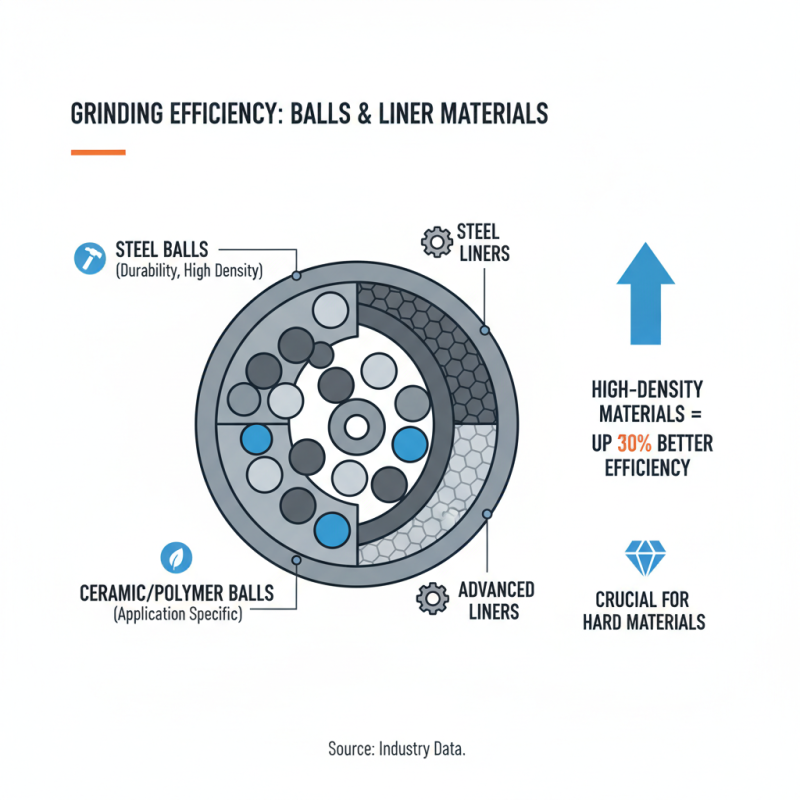
The efficiency of a continuous ball mill heavily relies on the materials used for the balls and liners. Typically, steel balls are favored for their durability and high density. However, alternative materials like ceramic or polymer balls can also be effective, depending on the application. According to industry data, using high-density materials can improve the grinding efficiency by up to 30%. This is crucial when processing hard materials, where traditional methods may fall short.
The liners' materials also significantly impact performance. Rubber can reduce wear and extend service life, while metal liners often enhance grinding action. In a recent study, mills with metal liners showed a 25% increase in output compared to those with rubber liners. The choice of material influences wear resistance and the overall lifespan of the milling equipment. Misalignment or subpar selection can lead to reduced effectiveness, requiring operators to frequently reassess their choices.
Implementing a hybrid approach may yield interesting outcomes. Combining different ball and liner materials could optimize specific grinding tasks. While this idea is promising, it often requires extensive testing and evaluation. Many operators overlook the potential for innovation in material combinations, missing out on enhanced performance and efficiency.
Key Factors Influencing the Working Principle of Continuous Ball Mills
Continuous ball mills operate on a fundamental principle. They grind materials by rotating a cylinder filled with balls and the material to be ground. However, several key factors significantly influence their efficiency and working principle.
The size of the milling balls is crucial. Smaller balls provide a finer grind, while larger ones are more effective for coarser materials. According to industry reports, ball size can impact grinding efficiency by over 30%. Additionally, the material properties of the input substance also play a role. Harder materials require more energy for grinding, which can strain the mill's operation.
Another significant factor is the mill's speed. An optimum speed ensures that the balls achieve the right impact force. Too slow and the materials won't be adequately ground; too fast and the balls won't cascade effectively. It's noted that a speed variation of only 10% can alter the grinding outcome significantly. Understanding this balance is vital for operators to refine their processes. This reflects the complexity of continuous ball mills and highlights the need for ongoing adjustments and evaluations for optimal performance.