Why Choose a Ball Mill for Cement Production?
When considering cement production, the choice of equipment is crucial. The ball mill is a popular option. It offers several advantages for grinding materials. A Ball Mill For Cement ensures uniformity in particle size. This consistency is essential for quality control in cement manufacturing.
Using a ball mill can also enhance production efficiency. It maximizes output while minimizing energy consumption. However, relying solely on this machine may come with challenges. Regular maintenance is necessary to prevent breakdowns. Over time, wear and tear can impact performance.
Despite these concerns, the benefits of a ball mill are significant. The ability to produce fine and uniform cement greatly influences construction projects. This fact can help companies make informed decisions on equipment choices. It is important to weigh both the advantages and drawbacks carefully.
Advantages of Ball Mills in Cement Production Processes
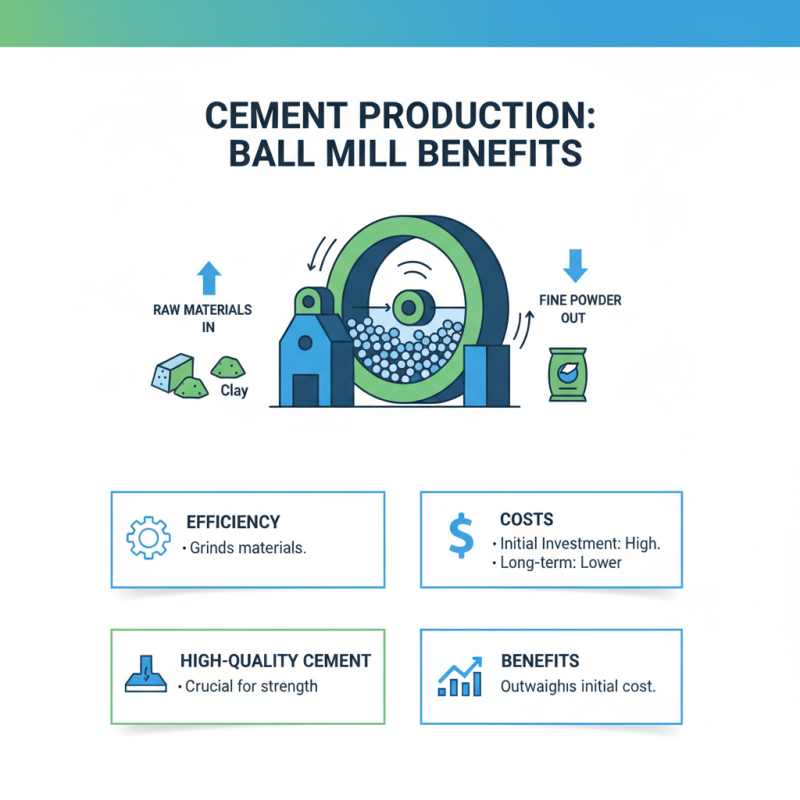
Ball mills play a crucial role in cement production. They are known for their ability to blend raw materials thoroughly. This process involves grinding materials like limestone and clay into a fine powder. The efficiency of this grinding process directly influences the quality of the final product.
One major advantage of ball mills is their adaptability. They can handle a variety of materials and achieve different particle sizes. This flexibility can be vital in meeting specific production requirements. Additionally, the construction of ball mills allows for efficient heat management. Proper heat control during milling ensures that the product maintains its desirable properties.
However, the operational complexity of ball mills can be a challenge. Regular maintenance is essential to prevent breakdowns. Operators must monitor wear on balls and liners to maintain efficiency. While ball mills have many benefits, the potential for inefficiencies exists. Identifying and addressing these issues is important for optimizing production. Hence, a thoughtful approach to operation can enhance the advantages of using ball mills in cement manufacturing.
Ball Mill Efficiency: Impact on Energy Consumption in Cement Plants
When considering cement production, the ball mill stands out for its efficiency. It plays a crucial role in grinding raw materials and finished products. An efficient ball mill can significantly reduce energy consumption. This is vital for cement plants aiming for sustainability. Optimizing energy use not only lowers costs but also minimizes environmental impact.
Energy consumption is a critical factor in cement plants. Every kilowatt saved translates into real savings. However, achieving optimal efficiency is not straightforward. Factors like ball size, mill speed, and material characteristics all influence performance. Many plants face challenges in fine-tuning these variables. Regular monitoring is essential to ensure that the mill operates at peak efficiency.
Investing in technology can improve performance. However, it requires careful analysis of existing systems. Exploring alternatives may also yield better results. There’s always more to learn about ball mill efficiency. Continuous improvement is key in this competitive industry. A perfect efficiency rate is hard to achieve, prompting a need for ongoing evaluation.
Comparison of Ball Mills and Vertical Roller Mills in Cement Grinding
When comparing ball mills and vertical roller mills for cement grinding, several factors come into play. Ball mills have been a staple in cement production for decades. They provide steady performance and are adaptable to various materials. However, they consume more energy and require more maintenance than their newer counterparts.
On the other hand, vertical roller mills have gained traction due to their efficiency. They use less energy, which translates to lower operational costs. The grinding process in vertical mills is continuous, allowing for a more consistent product. However, they can be more sensitive to fluctuations in feed material. A small change can hinder performance, leading to quality issues.
Both systems have their pros and cons. Ball mills produce a finer product but can struggle with larger quantities. Vertical roller mills are faster but may pose challenges with specific raw materials. Each cement plant needs to weigh these trade-offs carefully. Factors like capacity, cost, and product quality must drive the decision for cement production.
Comparison of Ball Mill and Vertical Roller Mill Performance in Cement Grinding
Role of Ball Mills in Achieving Desired Particle Size Distribution
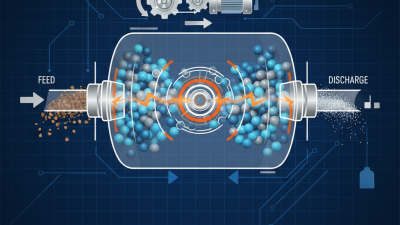
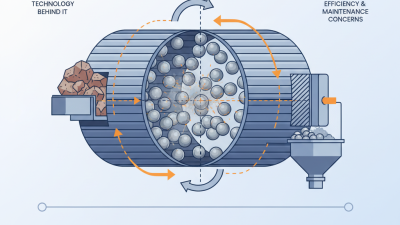
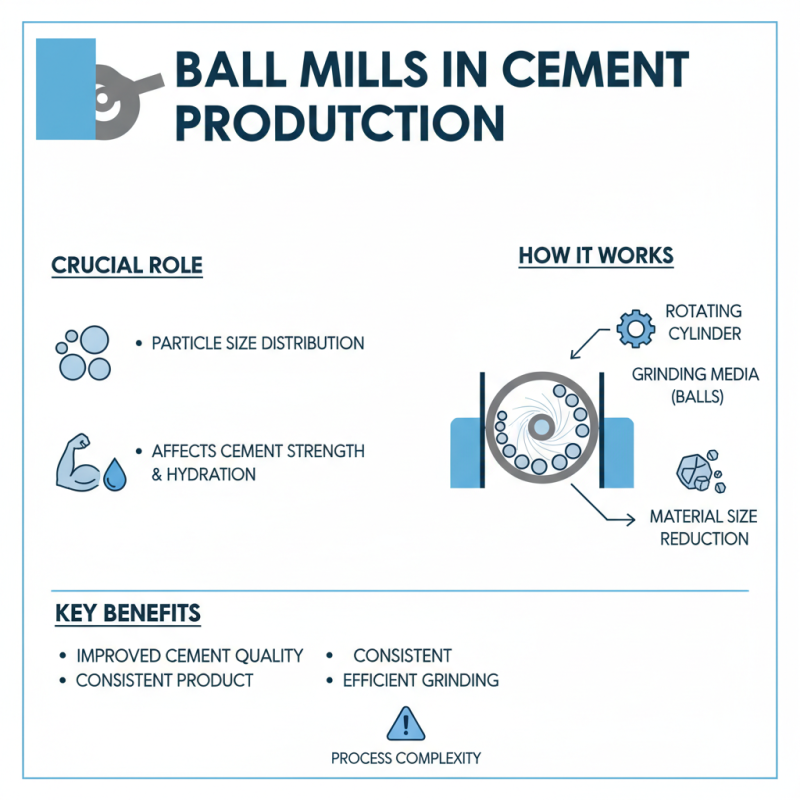
Ball mills play a crucial role in cement production. They are essential for achieving the desired particle size distribution. This distribution directly affects the properties of cement, such as strength and hydration. In a ball mill, materials are ground by rotating cylinders filled with grinding media. This motion allows for effective size reduction of materials. The process is not always straightforward.
Sometimes, the desired particle size is not achieved. Operators must adjust grinding times and media sizes. Regular maintenance is crucial to avoid inefficiencies. Mill speed also influences the outcome. Too fast or slow could lead to poor results. Different materials may respond differently, requiring constant observation and adjustment.
Achieving a consistent particle size helps in creating better quality cement. A well-controlled size distribution optimizes reactions during mixing and hydration. However, the right balance is not always easy to find. It requires experience and sometimes trial and error. Attention to detail is key. The role of ball mills goes beyond mere grinding; they shape the future of cement quality.
Cost-Benefit Analysis of Implementing Ball Mills in Cement Manufacturing
When considering cement production, the choice of milling equipment can significantly affect costs. A ball mill is often favored due to its efficiency. It effectively grinds raw materials into fine powder. This is crucial for creating high-quality cement. The initial investment can be substantial, but long-term benefits may outweigh these costs.
A ball mill’s operational efficiency can lead to lower energy consumption. Reduced energy use translates into lower electricity bills. Additionally, the maintenance costs of ball mills can be manageable. Regular checks and minor repairs keep them running smoothly. However, neglecting maintenance can lead to costly downtimes.
On the flip side, ball mills may take longer to produce the desired fineness. This slower process can impact the production rate. Some manufacturers might find this frustrating. They need to balance output with quality. Contemplating these factors is essential before making any decisions. The potential return on investment should be carefully evaluated. The advantages and limitations are worth reviewing.