How to Achieve Ultrafine Iron Oxide Grinding for Optimal Results?
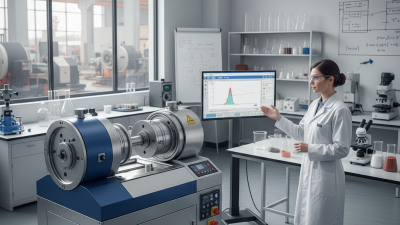
In the world of materials science, "Ultrafine Iron Oxide Grinding" stands as a critical process. Dr. Emily Cartwright, a leading expert in this field, emphasizes, “Mastering ultrafine grinding can significantly enhance reactor performance.” That statement guides our understanding of achieving optimal results in milling techniques.
Ultrafine grinding requires precise methods and high-quality equipment. Each step impacts the final product's properties. For instance, selecting the right grinding media ensures efficiency. However, many overlook the importance of testing various parameters. Poor choices in grinding conditions often lead to subpar outcomes.
Furthermore, achieving the desired particle size is not straightforward. Some producers struggle with consistency. Variations can arise from moisture content or equipment wear. Continuous refinement and experimentation are essential. Embracing these challenges allows for innovation and improved processes in ultrafine iron oxide grinding.
Understanding Ultrafine Iron Oxide: Properties and Applications
Ultrafine iron oxide is a versatile material with various industrial applications. Its unique properties are crucial for coatings, pigments, and electronics. With particle sizes typically below 100 nanometers, ultrafine iron oxide exhibits enhanced surface area and reactivity. This leads to improved performance in end products. According to a recent market report, the global demand for ultrafine iron oxide is projected to reach 30,000 tons by 2026, driven by its increasing use in coatings and inks.
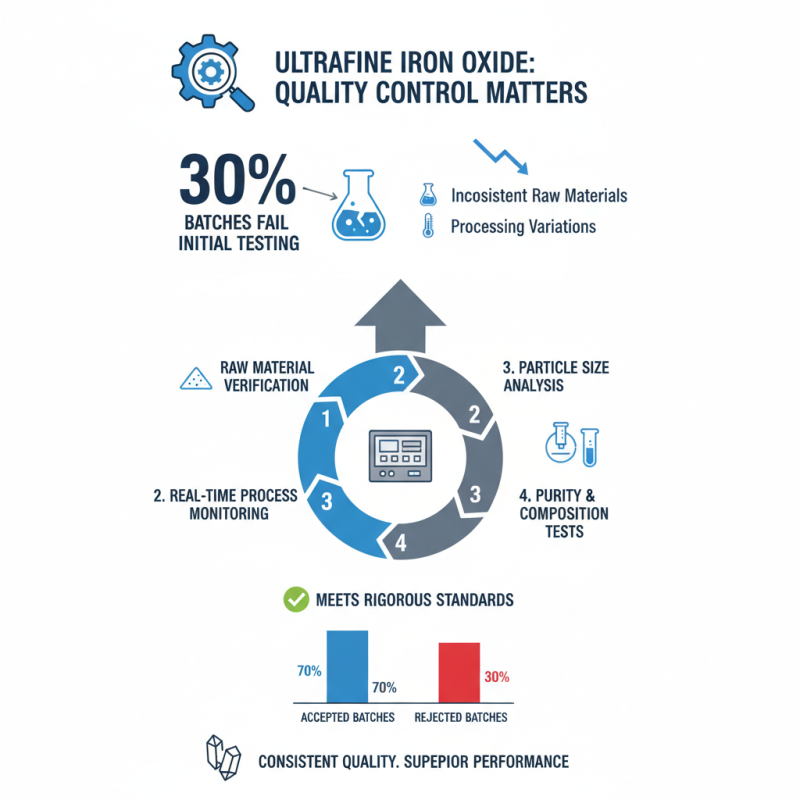
The properties of ultrafine iron oxide are both remarkable and challenging. High surface area can enhance pigment dispersion, but it can also lead to agglomeration issues. Maintaining the right balance is critical. Research indicates that improperly processed iron oxide can suffer from inconsistent quality. Data from material studies suggest that optimizing grinding processes can help achieve uniform size and improved performance. Some grinding techniques may fail to produce the desired results, highlighting the need for careful selection.
Applications for ultrafine iron oxide span many industries. In electronics, it contributes to magnetic materials, enhancing device efficiency. In coatings, it provides excellent weather resistance. Yet, not all manufacturers achieve the same quality standards. Variability in grinding techniques often results in inconsistent particle sizes. This inconsistency can impact performance negatively. Understanding these nuances is key for industrial applications.
Selecting Suitable Equipment for Ultrafine Grinding of Iron Oxide
Choosing the right equipment for ultrafine grinding of iron oxide is crucial.
Various types of mills, such as jet mills and ball mills, offer distinct superiority.
Jet mills are known for their ability to produce ultrafine particles while avoiding contamination.
They can achieve particle sizes of 1 to 10 microns. On the other hand, ball mills can also reach fine grinding, but they often introduce impurities.
When selecting equipment, consider the operational efficiency. A recent industry report indicates that jet mills can be more efficient in large-scale production.
They utilize compressed air as the grinding medium.
This process can reduce energy consumption significantly, enhancing the overall productivity. However, they require more maintenance, which could hinder long-term operations.
Tip: Regularly assess your equipment's performance to identify inefficiencies.
This reflection allows for necessary adjustments to optimize results.
Moreover, understanding the properties of the iron oxide itself is vital.
The particle shape and surface area will influence the choice of grinding equipment.
Irregular shapes may require more energy to grind efficiently. It's essential to test different settings and materials for the best results, as there's no one-size-fits-all solution.
Tip: Experiment with different milling parameters to find the optimal conditions.
It may take time, but the insights gained will be invaluable.
Key Techniques for Achieving Ultrafine Iron Oxide Particles
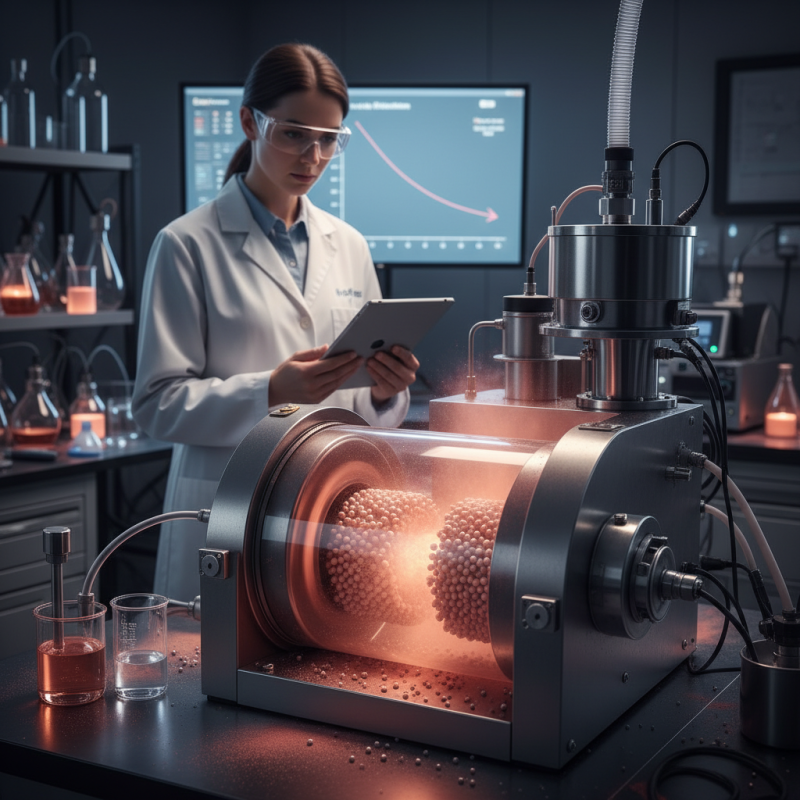
Achieving ultrafine iron oxide particles requires precise techniques. The milling process is critical. Using high-energy ball mills can yield fine particles efficiently. Adjusting the rotational speed optimizes the grinding process. A speed that is too high might lead to overheating. Conversely, too low could result in inefficient grinding.
Control the particle size distribution. This can be challenging. A narrow distribution often leads to better performance in applications. Incorporating additives might help stabilize the particles during grinding. These additives can reduce agglomeration but may affect purity. Testing different combinations is key.
Monitoring the temperature is essential. Overheating can change the iron oxide's properties. This may not always be immediately noticeable, but the effects can be significant. Remember, experimenting and learning from failures is part of the process. Each attempt reveals new insights, crucial for refining techniques.
How to Achieve Ultrafine Iron Oxide Grinding for Optimal Results? - Key Techniques for Achieving Ultrafine Iron Oxide Particles
| Technique |
Description |
Particle Size (µm) |
Equipment Used |
Efficiency (%) |
| Ball Milling |
Traditional method using grinding balls to crush particles. |
1-20 |
Ball Mill |
85 |
| Jet Milling |
Utilizes high-velocity jets of air for pulverizing materials. |
0.1-10 |
Jet Mill |
95 |
| Cryogenic Grinding |
Grinding materials at sub-zero temperatures to embrittle them. |
1-15 |
Cryogenic Grinder |
90 |
| Chemical Synthesis |
Creating ultrafine particles through chemical reactions. |
0.05-1 |
Reactor |
98 |
| Ultrasonic Dispersion |
Utilizes ultrasonic waves to disperse particles into ultrafine sizes. |
0.1-5 |
Ultrasonic Homogenizer |
92 |
Optimizing Grinding Conditions for Maximum Efficiency
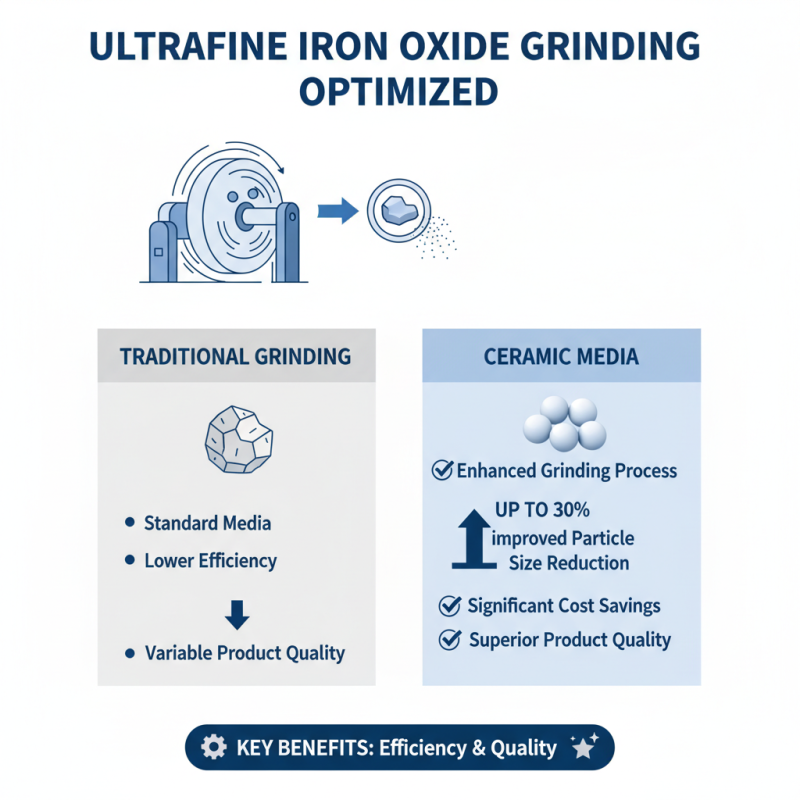
Achieving optimal results in ultrafine iron oxide grinding requires careful attention to the grinding conditions. Recent industry reports indicate that the choice of grinding media significantly impacts efficiency. For instance, using ceramic media can enhance the grinding process, increasing particle size reduction by up to 30%. This efficiency translates directly to cost savings and improved product quality.
Control of factors like temperature and pressure is also critical. High temperatures may cause iron oxide to agglomerate, which defeats the purpose of ultrafine grinding. Maintaining a stable temperature below 70°C can prevent this issue. Studies have shown that fluctuations in temperature can lead to a decrease in yield by as much as 15%.
Additionally, the duration of grinding plays a significant role. Over-grinding can lead to material degradation, impacting the final product's properties. It is essential to monitor grinding times closely. Ideally, optimizing the grinding process involves a delicate balance, as both insufficient and excessive grinding can compromise the end results.