What is an Ultrafine Ball Mill and How Can It Benefit You?
The Ultrafine Ball Mill is a critical tool in advanced material processing. It provides high efficiency and precise particle size reduction. According to a recent market analysis by Global Market Insights, the ultrafine grinding market is expected to surpass $5 billion by 2026, signaling its growing importance in various industries including pharmaceuticals and nanotechnology.
This equipment is designed to produce particles in the sub-micron range. It can achieve particle sizes as low as 100 nanometers. The ability to finely mill materials enhances their reactivity and performance. Industries often face the challenge of achieving the desired characteristics in their products. Ultrafine Ball Mills can be the solution to this complex issue.
Despite their advantages, using Ultrafine Ball Mills requires expertise and careful monitoring. Improper operation can lead to less than optimal results or equipment wear. Therefore, having a thorough understanding of the machinery is vital. Recognizing the balance between yield and quality is essential for maximizing benefits. Each application may have unique requirements that must be addressed for successful implementation.

What is an Ultrafine Ball Mill?
Ultrafine ball mills are advanced grinding tools designed to produce extremely fine powders. They utilize high-energy impacts to break down materials into particles much smaller than what conventional mills can achieve. The result is a uniform particle size distribution, which is critical in many applications. Industries such as pharmaceuticals, chemicals, and electronics greatly benefit from these precise grinding capabilities.
In operation, ultrafine ball mills rely on high-speed rotation. The balls inside the mill collide with the material, causing a significant reduction in particle size. This process allows for better dispersion and improved reactivity of substances. The resulting fine powders often have enhanced properties, resulting in higher efficacy in formulations. However, achieving the desired fineness can be challenging and may require multiple runs.
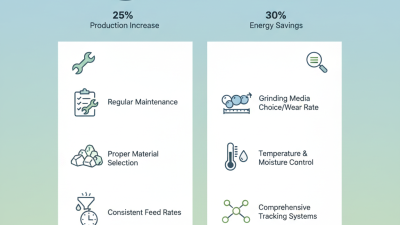
While ultrafine ball mills offer numerous advantages, they also present some challenges. Maintenance is essential to keep the machinery functioning smoothly. Regular checks on components can avoid downtime. Additionally, the energy consumption can be high, which might not be suitable for all production scales. These factors deserve consideration when deciding if this technology is right for your needs.
What is an Ultrafine Ball Mill and How Can It Benefit You?
| Feature |
Description |
| Particle Size Reduction |
Ultrafine ball mills can grind materials to a size in the micrometer or nanometer range. |
| Applications |
Used in various industries such as pharmaceuticals, cosmetics, and materials engineering. |
| Energy Efficiency |
Modern ultrafine mills are designed to minimize energy consumption during operation. |
| Product Quality |
Achieves high purity and quality of the end product without contamination. |
| Maintenance |
Requires regular maintenance checks but is generally low-maintenance compared to other milling equipment. |
| Operational Cost |
Initial costs can be high, but long-term savings on energy and labor can be significant. |
Key Components and Mechanism of Ultrafine Ball Mills
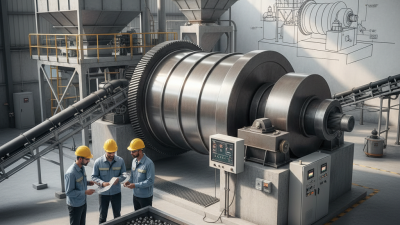
Ultrafine ball mills are intricate devices designed for grinding materials to incredibly fine particles. These mills utilize a series of rotating steel balls to crush and refine materials. The key components include a rotating cylinder, grinding media, and a feed system. The rotating cylinder holds the material and balls, while the grinding media facilitates the crushing action. This technology achieves particle sizes down to several microns, which is essential in various industries, including pharmaceuticals and materials science.
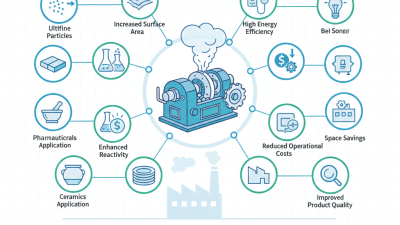
In a recent study, the efficiency of ultrafine ball mills was highlighted, revealing that they can produce particles with a surface area increase of up to 60% compared to traditional grinding methods. This fineness directly influences the reactivity and overall performance of materials. The mechanism of pulverization involves impact and shear forces, which can be fine-tuned by adjusting rotational speed and the size of the grinding media.
Despite their advanced capabilities, ultrafine ball mills require careful operation. Even minor deviations in speed or media size can result in sub-optimal performance. Regular maintenance is crucial to prevent wear and to enhance reliability. Operators should monitor output quality continuously to ensure that the desired particle size is achieved efficiently. Thus, balancing operational factors may lead to better outcomes in production processes.
Applications of Ultrafine Ball Mills in Various Industries
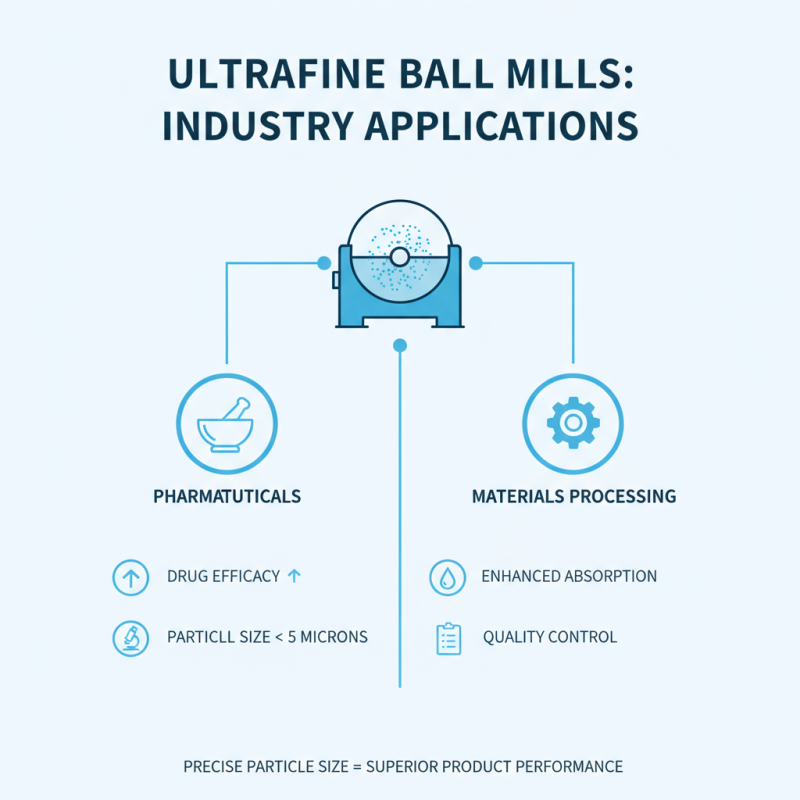
Ultrafine ball mills are increasingly used in various industries due to their unique ability to achieve precise particle sizes. These mills play a crucial role in pharmaceuticals, where the size of powders significantly influences drug efficacy. Fine particles lead to better absorption in the body, ensuring effective treatment. For instance, in creating active ingredients, ultrafine mills achieve sizes often below 5 microns. This precision is essential for quality control in medical formulations.
In the food industry, ultrafine ball mills enhance flavor and texture. They help in grind spices, coffee, and other ingredients to achieve a fine consistency. A finer grind can release more flavor, providing a more enjoyable consumer experience. However, the process can sometimes lead to over-processing. This can alter the intended flavor profile, which requires careful monitoring in production.
The chemical industry also benefits from these mills. They help create nanoparticles that enhance material properties. For instance, coatings with ultrafine particles can offer improved durability. Yet, the technology demands skilled operators. Mistakes in settings can lead to inconsistent outcomes. Continuous training and updates are vital for optimizing performance in different applications.
Advantages of Using Ultrafine Ball Mills for Material Processing
Ultrafine ball mills are essential tools for material processing. They enable the reduction of particle size down to micrometers. This level of fineness enhances the performance of various materials. For industries like pharmaceuticals and pigments, the need for fine grinding is crucial.
One major advantage of ultrafine ball mills is their efficiency. They can process materials faster and with more consistency than traditional methods. This results in improved production rates. Moreover, the improved surface area of materials promotes better reactivity in chemical processes. However, users must monitor operational parameters closely to prevent overheating or excessive wear.
Optimizing these machines requires precise control. The balance between speed and energy consumption must be considered. Fine-tuning these settings can lead to even better material outcomes. Nevertheless, finding the ideal combination can sometimes be a hit-or-miss process. Regular maintenance and adjustments are necessary for maximizing benefits.
How to Choose the Right Ultrafine Ball Mill for Your Needs
Choosing the right ultrafine ball mill involves several critical factors. First, consider the material you will be processing. Different materials have varying hardness levels, which can affect the mill's efficiency. According to a report by Research and Markets, the global ultrafine grinding market is projected to grow by 15% annually. This highlights the increasing importance of proper equipment selection.
Another aspect is the desired particle size. Ultrafine ball mills can produce particles in the range of 1 to 50 microns. Understanding your specific needs can prevent over-investment in unnecessary machinery. Additionally, evaluating energy consumption is important, as these mills can be costly to operate. Efficient models can significantly reduce costs in the long run.
**Tips:** Ensure proper mill configuration for your material type. Assess maintenance requirements for longevity. Look for options that allow flexibility in particle size adjustments. It's okay to seek input and guidance from experts. Balancing cost with technology efficiency is crucial for your operations.