Top 10 Primary Crusher Types for Efficient Material Processing?
In the world of material processing, the role of a Primary Crusher is crucial. According to industry expert Dr. Maria Lopez, "Selecting the right Primary Crusher can drastically improve operational efficiency." With a range of types available, each offers distinct advantages for different materials.
When considering the appropriate Primary Crusher for your needs, it’s essential to analyze project requirements. For example, jaw crushers excel in breaking down hard materials. However, they might not be ideal for all scenarios.
Balancing efficiency and performance is vital. Some crushers may consume more energy than others. Therefore, careful evaluation can yield better results. An informed choice contributes to a more productive material handling process.
Top 10 Primary Crusher Types for Efficient Material Processing
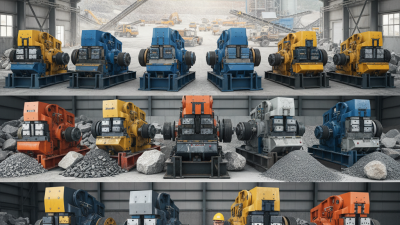
When considering the top primary crusher types for efficient material processing, it’s important to focus on their functionality and design adaptability. Cone crushers, for instance, account for approximately 30% of the global market share. They excel in producing refined aggregates, particularly for the construction industry. Their ability to handle hard and abrasive materials makes them valuable in today's operations, where durability is essential.
Jaw crushers are another significant option. They are favored for their simplicity and reliability, especially in recycling operations. According to a recent industry report, jaw crushers represent about 25% of total primary crusher sales. Despite their effectiveness, maintenance can be a concern. Parts wear out quickly if not monitored closely. Regular inspections are vital to maintain optimal performance.
Impact crushers also contribute meaningfully to material processing efficiency. They provide high reduction ratios and produce good-quality crushed materials. However, they may struggle with very hard rocks, which may lead operators to reconsider their use in certain applications. Understanding these differences helps operators choose the right equipment for specific projects. Such foresight can minimize downtime and reduce operational costs in the long run.
Understanding the Role of Primary Crushers in Material Handling
Primary crushers play a vital role in material handling within various industries. These machines reduce large rocks into manageable sizes. This process is crucial for mining, construction, and recycling operations. For efficient material processing, choosing the right primary crusher type is essential.
A well-selected primary crusher enhances productivity. It ensures the right size distribution and reduces operational costs. Factors like material type and site layout influence the choice of a primary crusher. It’s essential to assess your specific needs carefully. Oversized or undersized equipment can lead to bottlenecks or increased wear.
Tips: Regular maintenance is key. A well-maintained crusher performs better. It also reduces the risk of unexpected breakdowns. Operators should know the limitations of their equipment. Understanding capacity and material characteristics is necessary for effective operation. This knowledge can help in troubleshooting and avoiding costly errors. Recognize that even the best systems require adjustments and learning.
Top 10 Primary Crusher Types for Efficient Material Processing
| Crusher Type |
Material Processed |
Capacity (tons/hour) |
Typical Applications |
| Jaw Crusher |
Hard Rock, Ore |
50-150 |
Mining, Quarrying |
| Gyratory Crusher |
Granite, Basalt |
200-300 |
Mineral Processing |
| Cone Crusher |
Stone, Gravel |
70-200 |
Construction, Mining |
| Impact Crusher |
Concrete, Asphalt |
30-100 |
Recycling, Demolition |
| Hammer Mill |
Soft Rock, Biomass |
10-50 |
Agricultural, Recycling |
| Roll Crusher |
Clay, Coal |
50-150 |
Mining, Metallurgy |
| Vertical Shaft Impactor |
Sand, Gravel |
40-120 |
Construction, Aggregates |
| Mobile Crusher |
Various |
20-200 |
Construction Sites |
| Milling Machine |
Minerals, Materials |
15-75 |
Mining, Material Processing |
| Basher |
Construction Waste |
25-100 |
Demolition, Recycling |
Comparative Analysis of Jaw, Gyratory, and Cone Crushers
When evaluating primary crushers, three popular types stand out: jaw, gyratory, and cone crushers. Each has distinct advantages and limitations, impacting efficiency and suitability for various materials.
Jaw crushers are favored for their straightforward design and robust construction. They can efficiently crush hard materials and are particularly effective at reducing large rock sizes. However, their performance can decline with softer materials, as they rely heavily on compressive forces.
Gyratory crushers offer a more complex design, featuring a conical shape that allows for a continuous crushing action. This results in a high throughput, making them ideal for large-scale operations. Yet, their intricate mechanics may lead to higher maintenance costs and downtime. Cone crushers are versatile, excelling in secondary crushing applications. They provide a finer product size but are not as efficient with high-throughput tasks compared to gyratory models. This variance in performance across different materials often raises questions about the optimal primary crusher for specific applications.
Key Design Features and Their Impact on Efficiency in Crushers
When considering primary crushers, design features greatly influence processing efficiency. The type of material, size reduction capabilities, and overall durability are crucial.
For example, impact crushers offer high reduction ratios. This makes them suitable for soft to medium-hard materials. However, they may not perform as well with very hard rocks.
Jaw crushers, on the other hand, excel in breaking down tough materials. Their robustness allows for longevity, but they may require more maintenance. Another noteworthy feature is the feed opening size. A larger opening can accommodate bigger materials, increasing throughput. But, it also demands careful handling to avoid blockages.
Additionally, the design of the crushing chamber impacts efficiency. A well-designed chamber optimizes material flow and reduces wear. This often leads to lower operating costs over time. Yet, not all designs account for varying material characteristics, which can lead to performance discrepancies. Each crusher type presents unique advantages and drawbacks. An understanding of these features is essential for optimal material processing.
Industry-Specific Data on Crusher Performance and Capacity
In the world of material processing, primary crushers play a pivotal role. Different industries require varied performances from their equipment. According to a recent report by the International Journal of Mining Science, the efficiency of primary crushers can vary significantly based on their design and application. For instance, jaw crushers typically have a capacity ranging from 1 to 1000 tons per hour. This variability can affect operational costs and throughput rates.
Moreover, performance metrics highlight the need for tailored solutions. In the aggregate industry, for instance, feed size can greatly influence crusher efficiency. The same study indicates that reducing feed size can improve output by up to 20%. However, it's essential to recognize that not all crushers perform equally in different environments. Some may struggle with harder materials, leading to increased wear and tear. This often results in unexpected downtime, impacting productivity.
It's also crucial to consider the evolving technological landscape. Recent advancements show that automation in primary crushers can enhance performance and reliability. Yet, not every organization has adopted these innovations. A discrepancy exists between those who have upgraded their systems and those relying on outdated models. Such gaps can create inefficiencies, suggesting the industry must reflect on its equipment choices and adapt to emerging technologies.
Conclusion
The article "Top 10 Primary Crusher Types for Efficient Material Processing" explores the critical role that primary crushers play in the material handling industry. It delves into various types of primary crushers, including jaw, gyratory, and cone crushers, providing a comparative analysis of their performance and efficiency. Key design features are also discussed, highlighting how these elements impact overall effectiveness and operational capacity.
Furthermore, the article presents industry-specific data on crusher performance, illustrating the varying capacities of different primary crusher types, and examines recent trends in primary crusher technologies and market developments. This comprehensive overview serves as a valuable resource for understanding how the right primary crusher can enhance material processing efficiency across various applications.