Top 10 Benefits of Using Ultrafine Ball Mill for Fine Grinding?
In the world of material processing, the Ultrafine Ball Mill stands out for its unique grinding capabilities. Many industries seek fine powders for various applications. Achieving the desired particle size can greatly impact product quality. The Ultrafine Ball Mill excels in this area, offering a range of benefits that enhance efficiency and performance.
One significant advantage is the ability to produce ultrafine particles. This leads to improved surface area and reactivity of materials. It makes a difference in industries like pharmaceuticals and ceramics. The high energy efficiency of the Ultrafine Ball Mill also reduces operational costs. Moreover, it has a smaller footprint compared to traditional mills, saving valuable space in manufacturing facilities.
However, some users may find its maintenance challenging. Regular servicing is required to maintain peak performance. It's important to consider the long-term implications of this equipment. Balancing the benefits with maintenance efforts is crucial. Overall, the Ultrafine Ball Mill can transform fine grinding processes, but awareness of its complexities is also necessary.
Advantages of Ultrafine Ball Mills in Material Processing
Ultrafine ball mills are essential in fine grinding processes. They break down materials into very small particles. This leads to improved purity and consistency of the final product. With finer particles, mixing with other substances becomes easier. These mills also enhance the surface area, promoting better chemical reactions.
One advantage is energy efficiency. Ultrafine ball mills use less energy compared to traditional grinding methods. This can significantly reduce operational costs. Additionally, they often require less maintenance. This is due to their design, which minimizes wear and tear. However, they may require a higher initial investment. This can be a concern for some users.
Tips: When selecting an ultrafine ball mill, consider the material type. Not all mills work well with every material. Test runs can help determine suitability. Regularly monitor the grinding process. Fine-tuning can lead to better outcomes. Also, evaluate the size of the final particles required for your project.
Top 10 Benefits of Using Ultrafine Ball Mill for Fine Grinding
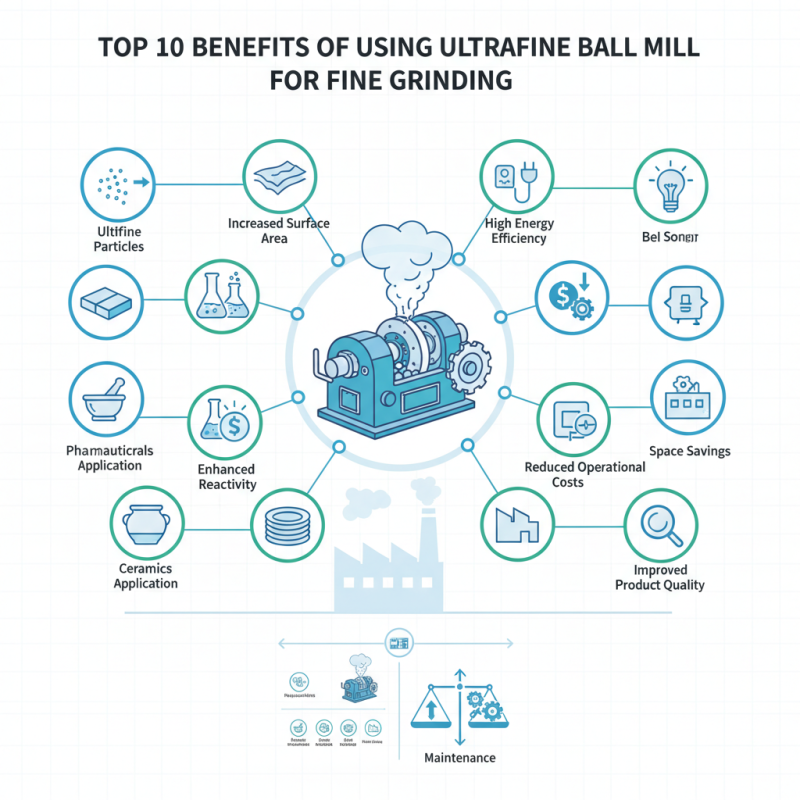
This chart illustrates the top 10 benefits of using ultrafine ball mills in fine grinding applications. Each benefit is graded on its importance percentage, demonstrating how ultrafine ball mills enhance overall material processing efficiency.
Improved Particle Size Reduction Efficiency with Ultrafine Ball Mills
Ultrafine ball mills are revolutionizing fine grinding processes. They excel in particle size reduction, making them ideal for various industries. These mills can achieve significantly smaller particle sizes compared to traditional grinding methods. As a result, materials become more uniform in texture. This uniformity enhances the effectiveness of subsequent processes.
The efficiency of ultrafine ball mills stems from their design. The grinding media used are incredibly small, allowing for better interaction with the material. This results in a much finer product. However, the setup requires careful adjustments. Too much energy can lead to heat buildup, affecting the final product's quality. Operators must monitor the process closely to avoid such pitfalls.
Moreover, the versatility of ultrafine ball mills is noteworthy. They can be used for hard, brittle, or soft materials. Yet, this adaptability comes with challenges. Some materials may clog the mill, slowing the grinding process. A strategy for overcoming this is to pre-treat the materials. This enhances their flowability and efficiency during grinding. Keeping these factors in mind is crucial for achieving optimal results in fine grinding.
Top 10 Benefits of Using Ultrafine Ball Mill for Fine Grinding
| Benefit |
Description |
Impact on Particle Size |
| Enhanced Particle Size Reduction |
Achieves finer particles for improved material properties. |
Reduces particle size significantly. |
| Uniform Particle Distribution |
Promotes consistency across material batches. |
Improves uniformity of particle sizes. |
| Energy Efficiency |
Designed for minimal energy consumption during operation. |
Reduced energy costs per unit of material processed. |
| Versatility |
Can process a variety of materials with different properties. |
Adaptable to various particle size targets. |
| Improved Surface Area |
Produces higher surface area for chemical reactions. |
Enhances reactivity due to larger surface area. |
| Reduced Contamination |
Minimizes risks of contamination during milling. |
Maintains purity of processed materials. |
| Simplified Operation |
User-friendly controls for easy operation. |
Streamlines the grinding process. |
| Less Maintenance |
Robust design requires less frequent maintenance. |
Reduces downtime for repairs. |
| Cost Efficiency |
Lower operational costs due to increased efficiency. |
Translates to cost savings in production. |
| Scalability |
Easily scalable to meet production demands. |
Supports both small and large batch processing. |
Enhanced Surface Area and Reactivity from Fine Grinding Techniques
Fine grinding techniques, especially using ultrafine ball mills, offer significant benefits. One of the key advantages is the enhanced surface area of the materials. When particles are finely ground, their total surface area increases dramatically. This larger surface area leads to more reactive surfaces, allowing materials to interact more effectively in various chemical processes.
The reactivity resulting from fine grinding is crucial. For instance, in chemical reactions, smaller particles can often lead to faster reaction rates. This increased reactivity can improve product yields. However, balance is essential. Over-grinding can result in unnecessary fines that don’t contribute to performance. It’s important to find the right range for optimal results.
Moreover, the choice of grinding parameters, like speed and time, can dramatically affect outcomes. While one setting may enhance surface area, another might lead to energy inefficiency. Experimentation is often needed to determine the best approach. Observing the effects of minor adjustments can provide valuable insights. Fine grinding is not just about making things small; it is about optimizing process efficiency.
Versatility of Ultrafine Ball Mills for Various Material Types
Ultrafine ball mills are gaining popularity for their versatility. They can process various material types, including minerals, metals, and organic compounds. A recent industry report noted that ultrafine milling can reduce particle size down to 1 micron or less, which is often necessary for advanced applications. This ability allows manufacturers to achieve higher quality products and improved performance.
The flexibility of ultrafine ball mills is particularly evident in the pharmaceutical and food industries. In pharmaceuticals, precise grinding is crucial for bioavailability. A study found that finer particles enhance drug solubility, leading to better absorption. Meanwhile, in food processing, ultrafine milling helps maintain flavor and nutrition while providing a finer texture. However, some processes might lead to heat generation, which can affect sensitive materials.
Despite their benefits, ultrafine ball mills pose challenges. Operators must monitor the milling environment closely. If not managed, overheating or contamination could occur. Furthermore, the initial cost of ultrafine ball mills can be significant, which raises questions about return on investment. These factors highlight the need for careful evaluation before adopting this technology in various sectors.
Environmental Benefits of Using Ultrafine Ball Mills in Manufacturing
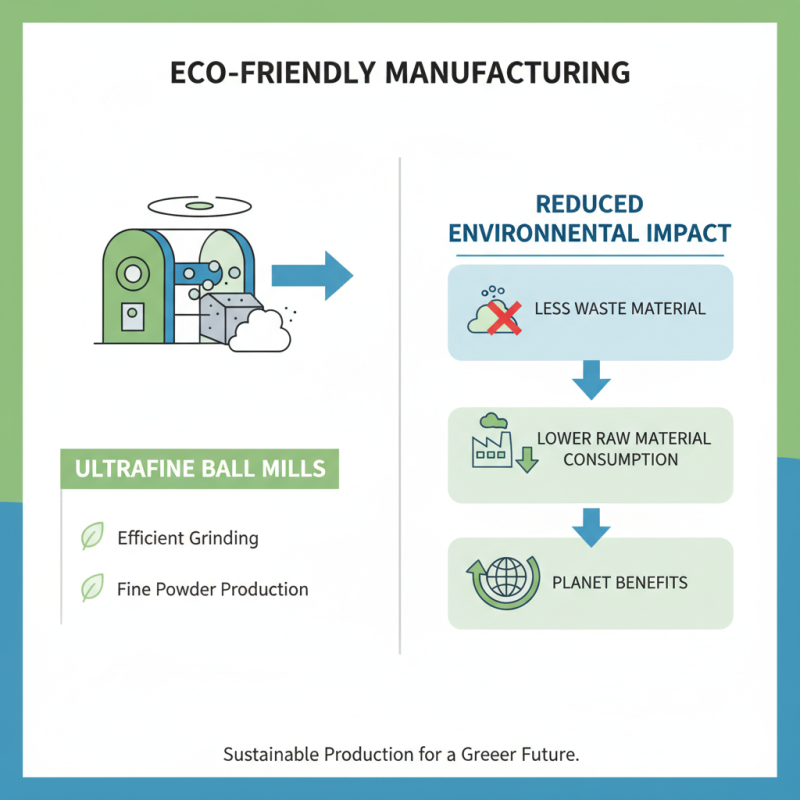
Ultrafine ball mills play a significant role in eco-friendly manufacturing. These machines efficiently grind materials to a fine powder, often reducing waste. Less material is left over during the grinding process. This leads to a decrease in raw material consumption, benefiting the environment.
Moreover, ultrafine ball mills generate less energy. They require lower power input compared to other grinding methods. This results in reduced carbon emissions and energy costs. Using these mills can lower the overall carbon footprint of manufacturing. Many companies are seeking to reduce their environmental impact. Choosing ultrafine ball mills aligns with this goal.
**Tip:** Regular maintenance of ultrafine ball mills can enhance their efficiency. Check for wear and tear periodically. Proper functioning machines operate more effectively, saving energy.
Another benefit is that ultrafine ball mills can utilize recycled materials in their processes. This promotes a circular economy. However, not all facilities are equipped to handle recycled input. Investing in proper training and equipment can bridge this gap.
**Tip:** Experiment with different materials to find the most eco-friendly combinations. Some mixtures may yield better results than others. Testing is crucial in optimizing environmental benefits.