Top Tips for Choosing the Best Crushing Equipment?
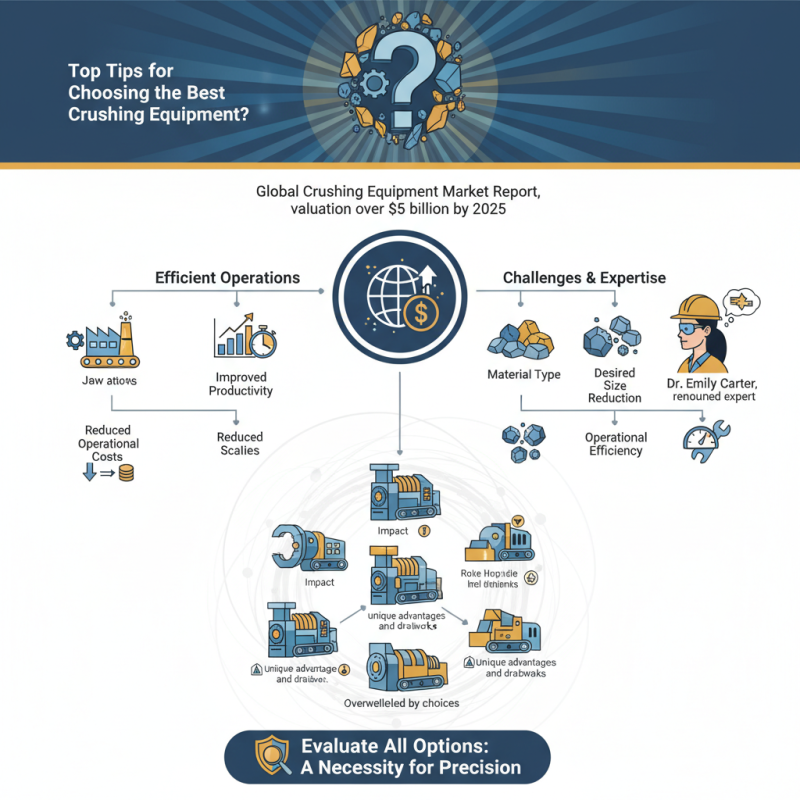
Choosing the right Crushing Equipment is crucial for efficient operations in the mining and construction industries. According to the Global Crushing Equipment Market Report, the industry is projected to grow significantly, reaching a valuation of over $5 billion by 2025. The right equipment can drastically improve productivity and reduce operational costs. However, selecting the appropriate machinery is often more challenging than it seems.
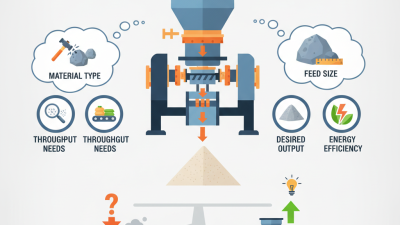
Dr. Emily Carter, a renowned expert in mining technology, states, “Investing in the right crushing equipment is a game changer.” Her insights highlight the importance of understanding both the specifications and the practical applications of various machines. Factors like material type, desired size reduction, and operational efficiency are paramount. Many operators rush the selection process, leading to poor choices that can haunt projects down the line.
A number of crushing equipment options exist, each with unique advantages and drawbacks. It’s easy to get overwhelmed by the choices available. Poor selection can result in operational inefficiencies and increased maintenance costs. In an industry where precision is vital, taking the time to evaluate all options is not just a recommendation; it's a necessity.
Understanding the Types of Crushing Equipment Available
Selecting the right crushing equipment is crucial for efficiency and productivity in various industries. Many types of crushing equipment exist, each with its distinct characteristics. For instance, jaw crushers are well-known for their ability to handle large rocks and are often employed in primary stages of crushing operations. Reports suggest they can achieve a reduction ratio of up to 6:1.
Another common type is the cone crusher. These devices are preferred for secondary and tertiary crushing. They provide significant benefits, such as high production efficiency and low operational costs. Industry statistics indicate that cone crushers can produce quality material with a fine end product. However, improper setup can lead to increased wear rates.
Impact crushers also play a vital role in the crushing process. They excel in creating sand and gravel products. These machines can operate at high speeds, offering impressive performance. Nevertheless, they can struggle with larger, harder materials and might require more frequent maintenance. It's vital to evaluate operational needs and material types to choose the best equipment effectively. Understanding these options can lead to better decision-making and improved overall productivity.
Evaluating the Material Characteristics for Crushing Needs
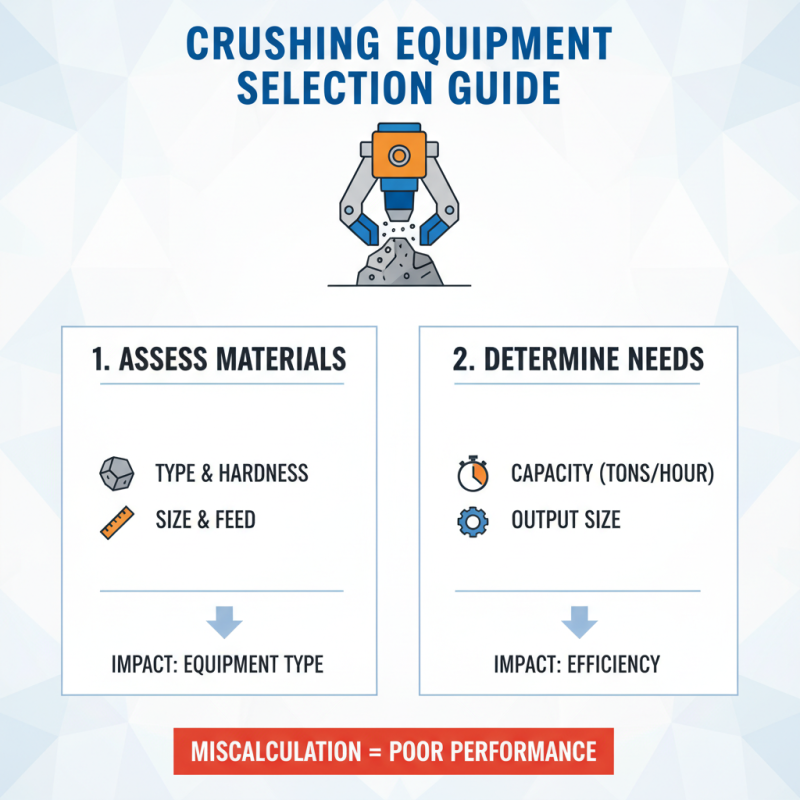
When selecting crushing equipment, understanding material characteristics is crucial. Different materials behave uniquely under force. For example, harder materials like granite require more robust equipment. In contrast, softer materials like asphalt can be processed with less intense machinery. According to industry reports, the compressive strength of the material plays a significant role. Materials with strengths above 30,000 psi are often best suited for heavy-duty crushers.
Another factor to consider is the moisture content of the material. Higher moisture levels can lead to clumping. This can hinder the efficiency of the crushing process. Studies indicate that materials with moisture above 10% may require additional drying. This adds time and cost to operations. Consequently, operators must evaluate the moisture content before choosing equipment.
Furthermore, the desired end product shapes the selection process. Companies often seek specific particle sizes. A study by the National Stone, Sand & Gravel Association revealed that 70% of companies need materials within certain size specifications. Equipment must accommodate these requirements. It is essential to analyze these characteristics carefully. Ignoring them can result in inefficient crushing and unforeseen operational challenges.
Considering the Maintenance and Operational Costs
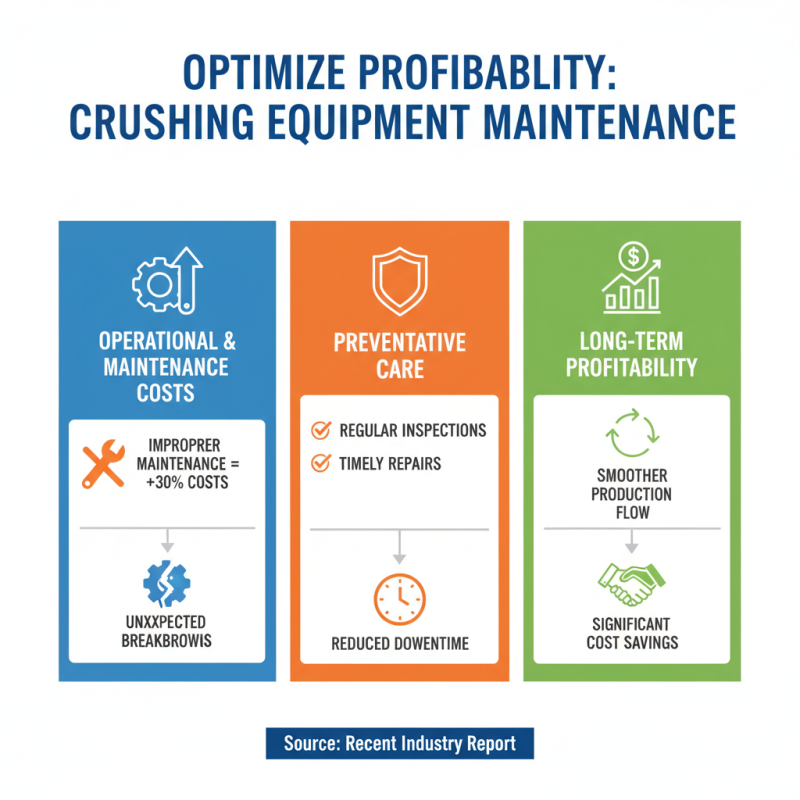
When selecting crushing equipment, operational and maintenance costs can significantly affect long-term profitability. According to a recent industry report, improper equipment maintenance can increase operational costs by up to 30%. Regular inspections and timely repairs help prevent unexpected breakdowns. These disruptions not only delay production but also escalate repair costs significantly.
It’s essential to evaluate the maintenance requirements of the equipment. Some models may boast lower initial costs but come with high upkeep demands. A study indicates that over 20% of total equipment costs are often attributed to maintenance expenses. Choosing equipment that is easy to maintain can save time and resources.
Operational costs also hinge on energy efficiency. Efficient machines consume less power, leading to lower energy bills over time. However, don’t overlook potential flaws in energy claims from manufacturers. It’s crucial to analyze independent performance data to verify these claims. This due diligence can lead to more sustainable financial outcomes. Remember, investing in the right equipment is not just about upfront costs. It's about long-term sustainability and efficiency.
Researching Manufacturer Reputation and Support Services
When choosing crushing equipment, researching manufacturer reputation is crucial. A strong reputation often signals quality. Look for manufacturers with a track record of reliability and customer satisfaction. Check online reviews and industry forums for insights. Peer recommendations can offer valuable perspectives too. It's important to know who stands behind the product you buy.
Support services play a significant role in this decision. Consider the availability of spare parts and service personnel. A company that provides prompt support can minimize downtime. Evaluate their response times during crises. Delayed assistance can lead to lost revenue. Training programs for your team can also enhance equipment efficiency. Investing in a manufacturer with comprehensive support services pays off in the long run.