Leave Your Message

China Top Ultrafine Grinding Crusher Manufacturer?

China’s ultrafine processing sector has moved from low-cost production toward engineered performance. Today, buyers compare particle-size control, energy use, wear resistance, automation, and after-sales support. The question is not simply, “Who is the China Top Ultrafine Grinding Crusher Manufacturer?” It is more demanding.

Look closely at the evidence.

The Coalition for Eco Efficient Comminution reports that grinding can consume a substantial share of mining energy, often reaching 30–50% of a site’s electricity demand. This makes equipment selection an operating-cost decision, not just a purchasing decision. Industry analyses from Grand View Research and MarketsandMarkets also identify growing demand for fine and ultrafine material processing across minerals, chemicals, cement, and advanced materials.

As comminution specialist Dr. Tim Napier-Munn has written, “The energy efficiency of comminution is notoriously low.” His observation remains practical. A machine producing fine powder may still perform poorly if it generates excessive heat, unstable throughput, or rapid liner wear.

Real factories reveal the difference.

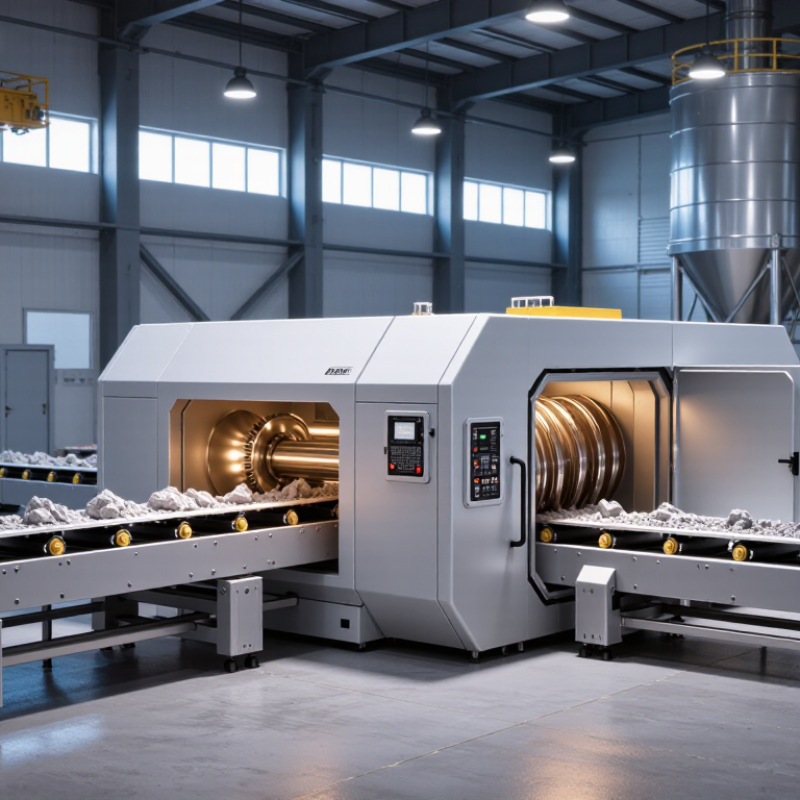
A credible Chinese manufacturer should provide laboratory test results, feed-size limits, product distribution data, motor efficiency, and documented customer references. It should explain whether its equipment is technically a crusher, mill, classifier, or integrated grinding system. That distinction matters. Marketing language can blur it.

There is also room for doubt. Reported capacity may depend on soft feedstock, ideal moisture, or unrealistic laboratory conditions. Therefore, this guide examines manufacturers through measurable performance, engineering experience, certification, maintenance response, and application fit. The strongest supplier is not always the largest. It is the one that can repeat the promised result under your actual working conditions.
China Top Ultrafine Grinding Crusher Manufacturer?

Ultrafine Grinding Crushers: Particle Sizes Typically Below 10 μm

Ultrafine Grinding Crushers: Particle Sizes Typically Below 10 μm

Ultrafine grinding crushers reduce mineral feed into particles typically below 10 μm. This range supports cement additives, calcium carbonate, ceramics, and advanced fillers. The U.S. Geological Survey reported global cement production at about 4.1 billion tonnes in 2023. That scale increases demand for finer, more consistent powders. Yet “ultrafine” should never be accepted as a marketing label alone.

Real performance depends on feed hardness, moisture, residence time, and classifier control. In a working plant, operators should monitor mill temperature, vibration, air pressure, and product size continuously. Laser diffraction testing, described in ISO 13320:2020, can verify the particle-size distribution. A 10 μm median does not mean every particle is below 10 μm. That distinction matters.

Energy use remains a practical concern. The International Energy Agency estimates that cement production creates roughly 7% of global carbon dioxide emissions. Efficient grinding therefore requires more than a powerful motor. Closed-circuit classification, suitable liners, and controlled feed rates can reduce unnecessary recirculation. Small details matter.

In my experience, moisture is often underestimated. Damp feed can build deposits and distort output. Wear also changes the final curve slowly, sometimes before operators notice it. A crusher may reach the target briefly, but stable production is harder. Buyers should request test reports, sampling procedures, and long-run operating data before selecting equipment. No single machine suits every mineral.
China’s Ultrafine Grinding Market: Materials, Capacity, and Key Applications

China Top Ultrafine Grinding Crusher Manufacturer?

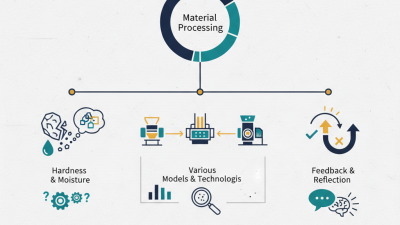
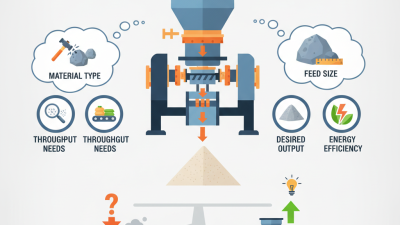
China’s ultrafine grinding market is shaped by material demands, energy costs, and application quality. In mineral-processing projects, feed moisture can change output within one shift. Dry calcium carbonate may flow smoothly, while damp kaolin forms stubborn cakes. Small differences matter. A crusher may prepare the feed, but ultrafine performance depends on the grinding and classification system. Equipment selection should consider hardness, feed size, target fineness, and contamination limits.

Common materials include limestone, calcite, barite, talc, kaolin, silica, fly ash, and selected metal oxides. Each behaves differently under impact, compression, or air classification. A soft mineral can still consume excessive power when moisture rises. Chinese plants often serve construction chemicals, plastics, coatings, ceramics, battery-related materials, and advanced fillers. Required particle sizes may range from several microns to sub-micron levels. The target is not always finer.

Capacity must be measured at a specified fineness, not from an attractive maximum figure. A practical line may combine a feeder, mill, classifier, dust collector, and controlled air system. Operators monitor bearing temperature, vibration, residue, and particle distribution during production. Laboratory data can mislead. Regional demand is strong, but the market is not uniform. Power availability, mineral quality, and environmental requirements alter the final design. Some published capacity figures deserve closer review because they may reflect ideal feed and new liners. That limitation should be stated clearly.

Core Performance Metrics: 1–10 μm Fineness, Feed Size, and Throughput

China Top Ultrafine Grinding Crusher Manufacturer?

Choosing an ultrafine grinding crusher requires more than a catalogue fineness claim. A practical target is 1–10 μm, verified through laser diffraction under ISO 13320 procedures. Feed size also matters. A unit accepting 10 mm material may perform differently from one receiving a controlled 2 mm feed. Throughput must be stated with material type, moisture, hardness, and final particle size.

Industry data supports careful testing. CEEC International technical reviews report that comminution can consume 30–50% of a mine site’s energy. The U.S. Geological Survey’s Mineral Commodity Summaries 2024 also shows the scale and diversity of mineral processing demand. These figures do not guarantee machine performance. They show why energy use, wear rate, and stable output deserve equal attention. A claimed 5 μm result may be only a laboratory peak. Real production can drift.

Tips: Ask for a signed test report. Check D90, not only average size. Request throughput at your actual feed. Inspect power consumption per tonne. Confirm moisture limits and replacement-part life. A pilot trial is safer than a brochure.

Some details still need judgment. Higher speed may improve fineness, but it can increase heat and wear. A smaller feed may improve output, yet preprocessing adds cost. The best supplier should disclose these trade-offs, including failed test conditions, instead of presenting perfect numbers only.

China Top Ultrafine Grinding Crusher Manufacturer? Core Performance Metrics

Representative operating points for industrial ultrafine grinding systems, comparing product fineness, maximum feed size, and throughput. Actual performance depends on material hardness, moisture, feed composition, and configuration.

Fineness is shown in μm, feed size in mm, and throughput in metric tons per hour. Values represent typical non-brand-specific industrial benchmark points.

How to Evaluate Chinese Manufacturers: ISO 9001, Testing, and Service

China Top Ultrafine Grinding Crusher Manufacturer?

A serious Chinese manufacturer should prove more than low pricing. The ISO Survey 2022 recorded 1,265,216 ISO 9001 certificates worldwide. This figure shows certification is common, not automatically meaningful. Check the certificate scope, expiry date, factory address, and issuing body. The scope should cover equipment design, production, and after-sales support. I also compare quality records with actual workshop conditions. Clean assembly areas and traceable parts matter.

Testing deserves closer attention. Ask for a signed report using representative feed material, not laboratory powder alone. The report should show capacity, final particle size, power consumption, vibration, and operating hours. Sieve analysis should follow a recognized method, such as ASTM E11. The USGS Mineral Commodity Summaries 2024 estimated U.S. crushed stone production near 1.5 billion metric tons. Large-scale demand makes repeatable performance essential. A single successful test proves little.

Service quality appears in small details. Request spare-parts lists, drawings, commissioning procedures, and response times in writing. Ask whether technicians can support installation across time zones. Speaking with two recent users can reveal more than polished brochures. I once treated a complete manual as strong evidence; that was too optimistic. Manuals can be copied. Verified test data and documented corrective actions are harder to fake. Allow room for doubt.

China Top Ultrafine Grinding Crusher Manufacturer? - How to Evaluate Chinese Manufacturers: ISO 9001, Testing, and Service

Evaluation Dimension Practical Requirement or Benchmark Evidence to Request Suggested Weight Score
(0–5)
Quality Management System A current ISO 9001 certificate should cover the legal manufacturing entity and relevant production activities. Verify the certificate scope and validity. Certificate number, certification body, scope, expiry date, and independent certificate-verification record. 15% —
Material and Component Traceability Critical parts should be traceable from incoming material inspection through machining, assembly, and final inspection. Material certificates, inspection records, heat or batch numbers, supplier-control procedure, and nonconformity records. 10% —
Ultrafine Product Performance The supplier must state a measurable product-size range, such as D80 or D97, together with the feed material, moisture, throughput, and operating conditions. Application-specific test report showing particle-size distribution, sampling method, operating parameters, and test date. 20% —
Testing Capability Testing should use calibrated instruments and a documented method. Laser diffraction, sieve analysis, or another suitable method must match the target particle-size range. Instrument list, calibration certificates, test procedure, raw data, repeatability information, and laboratory quality records. 15% —
Energy and Throughput Data Compare specific energy consumption, feed rate, product rate, and installed power under equivalent material and fineness conditions. Do not compare capacity figures without test conditions. Signed performance test report, motor rating, operating hours, feed analysis, product analysis, and kWh per tonne calculation. 10% —
Wear Parts and Maintenance Wear-part material, expected service interval, replacement procedure, lubrication requirements, and access for inspection should be clearly documented. Parts list, recommended spares, maintenance schedule, wear-limit drawings, warranty terms, and historical wear data from comparable applications. 10% —
Safety and Compliance The complete system should address guarding, emergency stops, electrical safety, dust control, noise, operating instructions, and applicable destination-market requirements. Risk assessment, electrical schematics, safety-function test records, manuals, declaration documents, and dust or noise test results where applicable. 10% —
After-Sales Service A reliable supplier should provide commissioning support, operator training, troubleshooting guidance, spare-parts availability, and a defined response process. Service-level agreement, response-time commitment, training plan, installation scope, service-team qualifications, and spare-parts delivery history. 5% —
Commercial and Delivery Risk The quotation should define scope, delivery terms, acceptance criteria, documentation, packaging, payment milestones, warranty, and remedies for unmet performance. Detailed technical offer, contract draft, inspection and acceptance plan, packing list, warranty statement, and reference project contacts. 5% —
Total Evaluation Weight 100% —
Evaluation note: A high score should be based on verifiable, application-specific evidence rather than a certificate or catalogue claim alone. Confirm whether the proposed equipment is a crusher, grinding mill, classifier, or complete ultrafine grinding system before comparing technical data.

Leading Manufacturer Selection: Energy Use, Wear Rates, and Total Cost per Ton

China Top Ultrafine Grinding Crusher Manufacturer?

Leading Manufacturer Selection: Energy Use, Wear Rates, and Total Cost per Ton

Selecting an ultrafine grinding crusher requires more than checking the purchase price. In plant audits, energy consumption often varies with feed hardness, moisture, and target fineness. Ask manufacturers for kWh per ton under conditions close to your own material. A laboratory result may look impressive. Production results can differ.

Wear rate deserves equal attention. Request measured liner, grinding media, and classifier replacement rates, preferably in grams per ton. Inspect the contact surfaces after extended testing. Smooth feed control and stable airflow can reduce unnecessary abrasion. However, one test campaign is not enough. Material properties may change across a quarry or mineral stockpile.

Total cost per ton combines energy, wear parts, labor, maintenance, and lost production. A practical comparison should use a twelve-month operating model, not only the quotation. Include downtime for inspections and difficult component changes. Check whether technicians can access bearings, seals, and discharge systems safely. A reliable manufacturer should provide test records, operating limits, spare-part forecasts, and clear warranty conditions. Ask uncomfortable questions. Cheap equipment may become expensive when output falls during humid seasons or when replacement parts arrive late. The calculation will never be perfect, but transparent assumptions make the decision more defensible.