Best Ultrafine Quartz Powder Mill for Global Buyers?
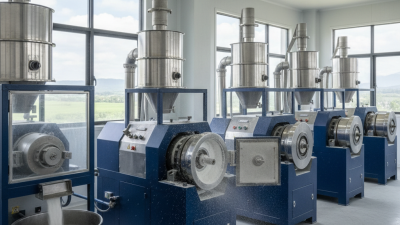
In today's competitive market, selecting the best Ultrafine Quartz Powder Mill can be challenging. Buyers often face several options. Each mill claims superior performance and efficiency. However, the true value lies in understanding the unique capabilities of each machine.
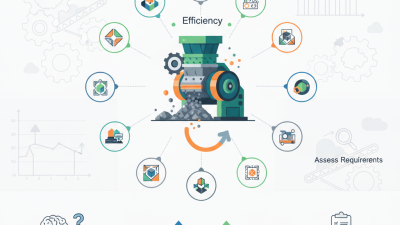
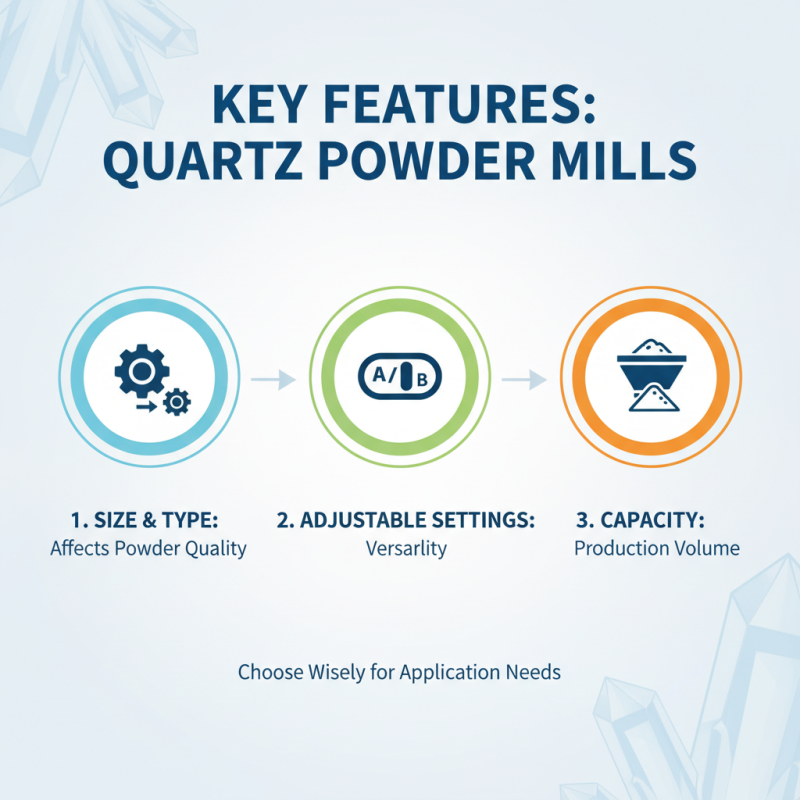
An effective Ultrafine Quartz Powder Mill should maximize production while maintaining quality. Factors such as particle size distribution and energy consumption play crucial roles. For global buyers, assessing these features is key. It's essential to choose a mill that aligns with specific business needs.
Moreover, industry experts suggest careful consideration of manufacturer reputation. Reviews and case studies provide valuable insights. Often, buyers overlook this vital aspect. They may focus solely on price rather than long-term reliability. A well-informed choice can lead to substantial growth. Therefore, thorough research is imperative for making the right decision.
Types of Ultrafine Quartz Powder Mills Available Worldwide
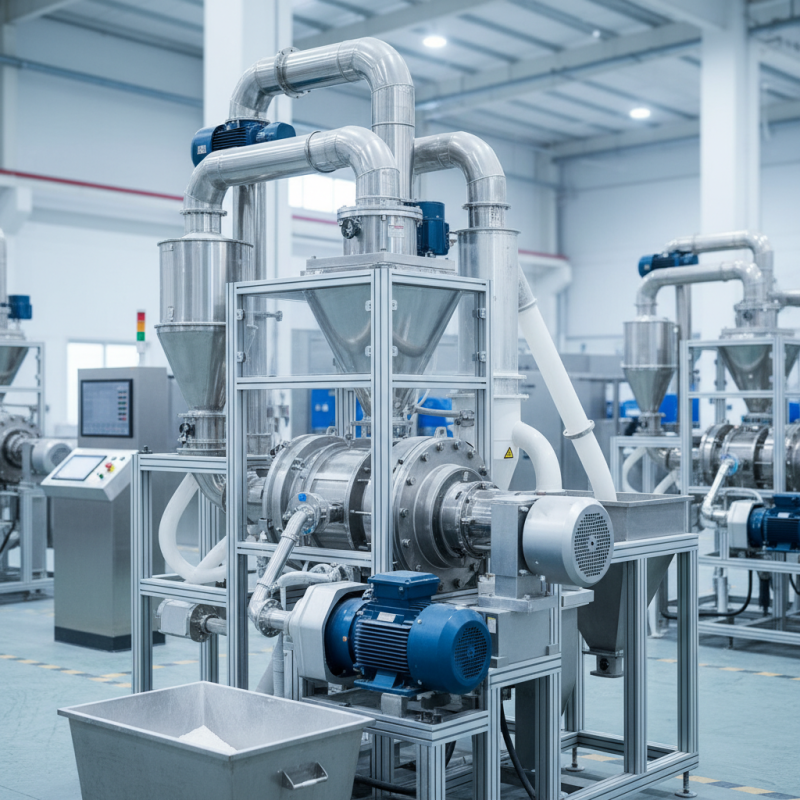
When exploring ultrafine quartz powder mills globally, understanding the various types available is crucial. These mills generally fall into different categories based on their grinding mechanisms.
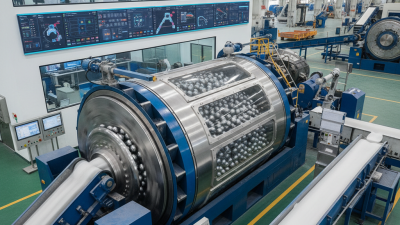
Ball mills are popular for their versatility and efficiency. They can handle a range of materials and produce fine particles.
Jet mills, on the other hand, use high-pressure air to achieve ultra-fine grinding, resulting in particles that are less than 10 microns in size. Their ability to prevent contamination makes them a preferred choice for many industries.
Additionally, hammer mills are another option, known for their straightforward design and operation. They use high-speed rotating blades to crush materials, which can result in a coarser product. While effective, users may find that achieving the desired particle size requires careful adjustment of settings. Another method, the impact mill, utilizes powerful mechanical forces to break down materials rapidly. Its efficiency can be beneficial for large-scale production but may come with energy costs that need consideration.
Buyers should weigh the pros and cons of each type. The choice of mill significantly impacts the quality and consistency of the end product. It's also vital to consider maintenance requirements and operational costs. Each mill has its unique challenges. Further research and expert consultations can help guide buyers to the best choice for their specific needs.
Top Manufacturers of Ultrafine Quartz Powder Mills for Global Buyers
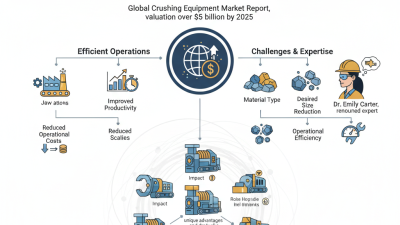
When considering ultrafine quartz powder mills, global buyers must focus on the top manufacturers known for their reliable products. According to a report by ResearchAndMarkets, the demand for ultrafine quartz powder is projected to reach USD 2.5 billion by 2025. This growth is driven by its applications in various industries, especially in electronics, ceramics, and construction materials.
Top manufacturers in the industry demonstrate a commitment to innovation and quality. Many are investing in technology to enhance production efficiency. The development of precision milling equipment is crucial for obtaining the desired particle size and distribution. For instance, mills capable of achieving particle sizes below 10 microns are increasingly sought after. However, finding the right balance between cost and quality remains a challenge for many buyers.
While leading manufacturers often boast impressive capabilities, it’s vital to evaluate them thoroughly. Not all offer the same level of reliability. Some machines may have higher failure rates or require excessive maintenance. Buyers should consider long-term operational costs and not just initial investment. A deeper dive into customer reviews and industry reports can reveal insights into a manufacturer's performance. Ultimately, informed decisions will ensure better outcomes in sourcing ultrafine quartz powder mills.
Comparative Analysis of Cost and Efficiency of Different Mills
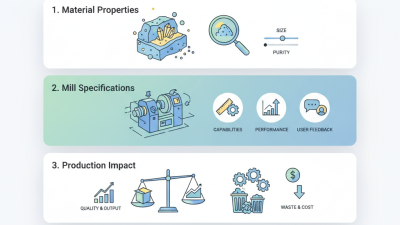
When selecting an ultrafine quartz powder mill, cost and efficiency are critical factors. Various mills offer different methods of grinding, impacting both the final product and operational costs. The initial investment can differ widely. Some mills may provide lower upfront costs but lack efficiency in processing. This can lead to higher operational costs over time.
Efficiency in grinding is equally important. A mill that operates faster might be more costly, but it can save money in the long run through reduced energy consumption. The particle size distribution is also essential. A more uniform size can enhance the quality of products, leading to better customer satisfaction. However, it is crucial to assess the performance. Not every mill that promises efficiency truly delivers in practice.
Analyzing user feedback can offer deeper insights. Sometimes, a mill may underperform despite high-end specifications. Test results can yield mixed findings. A mill can seem efficient on paper but may struggle with specific materials. Therefore, buyers should consider real-world performance rather than solely theoretical data. Choosing the right ultrafine quartz powder mill requires careful consideration and reflection on these aspects.
Best Ultrafine Quartz Powder Mill for Global Buyers? - Comparative Analysis of Cost and Efficiency of Different Mills
| Mill Type |
Cost ($ per ton) |
Energy Consumption (kWh/ton) |
Efficiency (tons/hour) |
Particle Size (µm) |
| Vertical Roller Mill |
120 |
50 |
3 |
5-20 |
| Ball Mill |
100 |
70 |
2 |
10-30 |
| Jet Mill |
150 |
60 |
1.5 |
2-10 |
| Micronizer |
130 |
55 |
2.5 |
1-5 |
| Hammer Mill |
90 |
75 |
3.5 |
30-100 |
Applications and Benefits of Ultrafine Quartz Powder in Industries
Ultrafine quartz powder has emerged as a vital material across various industries. Its unique properties, such as high purity and excellent chemical stability, make it an ideal choice for applications ranging from electronics to construction. According to a report by Industry Research, the global ultrafine quartz powder market is expected to reach $1.5 billion by 2026, driven by increased demand in the semiconductor and glass industries.
In electronics, ultrafine quartz powder enhances the performance of circuit boards and semiconductor devices. Its fine particle size contributes to improved electrical insulation and thermal resistance. For example, a study published in the Journal of Materials Science highlights that using ultrafine quartz significantly boosts the dielectric strength in electronic components.
In the construction industry, this powder acts as a filler and enhances concrete's strength. The blending of ultrafine quartz powder in concrete can increase compressive strength by up to 30%, according to research conducted by the Construction Materials Journal. However, the challenge lies in sourcing consistent quality and addressing variability in particle size. Despite these hurdles, the industry continues to innovate, seeking effective ways to utilize this valuable material.
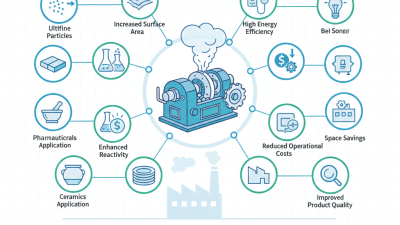
Global Applications and Benefits of Ultrafine Quartz Powder