Top 10 Benefits of Ultrafine Iron Oxide Grinding for Industries?
Ultrafine Iron Oxide Grinding has become a significant process in various industries. This technique transforms iron oxide into finer particles, enhancing its utility. With improved properties, ultrafine powders show promise in manufacturing, coatings, and electronics.
The benefits of Ultrafine Iron Oxide Grinding are numerous. These fine particles provide better dispersion in mixtures, which is crucial in paint and adhesive production. Additionally, ultrafine iron oxide exhibits enhanced magnetic properties. These traits are increasingly valuable in high-performance applications.
However, challenges exist, such as ensuring uniformity in particle size. Inconsistent particle sizes can affect product quality. Understanding the nuances of ultrafine grinding can help industries make informed decisions. Companies must weigh the benefits against the potential drawbacks carefully. The future of ultrafine iron oxide grinding holds great potential if these challenges are addressed.
Overview of Ultrafine Iron Oxide Grinding Process and Technology
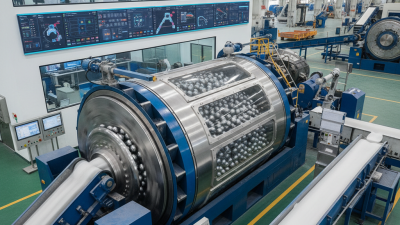
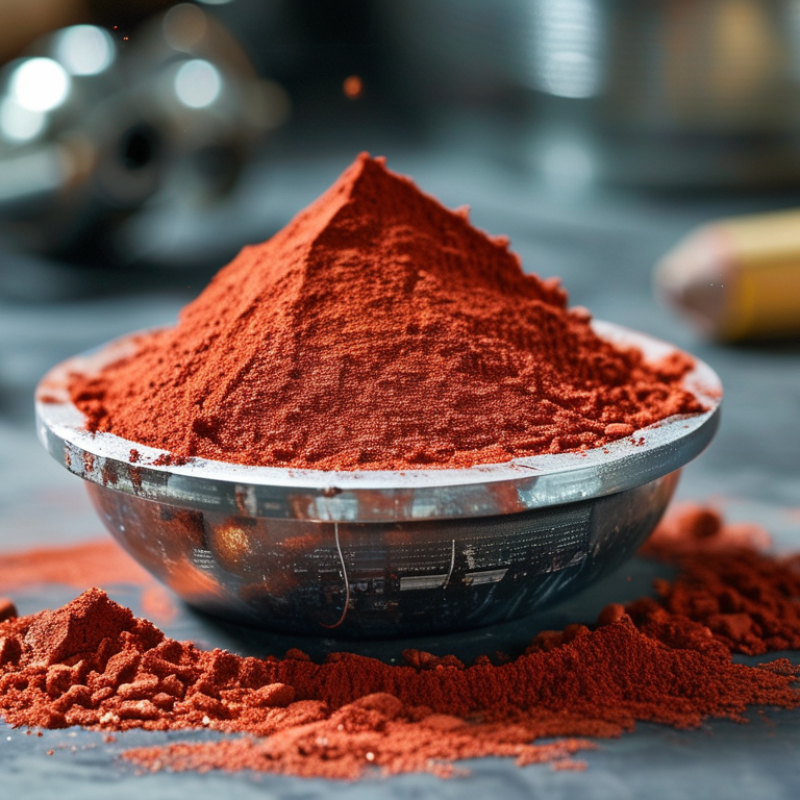
Ultrafine iron oxide grinding is a sophisticated process that enhances material properties for various industries. This technology subdivides iron oxide particles to a micron range, enabling improved surface area and reactivity. The grinding process typically involves high-energy milling techniques, which break down larger particles into ultrafine sizes. The resulting powder is more effective in applications such as coatings, pigments, and ceramics.
During the grinding process, attention to particle distribution is crucial. Controlling the size ensures uniformity, which is vital for performance. Fine particles interact more efficiently with other materials, enhancing their properties. However, operators must be cautious about over-grinding, which can lead to agglomeration or undesirable particle shapes.
The advancements in grinding technology have made it possible to achieve a consistent ultrafine product. This has implications for industries such as automotive, electronics, and construction. However, the specific requirements of each application demand continuous refinement of the grinding strategies. Adapting to these needs is not always straightforward, and constant evaluation of results is necessary for optimal performance.
Top 10 Benefits of Ultrafine Iron Oxide Grinding for Industries
Key Industries Benefiting from Ultrafine Iron Oxide Applications
Ultrafine iron oxide is increasingly essential in various industries due to its unique properties. The coatings industry, for example, utilizes ultrafine iron oxide for pigments. These pigments enhance durability and improve color stability. Reports show that the demand for these pigments is projected to increase by 4.2% annually, reaching over $3 billion by 2025. The fine particle size contributes to better dispersion in solvents, leading to superior performance.
The construction sector also benefits significantly from ultrafine iron oxide. It enhances the properties of concrete and asphalt. Studies indicate that adding ultrafine particles can improve strength and resistance to degradation. Furthermore, the ability to absorb UV radiation helps in reducing the thermal expansion of materials. This applications trend is crucial as infrastructure needs grow globally, with market forecasts suggesting a growth rate of 6%.
In the electronics industry, ultrafine iron oxide serves as an important component in manufacturing magnetic materials. Its finer particles improve the efficiency of recording media. Data indicates a rising demand for these materials due to the expansion of data storage technologies. The integration of ultrafine iron oxide in electronics is pivotal for enhancing performance and sustainability. However, challenges such as processing costs and quality consistency remain areas for improvement.
Enhanced Properties of Ultrafine Iron Oxide for Advanced Materials
Ultrafine iron oxide exhibits enhanced properties that significantly improve advanced materials in various industries. This unique form of iron oxide features a smaller particle size, leading to a higher surface area. A larger surface area allows for better interaction with surrounding materials, which can enhance performance in applications like coatings, electronics, and catalysts.
Moreover, ultrafine iron oxide displays superior magnetic properties. This feature is particularly valuable in electronics and data storage. Additionally, the increased reactivity of ultrafine particles can enhance the efficiency of catalysts in chemical processes. This means they can contribute to more effective reactions, improving overall productivity. While these benefits are noteworthy, challenges remain in consistent particle quality and scalability. Ensuring uniformity in production is essential for reliable application results.
Incorporating ultrafine iron oxide requires careful consideration. Developing optimal formulations can be complex. Manufacturers must balance cost and performance effectively. Future research must address these challenges while capitalizing on the potential of ultrafine iron oxide in new applications. This evolving field promises further advancements in materials science, driving innovation across multiple sectors.
Top 10 Benefits of Ultrafine Iron Oxide Grinding for Industries
| Benefit |
Description |
Impact on Industry |
| Improved Dispersion |
Ultrafine iron oxide offers superior dispersion in various matrices. |
Enhances the performance of products in coatings and plastics. |
| Enhanced Color Quality |
Provides vibrant colors and consistency in products. |
Important for cosmetics, paints, and inks to meet market demands. |
| Increased UV Resistance |
Offers better protection against UV degradation. |
Critical for outdoor applications such as building materials. |
| Improved Thermal Stability |
Maintains performance under high temperatures. |
Enhances the safety and durability of products in various industries. |
| Higher Refractive Index |
Improves light reflection and transmission properties. |
Beneficial for optical materials and electronic devices. |
| Enhanced Mechanical Properties |
Increases strength and durability of composite materials. |
Crucial for automotive and aerospace applications. |
| Cost-Effectiveness |
Reduces material consumption without compromising quality. |
Saves costs across manufacturing sectors. |
| Sustainability |
Promotes the use of environmentally friendly materials. |
Aligns with industry goals for sustainability and green practices. |
| Versatility |
Can be used in a wide range of applications from paint to electronics. |
Widens market applications and product offerings. |
| Better Adhesion Properties |
Enhances bonding capabilities in coatings and adhesives. |
Improves product performance and customer satisfaction. |
Environmental Considerations and Sustainability in Ultrafine Grinding
The ultrafine grinding of iron oxide plays a crucial role in promoting sustainability. As industries seek greener practices, the eco-friendly attributes of ultrafine grinding have gained attention. Reports indicate that ultrafine iron oxide can be produced using less energy compared to traditional methods, reducing carbon emissions. The application of this technology can cut energy use by up to 30%, contributing to a lower environmental footprint.
Many industries face the pressing need to address waste management. During ultrafine grinding, the process generates less waste, enhancing overall efficiency. This improvement leads to a decrease in landfill contribution. However, there are challenges. Some facilities may struggle to adopt new grinding technologies due to high initial capital costs. It's essential to assess long-term benefits carefully before making decisions.
Tips: Consider collaborating with experts in sustainable grinding solutions. Seek out case studies highlighting successful transitions. Evaluate the overall lifecycle impact of ultrafine grinding technologies. Keep in mind that despite advantages, ongoing assessments and adaptations will be necessary. Strive for continuous improvement to enhance both efficiency and sustainability in your operations.
Future Trends in Ultrafine Iron Oxide Usage Across Various Sectors
The use of ultrafine iron oxide is expanding rapidly across various industries. Recent reports indicate that the global ultrafine iron oxide market is projected to reach $1.2 billion by 2026, growing at a CAGR of 6.1%. This growth is driven by advances in technologies that enhance the effectiveness of ultrafine products. They are increasingly favored for their superior properties, such as high stability and excellent pigment strength.
In the coatings industry, ultrafine iron oxide is becoming essential. Its unique characteristics allow for improved corrosion resistance and durability in coatings. This sector alone is expected to account for over 40% of the market share. Beyond coatings, other sectors like electronics and cosmetics are harnessing ultrafine iron oxide for its functional benefits. However, the challenge remains in the environmental impact of production processes.
Emerging applications, particularly in renewable energy, are noteworthy. The integration of ultrafine iron oxide in battery technology shows promise. It can enhance conductivity, thereby improving battery performance. Despite its potential, the industry must address sustainability. As demand increases, a critical evaluation of production methods is crucial for a more sustainable future in ultrafine iron oxide usage.