2026 Top Crushing Machine Innovations and Trends to Watch?
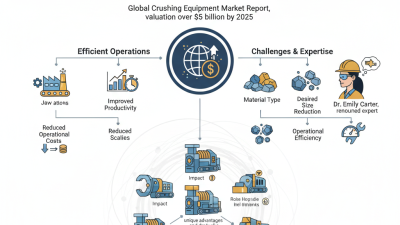
The crushing machine sector is evolving rapidly. Innovations in this field are vital for enhancing efficiency in various industries. According to a recent report by Industry Reports, the global crushing equipment market is projected to reach $4.3 billion by 2026, growing at a CAGR of 5.4%. This sustained growth reflects heightened demand for advanced technologies.
New trends emphasize automation and energy efficiency. Companies are integrating smart technology into crushing machines. This shift allows for real-time monitoring and optimization. However, the industry faces challenges in balancing innovation with cost-effectiveness. Many businesses struggle to adopt cutting-edge solutions without exceeding budgets.
As we look to 2026, the importance of reliable data and user feedback cannot be overstated. Insights from industry experts are critical for shaping future developments. The focus on sustainability in manufacturing processes must not be overlooked. Crushing machines of the future must align both with technological advancements and environmental responsibility.
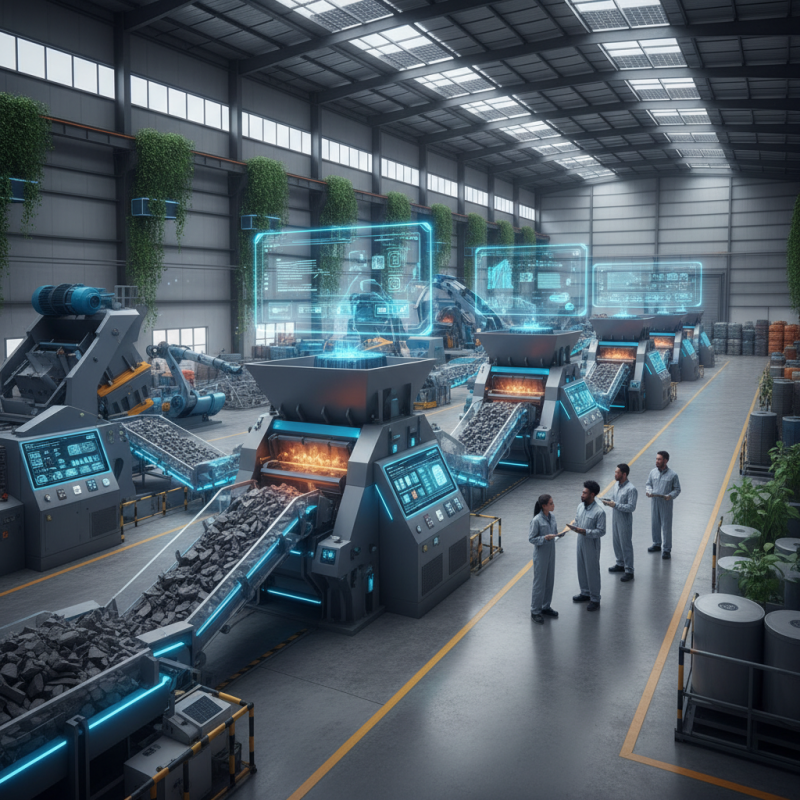
Emerging Technologies in Crushing Machines for 2026
As we head toward 2026, the landscape of crushing machine technology is on the verge of significant transformation. Emerging trends highlight automation and artificial intelligence, promising improved efficiency. For instance, machine learning algorithms can analyze material properties in real-time, enabling precise adjustments during operation. This not only enhances productivity but also reduces wear and operational costs.
Another noteworthy development is the integration of eco-friendly materials in machine design. Manufacturers are exploring lightweight composites that maintain durability while minimizing environmental impact. These innovations diminish energy consumption, aligning with global sustainability goals. However, the transition to these new materials poses challenges such as sourcing and cost-effectiveness, requiring careful consideration and development.
Moreover, remote monitoring systems are becoming increasingly prevalent. They allow operators to track performance and diagnose issues from afar. This shift implies a need for skilled technicians who understand both machinery and data analytics. Not every company is prepared for this change, highlighting a gap in the industry. Investing in training is essential to maximize the benefits of these advancements.
Key Innovations in Crushing Machine Design and Performance
The crushing machine industry is witnessing remarkable innovations that enhance design and performance. Modern designs focus on energy efficiency, which is critical for reducing operational costs. Advanced materials are used to improve durability and reduce wear. This boosts reliability in demanding environments.
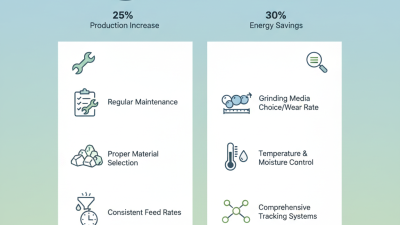
Tips: Regular maintenance is essential. Check for wear and tear to prevent unexpected downtime.
Automation is another trend reshaping the sector. Automated systems enable precise control over crushing processes, ensuring uniform particle size. However, integrating these systems can pose challenges. Operators must be well-trained to manage new technologies effectively.
Tips: Invest in training for your team. A knowledgeable crew can avert costly mistakes.
Sustainability is becoming central to design choices. Machines are being engineered to minimize waste and energy consumption. Yet, the journey toward eco-friendly solutions requires ongoing research and adaptation. Current models still leave room for improvement in reducing their environmental footprint.
Sustainable Practices in the Crushing Industry: A 2026 Perspective
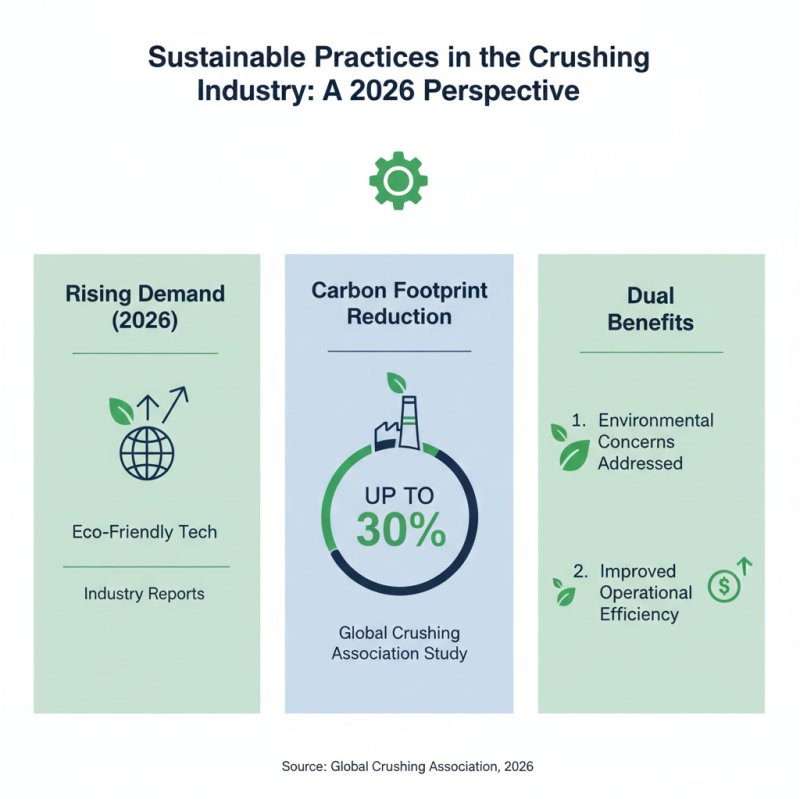
Sustainable practices are crucial in the crushing industry. As we approach 2026, industry reports indicate a rising demand for eco-friendly technologies. A recent study by the Global Crushing Association highlights that companies adopting sustainable practices could reduce their carbon footprint by up to 30%. This shift not only addresses environmental concerns but also improves operational efficiency.
Investing in innovative machinery is essential. Modern crushing machines are designed to consume less energy while maintaining high performance. The integration of automation can further optimize resource use. According to a 2023 industry report, up to 40% of operating costs can be decreased through smarter energy management. However, many companies still struggle to implement these solutions effectively, indicating a gap in industry readiness.
Tips: Consider embracing hybrid technology. This can significantly lower emissions and enhance productivity. Regular training for staff on sustainability practices will also foster a culture of eco-consciousness. Additionally, monitor your supply chain for both environmental and economic efficiency. Regular audits can uncover areas for improvement and drive significant change toward a more sustainable future.
Market Trends Driving the Evolution of Crushing Equipment
The crushing equipment market is experiencing significant evolution driven by key trends. One of the notable trends is the increased focus on sustainability. According to a report by Allied Market Research, the global crushing equipment market is projected to reach $6.3 billion by 2027, growing at a CAGR of 6.2%. This growth is influenced by the demand for eco-friendly technologies that reduce waste and enhance recycling capabilities.
Another critical factor is the rise in automation. The integration of advanced technologies such as IoT and AI allows for more efficient operations. Data from MarketsandMarkets indicates that the smart mining market, which includes crushing equipment, is expected to grow to $28.5 billion by 2026. Automation minimizes human error, but it raises questions about job displacement in the industry. Balancing innovation with workforce stability is a challenge that needs careful consideration.
Furthermore, the trend towards mobile crushing equipment is gaining momentum. Operators are favoring portable solutions for their flexibility and cost-effectiveness. According to the Research and Markets report, the mobile crushing and screening equipment market is projected to grow at a CAGR of 5.1% from 2021 to 2026. This shift poses questions about logistics and maintenance in various terrains, emphasizing the need for durable and versatile designs.
2026 Top Crushing Machine Innovations and Trends to Watch
| Innovation/Trend |
Description |
Expected Impact |
Implementation Year |
| Automation and AI |
Integrating AI technologies to enhance operational efficiency and predictive maintenance. |
Increased productivity and reduced downtime. |
2025 |
| Eco-Friendly Materials |
Development of crushing machines using sustainable and recyclable materials. |
Lower environmental impact and compliance with regulations. |
2026 |
| Enhanced Mobility |
Designing portable crushing machines for ease of transport and operation in remote locations. |
Improved access to various sites without transportation issues. |
2025 |
| Telematics and IoT Integration |
Use of IoT technologies for real-time monitoring and data analytics. |
Enhanced performance tracking and maintenance scheduling. |
2024 |
| Safety Enhancements |
Innovations aimed at improving operator and on-site safety. |
Reduction in workplace accidents and enhanced compliance with safety regulations. |
2026 |
Impact of AI and Automation on Crushing Machine Efficiency in 2026
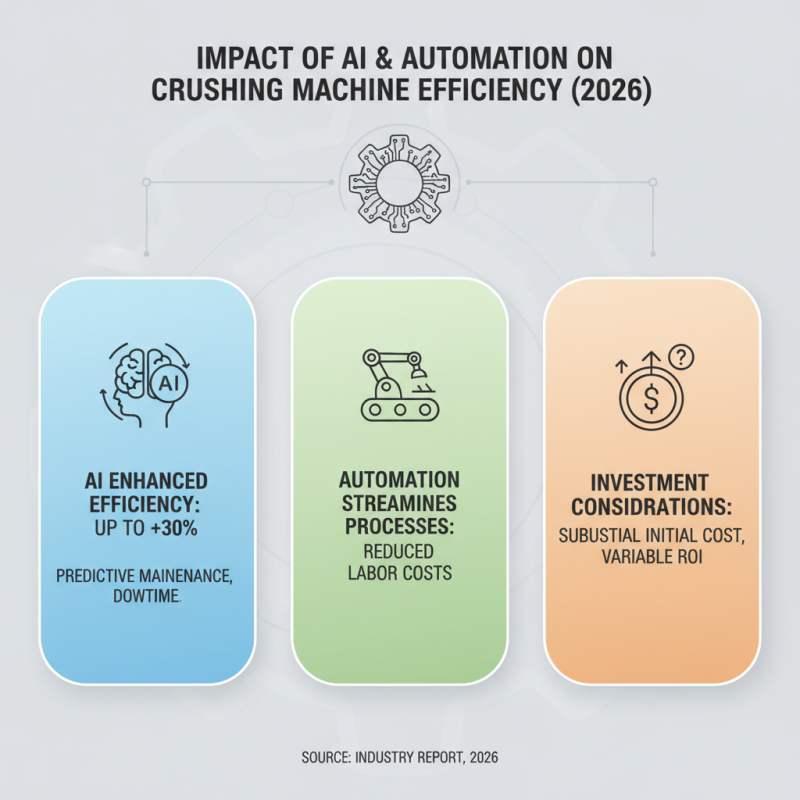
The future of crushing machines in 2026 is heavily influenced by AI and automation. According to a recent industry report, the integration of AI technologies can enhance crushing efficiency by up to 30%. This allows for better predictive maintenance and less downtime, a crucial factor for operations that rely heavily on uptime. Automation further streamlines processes, leading to significant labor cost savings. However, the initial investment in these technologies can be substantial, and the return on investment may vary.
Companies must also consider their workforce’s adaptability. A skilled labor force is essential for effective implementation. Not all machinery operators are equipped to handle advanced automated systems. Additionally, as technology evolves rapidly, staying updated on training and development is a challenge. Strategies addressing these factors are vital for maximizing the impact of these innovations.
Tips: Start small with automation. Gradually introduce AI tools to mitigate risks. Regular training sessions for employees can ensure they stay relevant. Keep an eye on industry trends. Monitoring competitors' progress can reveal gaps in your strategy, driving innovation.